


REBEKAH | NL 2026 #06
Industrial mind
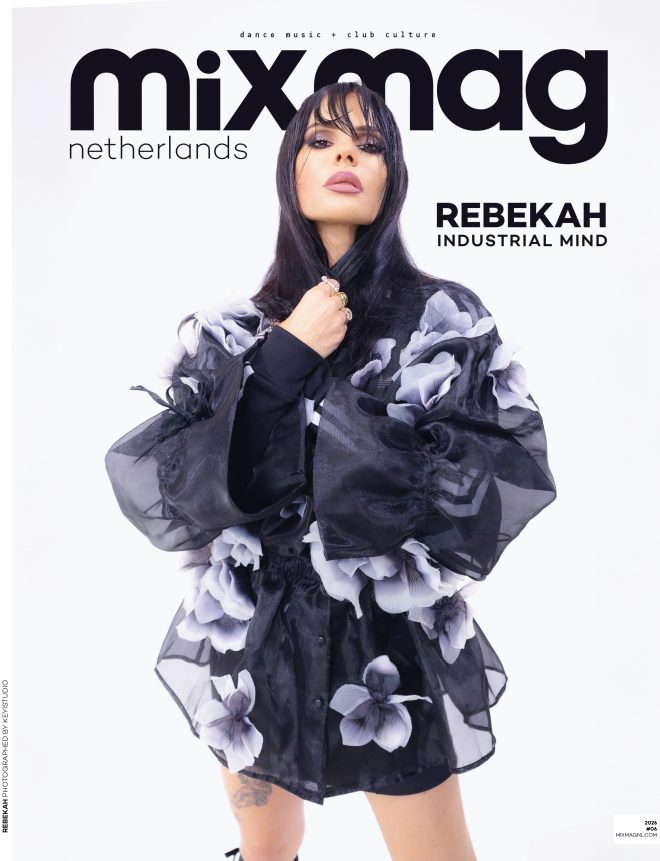
The artist who helped shape one of techno’s most explosive movements is no longer interested in chasing harder sounds. She’s looking for something far more difficult to find: honesty.
Rebekah doesn’t speak like somebody defending a genre.
In fact, she spends much of our conversation questioning one. Over the last decade, she has become one of the defining figures associated with industrial techno’s rise, helping shape a sound that would eventually influence an entire generation of artists, promoters and festival lineups. Then she watched hard techno explode beyond clubs and underground communities, becoming one of electronic music’s most visible and commercially successful movements. Many artists would celebrate that trajectory as validation. Rebekah seems more interested in examining what was lost along the way.
Not because she misses the past.
Because she misses the friction.
The challenge.
The possibility that music can still surprise both the artist making it and the audience experiencing it.
At the center of that reflection sits Industrial Mind, a record that initially seems about intensity but reveals itself to be more complex. The album is full of pressure, impact, and physical force, yet the story behind it is not one of escalation. If anything, it documents an artist becoming more open, more playful, and less interested in maintaining a fixed identity. Rather than reinforcing expectations, it quietly dismantles them.
“There wasn’t a conscious shift but more of a snapshot of where I am currently. It was more about creating something more long-form as a way to show again my different sides within the current structure of music that I am playing. The music will be less dark as I have also transformed over previous years to be more playful and open and express a side of me that was repressed, and I always believe in the yin and yang effect, where darkness lies the opposite must also come to light and that we are constantly swinging between these two threads.”
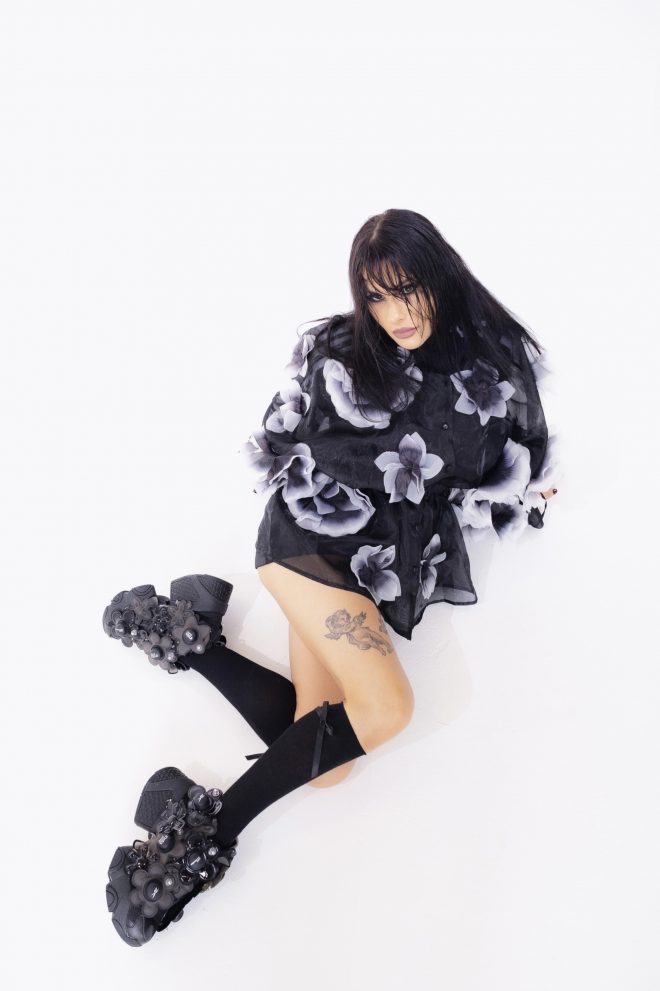
It is an answer that immediately reframes the album. Rather than a declaration of a new direction, Industrial Mind becomes a document of a person in motion. The record does not abandon the industrial textures and physicality that have become synonymous with Rebekah’s work, but it refuses to be defined exclusively by them. Melodies emerge. Unexpected influences surface. Moments of release interrupt moments of aggression. The result feels less like a manifesto and more like a portrait.
That sense of contradiction runs throughout her entire career.
For all the conversations surrounding industrial techno, hard techno, and hardcore, Rebekah repeatedly returns to a completely different reference point when describing herself. It isn’t a club. It isn’t a label. It isn’t even a genre.
It’s punk.
The word appears naturally and repeatedly, almost as a guiding principle that has survived every musical transformation she has undergone. Long before BPMs became a talking point and long before industrial aesthetics became fashionable, the attraction was always towards extremity, chaos, and emotional release.
“The essence is still there, the punk ethos, the chaos and the extremities; it’s to leave all the aggression on the dance floor. This has not changed in all the years of my DJing. I don’t do steady paced sets; I like the vulgar, the profanities and the attitude. The only fun fact is that this comes out in my DJ sets, but currently at home I’m listening to a lot of the early house music that I used to play, keeping it sexy if it’s only for me grooving away in my kitchen!”

That final image is perhaps one of the most revealing moments of our conversation. Away from the industrial imagery and the relentless energy of her performances, there is somebody happily dancing alone in her kitchen to old house records. It complicates the mythology. It reminds us that artists are rarely as singular as audiences imagine them to be.
The same complexity appears in the album itself.
Throughout Industrial Mind, there is a constant push and pull between structure and overload. Sounds collide. Arrangements mutate. Tracks often feel as though they are approaching a breaking point before suddenly reorganizing themselves into something else. Rebekah describes intentionally moving away from formulaic writing methods, challenging herself to break out of predictable structures and familiar production habits. Even when tracks remain rooted in industrial techno, there is a noticeable desire to allow other influences to enter the mix.
That desire ultimately led her towards hardcore.
At a moment when hard techno was becoming increasingly visible and commercially successful, Rebekah found herself looking elsewhere.
“I was never really a fan of the more commercial hard techno that came out since COVID; it’s always felt over-processed and too simple for me to play; it’s almost as if that punk edge got lost. So I jumped into hardcore and just loved that extreme sound in relation to sound design and attitude. It awakened me from a deeper techno slumber, and slowly I got used to the more intense sounds and vibe it offered. It also sounds amazing live in clubs; the producers who create this music are on a different level of production skills than what I was hearing within hard techno.”

The phrase “awakened me from a deeper techno slumber” hangs in the air.
Not because it dismisses techno, but because it reveals a hunger for challenge. Throughout our conversation, Rebekah consistently positions growth as something that happens through discomfort. She speaks about genres less as identities and more as creative tools. Hardcore became valuable not because it provided answers, but because it asked new questions.
That perspective also explains why she rejects the increasingly rigid divisions that dominate contemporary dance music discourse.
While many debates surrounding hard techno focus on purity, authenticity, and underground credentials, Rebekah appears largely uninterested in policing boundaries. Instead, she sees musical evolution as inevitable. Generations arrive, discover their heroes, reshape sounds, and eventually move on. What older artists often perceive as decline, she views as continuity.
Her criticism is not directed at younger audiences.
It is directed at stagnation.
At repetition.
At the idea that any genre should stop evolving.
“I think I just saw where we were headed. I found out that industrial hardcore had pretty much gone back underground, hard techno was super commercial, and I knew there was something in between. I love industrial techno and will always be grateful for the 2018 and 2019 period when it was growing. But the music needed development; it needed to say more than just beats and sound design. That’s where I saw that the inclusion of melodies and pads and the influence of hardcore and hardstyle would create something new.”
Interestingly, some of the most revealing moments in our conversation have very little to do with production at all.
They concern performance.
For years, Rebekah has built a reputation as one of techno’s most powerful DJs, capable of generating enormous tension and release across marathon sets. Yet she openly admits that adapting to larger stages created an unexpected internal conflict. As festivals grew bigger and expectations became more predictable, she found herself drifting away from the qualities that originally defined her approach.
What followed was not reinvention.
It meant total recovery.
“I knew I had to adapt a little for the bigger stages and that’s been a massive shift for me, pacing, etc but I didn’t feel very authentic when I was playing; there was too much analysis, it felt too contrived and pre-planned. The clubs will always be my home, where I can build and build, layer, and then release the tension over three or four tracks, rather than every track playing two breakdowns. It almost feels like a disservice to my skills as a DJ and the energy I can harness playing this way.”

She pauses before continuing.
“There should still be a slight challenge where it could be overpowered rather than chasing perfection. That’s probably my punk attitude coming back in.”
Few sentences better capture the spirit of Industrial Mind.
Not chasing perfection.
Allowing imperfection.
Trusting instinct.
Accepting risk.
These ideas extend beyond music and into her broader relationship with dance culture itself.
Through #ForTheMusic, Rebekah became one of the most visible advocates for addressing abuse, misogyny and accountability within electronic music. The campaign permanently altered her public role. She was no longer only an artist or producer. She became part of a much larger conversation about responsibility, safety, and systemic change.
Years later, she remains realistic about how much work still needs to be done.
“This was more of a wake up call to be thinking about how far along we actually are with equality and human rights within the dance music industry. And to be honest, we are still not there yet; misogyny is rampant throughout the scene currently. But testament to the new generation of clubbers, they are less tolerant of it. They called for change in the last wave of allegations, and the tipping balance is in process for a better long term outcome.”
What follows is perhaps the most important point she makes.
“We don’t need panels of women speaking about this topic to other women; the men need to take control because, in actual fact, it is a male issue predominantly.”
It is a perspective grounded not in outrage but in practicality. Throughout the discussion, Rebekah repeatedly emphasizes solutions, accountability, and structural change rather than symbolic gestures. There is a clear recognition that visibility alone is not enough. Progress must be built into contracts, reporting systems, organizational culture and everyday decision-making.
The same pragmatism shapes her view of hard techno’s future.
Despite her criticisms of commercialization, she refuses to engage in the familiar narrative that the scene is somehow doomed. She understands why harder sounds exploded. She understands the excitement. More importantly, she remembers feeling it herself.
For many young people, hard techno has become an entry point rather than a destination. Some will remain there. Others will discover different corners of dance music. The process itself matters more than the outcome.
“The DJs are having fun, the crowd is having fun, it became a celebration; the rave. My entry to techno was in a 2000 people capacity venue, and it was epic; it blew my mind. It’s amazing that young people have managed to experience this too now as a point of entry.”

In a culture increasingly divided by arguments about authenticity, Rebekah’s optimism feels surprisingly radical.
She does not see younger generations as a threat.
She sees them as evidence that the cycle is still working.
Which brings us back to Industrial Mind.
For all the discussions surrounding hardcore influences, industrial aesthetics, and contemporary techno culture, the album ultimately reveals something much simpler. It captures an artist learning to trust herself again. Not the version expected by audiences. Not the version rewarded by algorithms. Not the version that fits neatly inside a category.
Just herself.
“It really showed me that I had become more open with sounds and melodies, and I had become less critical of myself. Some might say that I have gone backward and de-evolved, but I really feel it’s an evolution and I would rather stay open, playful and curious and also not take myself too seriously.”
When asked what she hopes people will take away after experiencing the album at full volume, her answer is remarkably concise.
“That they have a piece of my energy with them, that it will attract those who resonate and maybe challenge those who don’t.”
Perhaps that is the most accurate way to understand Industrial Mind.
Not as an attempt to convince.
Not as an attempt to belong.
Not even as an attempt to lead.
Simply as the sound of an artist remaining curious enough to keep moving.
