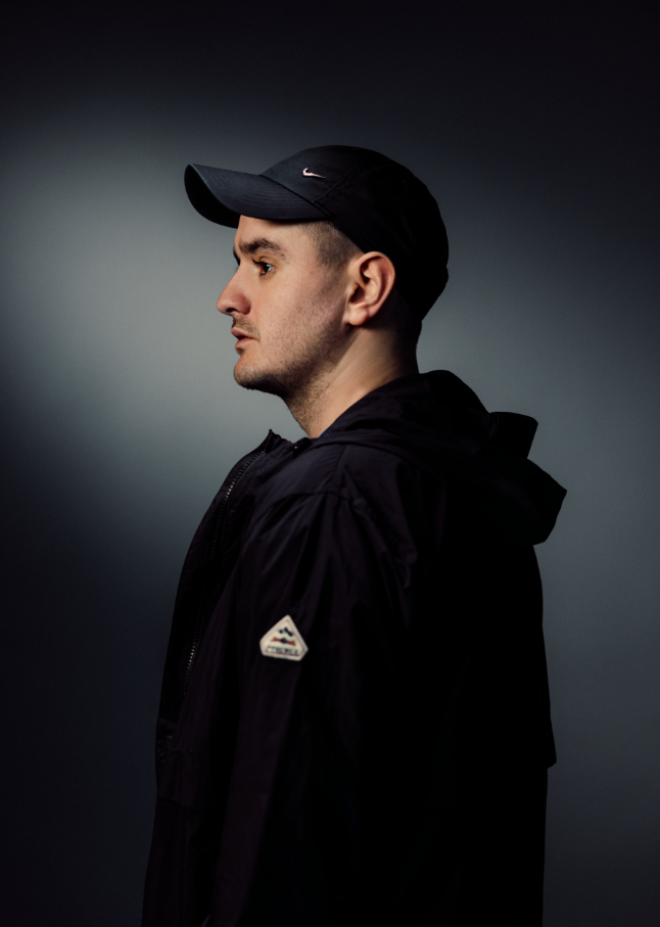


BEN HEMSLEY | NL 2026 #05
Move through the noise
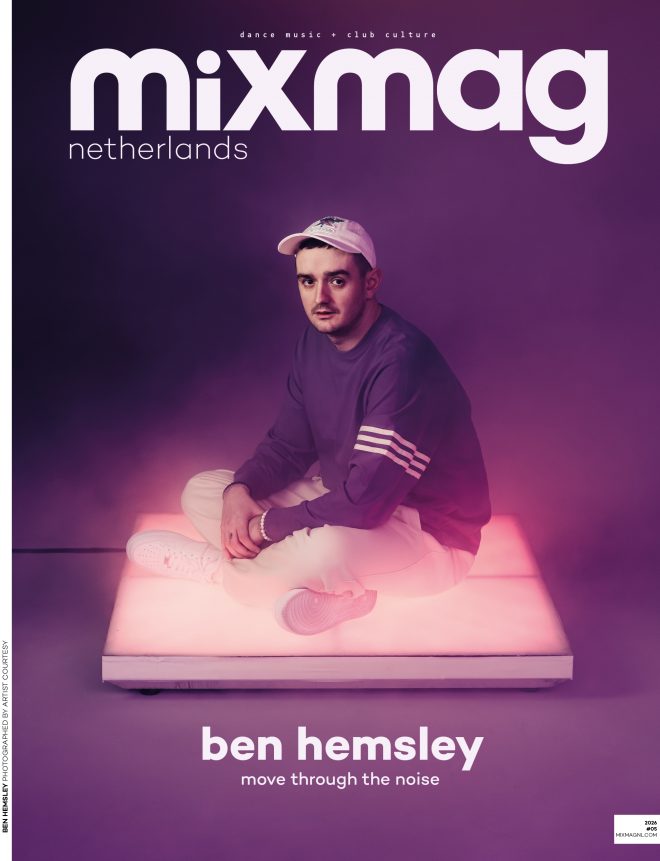
There are moments where scale begins to distort perception. Stages expand, crowds multiply, and the distance between artist and audience becomes something you can physically register rather than simply feel. For Ben Hemsley, that expansion has happened quickly, pushing his trajectory outward into spaces that demand consistency at a level that cannot be improvised. What becomes more revealing, though, is not the speed of that growth but the resistance to letting it redefine the project's core.
From the outside, the narrative reads like acceleration, bigger shows, wider reach, a constant upward curve that suggests momentum without interruption. Internally, the movement is less linear. His process remains tied to something more immediate, shaped by shifts in emotional state rather than strategic positioning. The music does not attempt to get ahead of him. It follows.
That distinction matters because it introduces friction. Touring introduces new environments, new stimuli, and new expectations, all of which feed back into the work in ways that are not always controlled. What holds the structure together is not discipline in the conventional sense, but continuity of intent. The same impulse that drove the earliest records continues to operate, even as the context around it becomes more complex.
“The driving force comes from seeing people happy, something I feel my music does. Traveling the world through touring has allowed me to meet new people and experience different cultures. Life on the road has shaped me, and it’s impacted my music too. When I feel like shit, I’ll end up writing something that mirrors how I’m feeling while touring. When I wrote Erase Me, it was the emotion the carried the song writing. Traveling has impacted my creativity as well. I’ve found so many new sounds through touring that wouldn’t necessarily have been in my ecosystem without experiencing the world.”

Movement, in this sense, is not just logistical. It becomes compositional. Each environment introduces subtle shifts in perspective that accumulate over time, altering not just what is heard but how it is approached. There is no fixed center to return to, only a sequence of moments that continue to reshape the work as they pass through it. That fluidity is what keeps the output from becoming static.
At the same time, that openness carries risk. When everything feeds into the process, the boundary between clarity and overload becomes thin. There have been periods where the external pace continued while the internal one resisted, creating a disconnect that could not be resolved through productivity alone. Choosing not to force that alignment became a defining decision.
“I’d like to think I always stay real and true to who I am, and I think people can recognize that. Even on social media, you can see who’s full of shit and who isn’t. I’ll always speak my mind and say how I really feel about things. My mental health hasn’t been in the best place for the last three years, so I didn’t want to just put music out and force something for the sake of it. I needed it to be right. That’s why I’m now in a place where I’m about to release loads of music and give fans what they deserve, not just something rushed that isn’t true to who I am.”
That refusal to force output introduces a different kind of pacing. It shifts the focus away from constant presence toward selective release, where timing becomes part of the creative decision rather than a response to demand. The result is a body of work that feels less reactive and more aligned, even if it arrives in bursts rather than in steady increments. In a landscape that rewards visibility, that restraint becomes a form of control.
His sound reflects that same openness. It moves through references without settling into a fixed position, drawing from rave structures, melodic frameworks, and club energy without committing to a single lane. The identity emerges not from genre but from selection, from the way elements are combined and filtered through his own instinct. What remains consistent is not the style, but the intention behind it.
“There isn’t really any one way I could define my musical identity. I love all genres, and I think that comes through in my sets, the music I release, and especially what I’m about to put out. In terms of sonics, there’s this sound I’ve used in a lot of my records that I honestly can’t take credit for, but it’s kind of become part of my identity. I first came across it through listening to Hi-Gate’s Sunshine Remix. I was messing around with a synthesizer one day and stumbled across it by accident. It was the type of sound I’d always been looking for. Paul Masterson is a genius. That sound, to me, feels Balearic. That’s why I use it so much in tracks that are built for Ibiza, or inspired by my love for the island.”
Accident plays a role within that process that cannot be replicated deliberately. Certain elements surface without being planned, revealing themselves as central only after they have been repeated and recognized. That unpredictability keeps the work from becoming overly engineered, allowing moments of discovery to remain part of the structure. Even meaning can arrive retrospectively, attaching itself to something that was initially instinctive.
“Weirdly, the Spanish lyric in Erase Me translates to: ‘Everything started with a song, you made your way into my heart.’ I didn’t even know that at the time, but it makes sense now.”
That balance between instinct and structure is rooted in something earlier. Growing up in the North East placed him within a specific musical environment, one shaped by community, repetition, and a shared understanding of how energy moves through a room. That context continues to inform how he approaches both production and performance, even as the scale of those environments changes.
Access to that world came through proximity rather than distance. Early exposure to DJs operating within the same circles created a pathway that was practical rather than abstract, built on observation and participation rather than aspiration alone. Learning happened inside the room, through repetition and response, rather than through theory.
“I was blessed in the fact that Patrick Topping was in the same friendship group as my older brother. Through my brother and Patrick, I became friends with Matty Robson and Jonny Burn. Those two had a big influence on how I play. They definitely showed me how to read a room. I used to warm up for them and only play minimal. Once I got some recognition, they pushed me on and massively helped me throughout. Before I knew it, I was supporting Alan Fitzpatrick through their influence. It feels good to be able to return the favor now. They’re still two of my best mates to this day.”
Reading a room becomes a central skill within that framework. It is less about control and more about sensitivity, about recognizing shifts in energy and responding without overcorrecting. That responsiveness creates a feedback loop between artist and audience, where the set evolves in real time rather than following a fixed path. The same principle extends beyond DJing into the broader trajectory of the project.
Certain moments reinforce that trajectory with unusual clarity. Not because they introduce something new, but because they confirm that what is already happening can hold at scale. These moments act as markers, anchoring the progression without redefining it.
“Creamfields 2022. That was definitely a turning point in my career. That was so emotional. I think because I had such a good reception following my debut the year before, it really made that moment. I’ll never forget that.”
As the scale increases, the demands change. Touring introduces a rhythm that can quickly become unsustainable if left unchecked, particularly when the expectation is to remain consistently available. Recognizing the limits of that pace becomes part of the process, not as a retreat but as a recalibration.
“I think I’m only just learning this now. It took me a long time to realize I have to put my health first. Before, I felt like I just burned myself out trying to give fans what they wanted. If I’m not touring now, I’m chilling at home making music. That’s how I rest and reset.”
The relationship between studio and stage remains direct throughout. One informs the other without requiring a shift in mindset, allowing ideas to move freely between the two environments. That continuity simplifies the process, reducing it to a single objective that carries across both contexts.
“Both are the same for me. I feel just as natural in the studio as I do on stage. There isn’t really a mindset shift. I’m just looking to make people happy.”
Remaining grounded within that expansion relies on something more fundamental. The environment he came from continues to shape how he navigates attention, preventing the external scale from altering the internal perspective. It is less about resisting change and more about maintaining proportion.
“This comes naturally to me. I think it’s down to my upbringing. I grew up on a council estate and was always friends with everybody. I don’t judge people. I think that keeps me grounded.”
That same approach extends into the structures forming around the music. His label emerges from a need to create space for records that might otherwise remain unheard, operating without a fixed stylistic boundary. The selection process reflects taste rather than category, allowing the catalog to remain open.
“It used to amaze me that I got sent so many records that no one was signing. I was like, how many tunes is the world not hearing? That’s what my label is about. It’s not just one sound. We’re going to release house music alongside trance stuff. It’s just about putting music out that I love.”
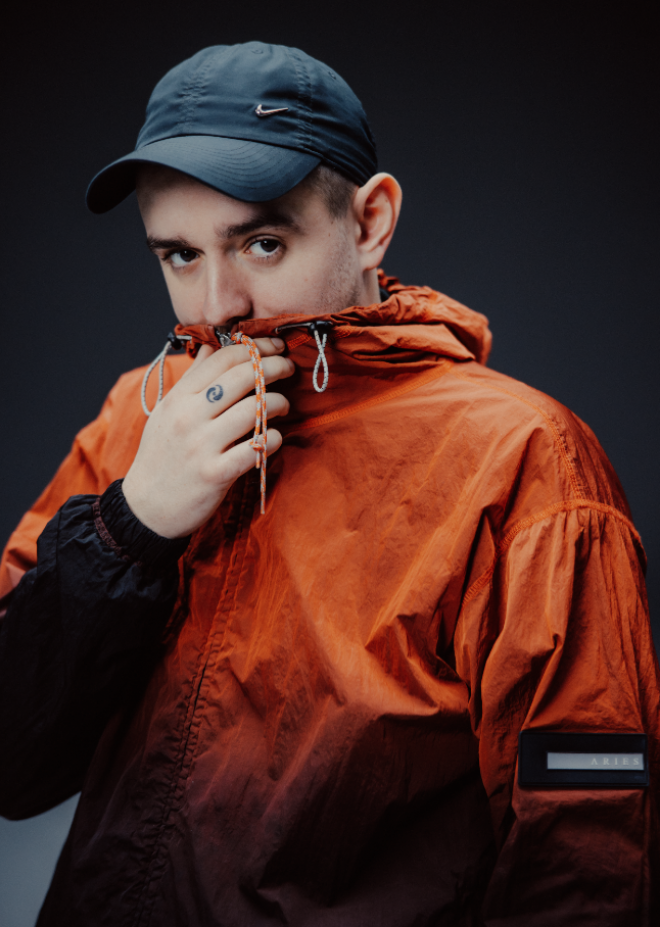
What becomes clear across all of this is that the expansion does not introduce a new direction. It extends an existing one. The same principles that shaped the earliest stages of the project continue to operate at a larger scale, without being diluted in the process. Growth becomes a matter of reach rather than transformation.
“I’m not chasing anything anymore. I just want to write as much music as I can and make as many good memories as possible, without fucking dying in the process.”
That position reframes the trajectory in a way that resists conventional endpoints. There is no fixed destination being pursued, no final state that defines success. Instead, the work continues through accumulation, shaped by experience and held together by a consistent internal logic.
What defines this phase is not arrival, but control over direction. The ability to expand without losing coherence becomes the central task, one that requires constant adjustment rather than a single decision. The scale will continue to shift. The question is whether the core can remain intact as it does.
For now, that core holds.