


Marco Bailey: The Art Of Never Standing Still

After more than three decades in electronic music, Marco Bailey has little left to prove. He has witnessed techno evolve from an underground movement into a global industry, built his own record labels, and performed for generations of clubbers. Yet the Belgian producer remains driven by the same instinct that first brought him behind the decks: the excitement of discovering something worth sharing.
His latest album, Impatient Heart, arriving October 16 through his Materia imprint, is perhaps the clearest expression of that philosophy. Developed over two years, the record moves between driving, hypnotic techno and atmospheric compositions, revealing a broader musical identity without abandoning the dancefloor that has defined his career.
“I still have a lot of energy for techno, but I don’t always want to express it in the same way. People who know my DJ sets have certain expectations, and I understand that. The dancefloor has been a huge part of my life, and it always will be.”
“But in the studio, I also hear things that don’t necessarily belong in a club. With Impatient Heart, I wanted to give those ideas space alongside the more physical tracks. I wasn’t trying to prove I could make something harder or bigger. I wanted a record I would still feel connected to long after its release.”
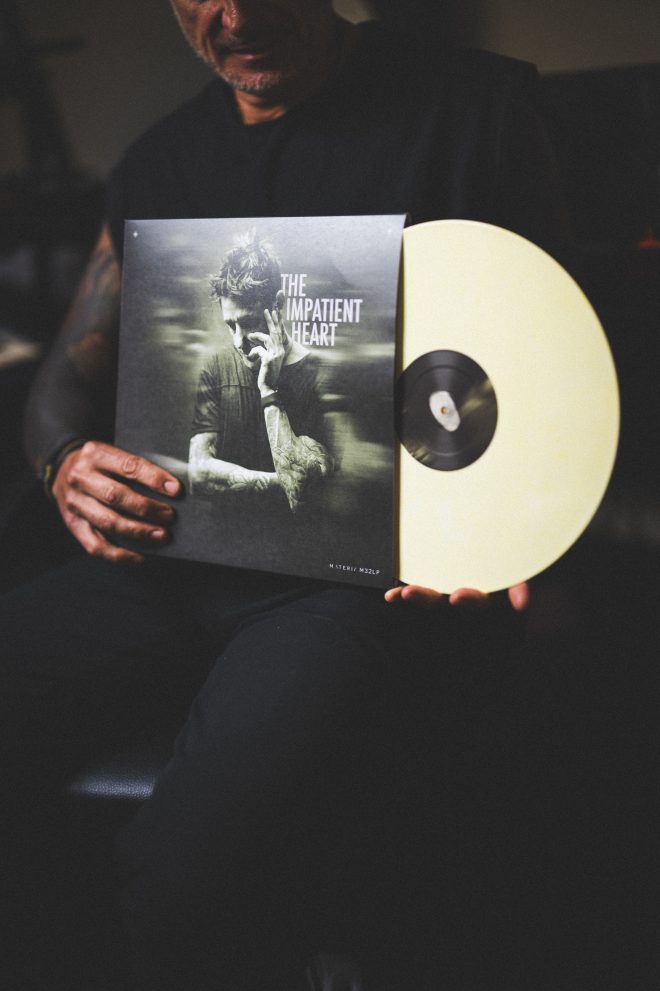
For Bailey, the distinction between producing club records and constructing an album became essential. Rather than assembling a collection of tracks designed exclusively for peak-time moments, he wanted to explore how different musical ideas could coexist within a single narrative.
“If an idea works without drums, why add them just because someone expects that from me? An album gives me room to explore that. Otherwise, I could release everything as separate EPs. I wanted the driving tracks to have their place, with quieter passages that change how you hear what comes next.”
That freedom also required him to confront something unexpected: the limitations of his own experience.
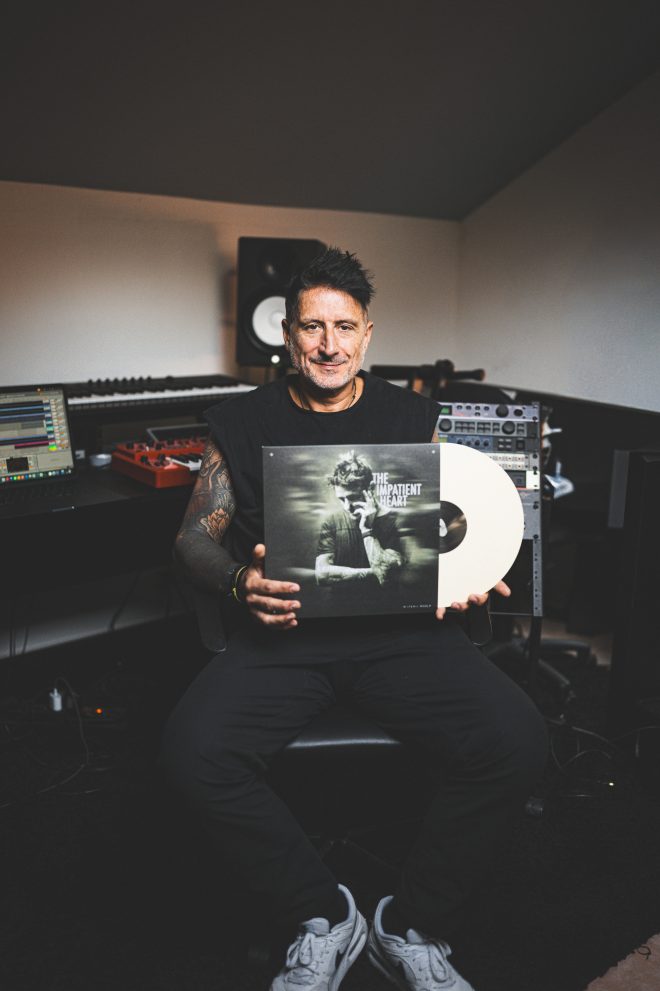
“Experience helps, but sometimes it gets in the way. You know how to make a track work, and your hands can take you somewhere familiar before you’ve really listened to what the piece needs. I have to watch that. I don’t want to finish something simply because I know the quickest way to do it.”
It is an interesting contradiction for an artist whose technical understanding has been refined over decades. The challenge is no longer learning how to make music work, but recognising when familiar solutions prevent something more interesting from emerging.
TECHNO CAN EVOLVE WITHOUT LOSING ITS HISTORY
Bailey’s commitment to artistic independence extends beyond his productions. Having experienced electronic music before the arrival of social media, streaming algorithms, and increasingly commercial festival culture, he has developed a critical perspective on how the industry measures success.
Yet he refuses to romanticise the past.
“There’s good music being made today. I don’t believe everything was better before. Discovering producers from places you might never have heard from years ago is exciting.”
His concerns are directed instead toward the growing importance of online visibility and the increasingly ambiguous definition of techno itself.
“What bothers me is when online visibility becomes a measure of someone’s ability as a DJ. A polished profile or a short clip tells you very little about how someone reads a room or builds a set. I run labels; I understand promotion. But I don’t want to choose my sound according to what gets the quickest reaction on a phone.”
“And you cannot call everything techno. When media use that word for commercial EDM, or hand out ‘techno king’ and ‘techno queen’ titles without considering the music, the term loses meaning. New listeners deserve a chance to discover its foundations and artists such as Jeff Mills. Techno can evolve without losing its history.”
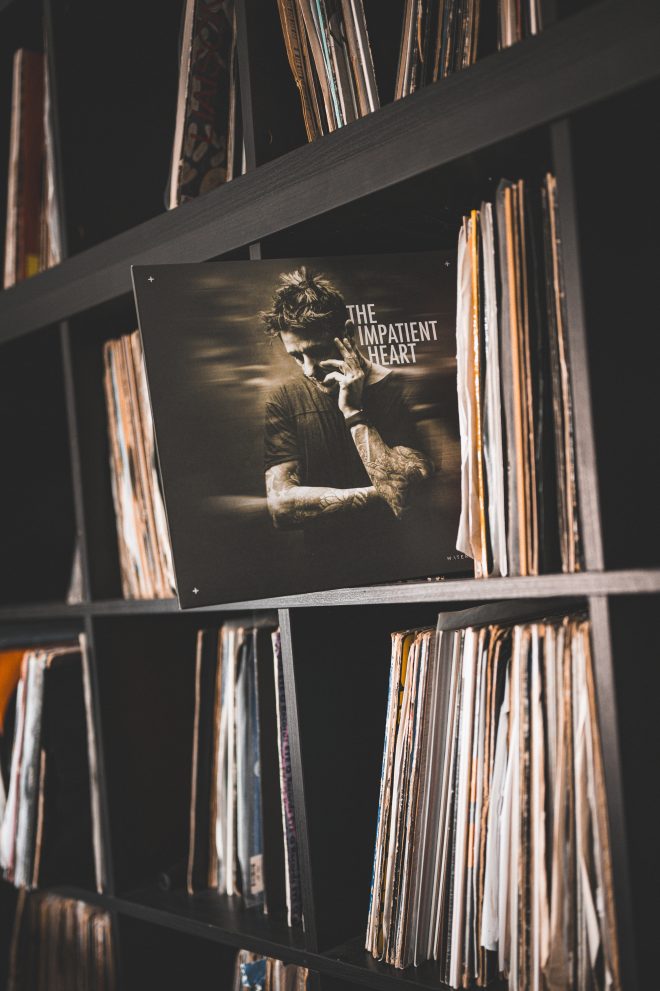
For Bailey, understanding the foundations of techno is not about resisting change. It is about recognising that a culture’s evolution becomes more meaningful when its history remains part of the conversation.
That perspective also shapes his understanding of longevity. While the industry continually searches for new trends and emerging talent, Bailey has little interest in treating relevance as a creative objective.
“I don’t go into the studio thinking, ‘How do I stay relevant?’ That would make me miserable! I want to make a record I believe in and feel there was a reason to make it. Having a history is something I appreciate, but it doesn’t do today’s work for me.”
“What hasn’t changed is how excited I get when I hear something I want to share. I still find records and think, ‘I need to play this.’ Losing that curiosity would worry me much more than getting older.”
THE HUMAN SIDE OF AN IMPATIENT HEART
Behind the album’s title lies a more personal reflection on ambition, time, and the difficulty of slowing down.
For someone who has spent decades travelling, performing, producing, and managing record labels, the constant movement of a musical career can easily become an end in itself. Creating Impatient Heart forced Bailey to reconsider the relationship between productivity and creative satisfaction.
“I’d love to say I’ve become more patient with age, but honestly, not enough! When I have an idea, I want to hear it. When a record is finished, I want people to hear it too. The difficult part is accepting that wanting something to happen faster doesn’t make it better. This album needed time, and I had to give it that.”
His ambitions have not disappeared, but his understanding of what deserves his attention has evolved.
“The ambition is still there, but I think more carefully now about where my energy goes. Travelling, playing and running labels can keep you constantly occupied. You say yes, keep moving, and there’s always another thing waiting. I also want time to enjoy what I’m making, to listen because I want to, without immediately thinking about the next job. Otherwise, what am I working for?”

Releasing the album through Materia gives Bailey the freedom to present this chapter entirely on his own terms. It also reinforces his commitment to creating opportunities for producers whose artistic identities may still be developing.
“With younger producers, I try to remember what it means to send someone your music. You’ve spent hours working on something and now you’re asking another person to believe in it. That deserves a proper listen. We can’t release everything, but there should be room for artists who have their own ideas, even if they’re still developing them.”
As Impatient Heart prepares to reach listeners, Bailey hopes the album will reveal musical dimensions that audiences might not immediately associate with his DJ sets. Although he remains firmly connected to techno, he is already considering the possibility of exploring ambient and electronica more extensively in the future.
For now, however, his relationship with the dancefloor remains unchanged.
“This album belongs mainly to the dancefloor because that’s where my heart is. It’s a place where people can enjoy life and feel together through music. That still means a lot to me. A future album might go further into ambient and electronica; I have that desire too. But this is the record I wanted to make now.”
After thirty years, perhaps the most remarkable thing about Marco Bailey is not how much he has accomplished, but how little his fundamental motivation has changed.
“What excites me is still finding a track I can’t wait to play, or making something I want to hear again the next morning. After all these years, I still want to get into a club and hear what happens.”
Marco Bailey’s Impatient Heart arrives October 16 via Materia.
