


Liam Palmer and Elliot Schooling: Appetite as instinct
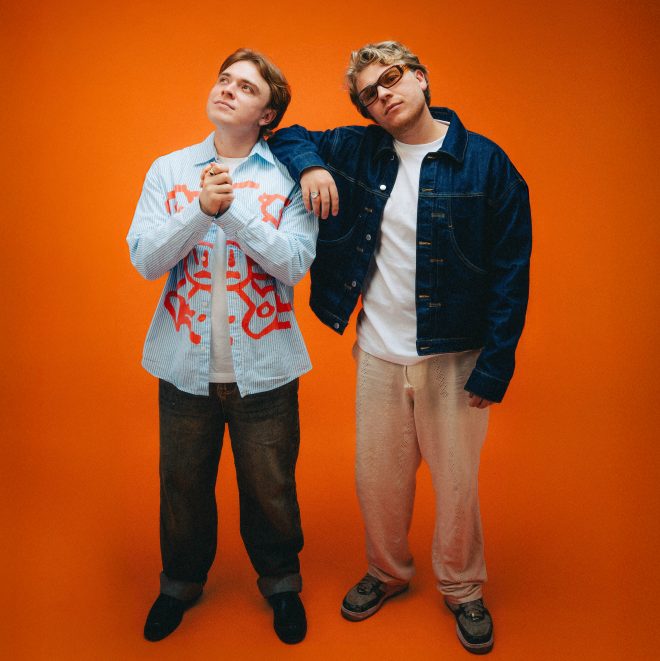
Something sits underneath the project that doesn’t need to be explained out loud. It’s not branding, and it’s not strategy. It’s familiarity, built over years, shaping the way decisions are made before they are even spoken. What Elliot & Liam have built doesn’t feel like something assembled piece by piece, but something that has grown in parallel with who they already were.
That sense of continuity runs through everything. From early parties to international shows, from studio sessions to festival fields, the project holds together because the foundation hasn’t shifted. Expansion hasn’t required reinvention. It has simply extended the same instinct into larger spaces, with more people inside it.
At the center of that is a relationship that predates everything else. Before the label, before the parties, before the recognition, there was time. Time spent next to each other long enough for the creative process to become second nature, for communication to reduce itself to something almost unspoken.
“For sure, we’ve known each other for a very long time, maybe 15 years now, I think… our close friendship has definitely informed the creative project of us as artists. I think it’s allowed us to be free, expressive, and super comfortable with each other, whether that’s in the studio or on stage together. I think we’re lucky being best mates, it’s definitely helped with trust and keeping tension low, haha.”
That same ease extends into Appetite, which has gradually moved beyond its original format without losing its internal logic. What began as a party now exists across different forms, but the intention hasn’t fractured. It continues to revolve around people, around gathering, around the idea that music is only one part of something wider.
“It’s definitely hard to pinpoint just one thing, as you said, Appetite has grown into so many things, but I think at the heart of it all is just creating a platform and community that allows people to come together. We have never been too serious and always work with like-minded friends who are good people at the core. We like to think of it as a brand that includes people from all walks of life and cultures through the love of good music and art. I think we have, and always will, keep our core values intact as we scale, as the people and choices we make are all handpicked. As much as we are growing on an international scale now, the people we collaborate with in other cities are all coming from a similar ethos to us, young people pushing forward-thinking music and concepts built with love.”
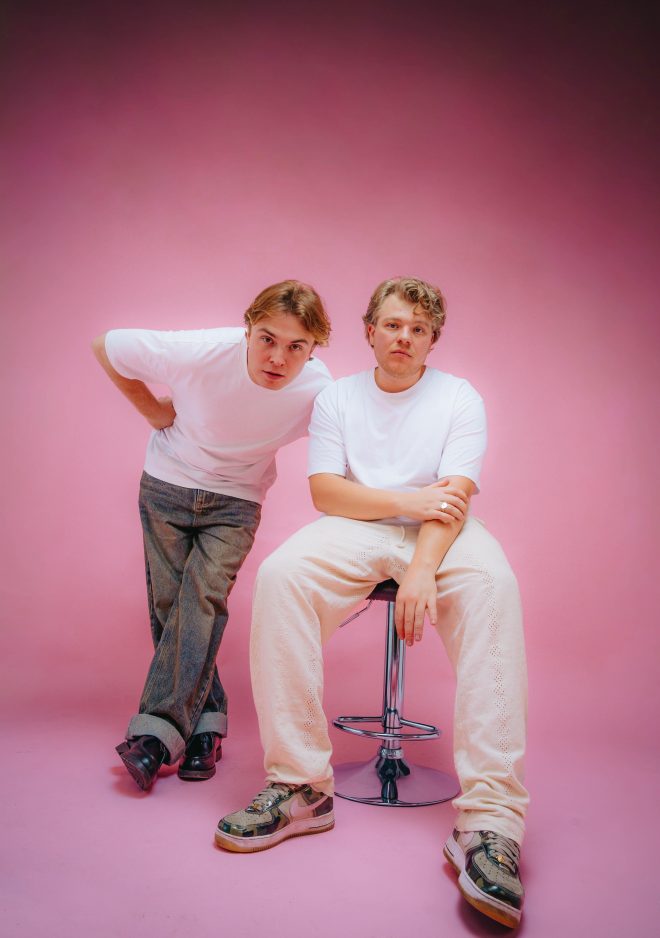
Momentum didn’t arrive all at once. It was built through specific moments, the kind that shift perspective more than they change direction. Certain sets begin to feel different, not because of where they happen, but because of how they land.
“There was one set at Three Mills Island in London, only a week or so after the world opened back up after COVID. We were supporting Michael Bibi and The Martinez Brothers for Solid Grooves that day, which definitely seemed to change things for us. It was the first time playing with such a caliber of artists and at an event of that scale. I remember we smashed the set, ending up with probably 2,000 people. We met so many people, and it really helped give us confidence in ourselves, which led to some standout shows with No Art London, Solid Grooves, and our Ibiza debut at DC10, matched with a run of really strong and consistent Appetite shows and some European debuts. It definitely helped put us more on an international map.”
That confidence carries directly into the way they play together. There is very little pre-planning, and no rigid structure is imposed before they step into the booth. Instead, everything leans on familiarity, on knowing where the other might go before it happens.
“We don’t really plan sets at all, but I think we both have a strong knowledge of our music and collection, so we know where to steer the set in the right direction, whatever one of us plays. I think playing together for so long means we have chemistry where we can communicate with just a nod of a head or a thumbs up for certain things, so that helps for sure.”
That same openness defines how Appetite Records takes shape. It doesn’t lock itself into one sound or direction, instead moving in line with what feels right at the time, reflecting the same flexibility that defines their sets.
“I think we are just trying to build a platform that expresses what we love, music-wise. There isn’t a set genre or style. Like ourselves as artists and DJs, we don’t stick to just one style, so we want the label to reflect that. I think we want to push new directions while at the same time building a community of artists who maybe are not doing the norm or following trends. I think the music on the label reflects us as a brand also: fun, playful, expressive, sexy, raw.”
The first release carried that approach from the beginning. It wasn’t planned as a statement or positioned as a defining moment. It came from something much simpler.
“We actually created that song as a laugh one night in the studio, with DC10’s dancefloor in mind, as we had just got news of our debut at the club that coming summer. I don’t think we even thought we were going to release it, and it was a bit of a joke at the time, but after playing it out a lot that summer, people really wanted it. I guess it represented us just having fun in the studio without thinking too deeply about what people would think, as I said, we didn’t think we were going to release it. Which, I guess, supports the ethos that just making music for yourselves always delivers the best results. I think ‘Hey Johnny’ isn’t the track that represents us best as artists, but it is still a very unique track that people love and that will stand the test of time.”
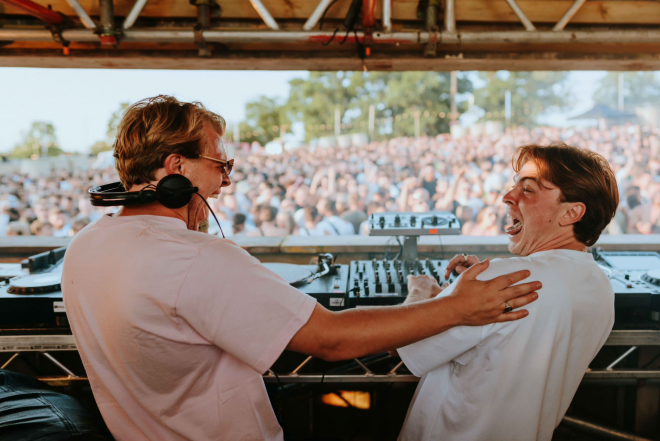
That balance between instinct and function continues in the studio. Ideas tend to come quickly, shaped in the moment before being tested in the only place that really matters.
“For sure, I think being DJs we are always navigating a space that includes the dancefloor at the heart of what we do, but at the same time we love to also create real music that has a songwriting approach that can be enjoyed not only on the dancefloor. So I guess we’re operating in a space between the two, trying to blend these styles together. Tracks always start with quick, fun sessions, and we usually get most of the ideas down; then, after revisiting, we may change things. There is no better test than playing a track out to see what’s missing or what does or doesn’t work. Playing out every week, we are in a unique and lucky position to be able to test our music and get a live reaction, which definitely helps and lets us develop as producers and DJs.”
Some places sit differently within that process. Ibiza, in particular, carries a weight that goes beyond performance. It exists as memory, as routine, as something that has always been there.
“For sure, as you said, Ibiza is a second home. I think it’s so special, other than the obvious reasons of it being such a beautiful island and having amazing parties. For me, it’s the people… we have such a strong family of friends on the island, so whenever we’re there, I feel at home. I mean, we have all been going every year since we turned 18 (or younger), and it’s such a destination for people from where we grew up in Essex to visit, so it’s kind of built into our identity, growing up with all our family members going before our time. I wouldn’t say anything has changed other than just being more connected and more in love with the island, as now it’s a place of work for us and even more a part of the story.”
As the project moves outward, that sense of identity is carried into new environments. The US, in particular, offers a different kind of energy, shaped by discovery rather than familiarity.
“For sure, I get what you’re saying about exporting a culture. I mean, Europe, and the UK especially, has such a strong culture in dance music that has been developed over the years, and now the US is starting to connect with that in such a big way. I have really enjoyed the crowds over in the States, as it’s all so new, everyone is really excited and happy to be discovering this sound. I think they all feel really grateful to be able to listen to this music, which I have definitely seen when coming off stage and speaking to people in the crowd. Of course, you can’t beat it when you get a good crowd in the UK, but I’d say as a standard, the US crowds are definitely giving the UK a run for their money. With the drinking age being 21+, you definitely see an average age being older in the States. To preserve the Appetite vibe when we enter the States, we’re being very mindful of line-ups, venues, etc., but the main thing is the people we collaborate with. Raw Cuts and House Calls are both young collectives who are pushing forward proper house music with a good ethos, so it really matches what we stand for.”
Across all of it, community remains constant. It informs decisions quietly, shaping how events are built and how people move through them.
“I think it’s an unspoken thing that informs every decision, whether that be ticket pricing, capacity, or line-ups. We always have the community and the audience in mind. I guess a successful Appetite event is when we have made everyone go home with a smile on their face. Maybe they’ve met a new friend, a new love interest, or found their favorite new DJ or track ID. For us, it’s all about giving people good experiences, as that’s what this music is all about, somewhere to escape the pressure of life for a certain amount of time at a party.”

That idea becomes more tangible in Appetite On The Farm, where the scale of control changes what can be built and how it can feel.
“Festivals have always been the ultimate party and life experience for the team and me, with life-changing weekends at Glastonbury and Houghton in our early twenties definitely helping shape our inspirations for the festivals. I mean, we build the thing from the ground up in the middle of a field, so every little thing is bespoke, and we can build it to our taste or direction. I think we are always developing the site and the concept, and we’re really happy with where it’s at. I mean, if we had an unlimited budget, I think we could express ourselves even better (festivals are fucking expensive to put on), but we’re giving it a good go. As I said, we’re only five years in, and there are so many plans that we haven’t touched on yet. When we hit 10 years, I think we will be able to say we have completed a lot of our dreams and aspirations with the farm.”
As things continue to expand, the focus remains on holding onto what was there from the start. Growth is part of the trajectory, but not at the expense of the core.
“I think at the root of it all, we are always trying to stay grounded creatively and never forgetting where we came from, creating the music we love and not catering to what we think people will love. It definitely helps having a good team and people and family around you. But of course, we need to look forward at the same time, as the scene has exploded on a global scale now, and we want people to be able to connect and bring Appetite to everyone around the globe, bringing our special energy to these people.”
What emerges is not a project chasing a definition, but one that continues to extend itself. The shape shifts, the scale changes, but the instinct remains the same.
