


Inafekt: between instinct and intention
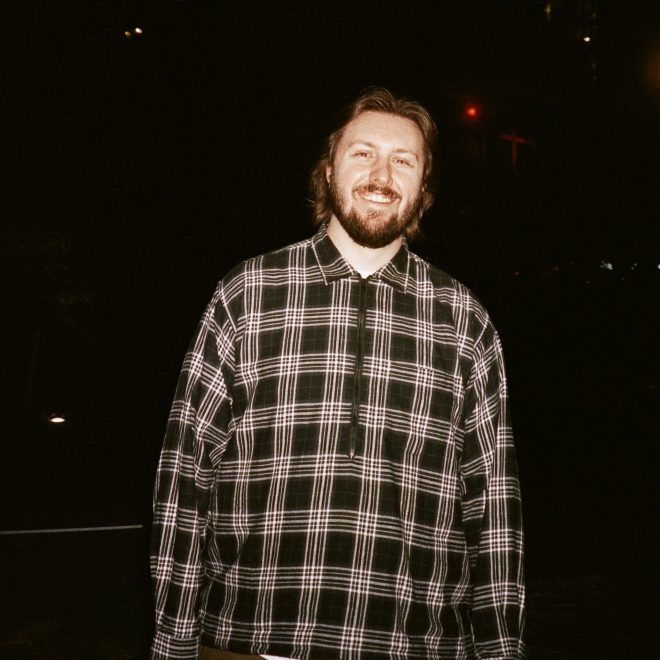
There is a certain point in an artist’s trajectory where movement slows just enough to become visible. Not in the sense of recognition or scale, but in clarity. The noise that surrounds early growth begins to fade, and what remains is something more deliberate. For Charlie Gray, operating under Inafekt, that moment feels recent. The project has not stopped evolving, but it has begun to settle into a shape that feels less reactive and more self-defined.
That sense of balance sits at the core of where Inafekt stands today. The external markers of growth, touring, releases, wider recognition, exist alongside something quieter. A focus that has shifted inward, toward making decisions that feel aligned rather than expected. The result is a project that feels more grounded, even as it continues to expand outward.
“Right now, Inafekt feels like a project that’s finally settling into the sound I genuinely believe in. For a while things were evolving in different directions, but lately there’s been a lot more clarity creatively. The focus now is simply on making music that feels honest to me rather than trying to fit into anything around me. If there’s one thing that has always defined the project, it’s versatility. I’ve always been drawn to a lot of different sounds, and for me it’s about building bridges between them rather than staying in one lane. That carries through both in my productions and my DJ sets, and it’s something that naturally shapes how Inafekt continues to evolve.”
LEARNING THE ROOM
Liverpool sits quietly inside that identity. Not as a reference point that needs to be stated, but as something embedded in instinct. The early years were not defined by scale or visibility, but by repetition. Weekly sets, inconsistent crowds, nights that demanded adaptation rather than performance. It is in those conditions that a certain kind of awareness develops.
The dancefloor, in that context, becomes less predictable. Some nights offer momentum, others require it to be built from almost nothing. The absence of consistency forces a different kind of discipline. You learn to read small shifts, to recognize when something is working before it fully reveals itself. That process creates a sensitivity that cannot be replicated in more controlled environments.
What emerges from that period is not just technical ability, but patience. An understanding that energy is not always immediate, and that the work often happens before the payoff. Those early rooms, imperfect, unpredictable, shaped a way of thinking that continues to define how Inafekt approaches a set.
“I started playing at a friend’s weekly club night at E.B.G.B.S in Liverpool around 2018. It was the basement room, basically like a dungeon, sticky floors, low ceiling, the absolute pits in the best possible way. I was 18 and had a lot of good nights in that place. Some weeks it would be packed, other weeks there might only be ten people in the room. Nights like that teach you very quickly how to read a dancefloor because you have to adapt to whatever situation you’re in. I remember there was a period where it was quiet for weeks and then suddenly one night the place was absolutely rammed. Being able to play to a full room after putting the time in really unlocked something in me. The payoff was unbelievable and it taught me early on that patience is a huge part of DJing. Those nights shaped how I think about dancefloors now. It’s not just about playing good records, it’s about understanding the room and learning how to build energy regardless of how many people are there.”
The transition from those rooms into wider recognition often arrives in fragments. A track played by the right person at the right time. A moment that feels almost accidental, but carries weight long after it passes. These moments do not announce themselves as turning points. They reveal their significance gradually, through what follows.
For Inafekt, that shift was tied to a first release that moved beyond the local. It introduced a different level of visibility, but more importantly, a different kind of validation. The sense that what had been built in smaller rooms could translate into larger systems.
“That moment definitely felt like a turning point for me. I was actually standing at the back of Invisible Wind Factory in Liverpool when Alan Fitzpatrick started mixing my track in. I rushed forward because I couldn’t quite believe what was happening. Suddenly you hear your own drums coming through the system and realise someone like Alan is playing your record. At the time it felt pretty magical and it gave me a huge boost in confidence. It made me realise that what I was doing could actually go somewhere. After that, I had loads of people reaching out and it felt like the perception shifted quite quickly from people seeing it as a small project to something they started taking much more seriously.”
BUILDING A LANGUAGE FROM THE PAST
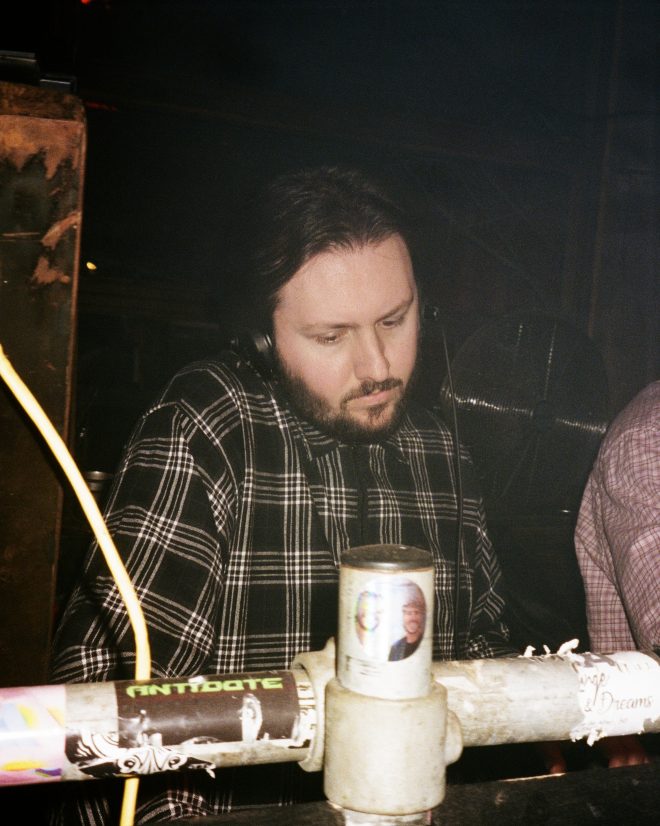
What defines Inafekt’s sound is not a fixed genre, but a foundation. The reference point sits in a specific era, one that continues to shape both texture and structure. The influence is not applied directly. It filters through selection, through the way sounds are chosen and arranged rather than replicated.
Liverpool’s relationship to rave culture plays a role in that. The legacy of ’90s dance music exists as something inherited rather than discovered. Early exposure, often indirect, becomes more significant over time. What once felt like background begins to reveal itself as foundation.
This connection extends into the act of digging. Not as a trend, but as a method. The process of searching, collecting, and understanding older records becomes central to how the sound develops. It creates a continuity between past and present that feels intentional without being forced.
“For me the key has always been having a solid foundation, and my sound is very much rooted in the ’90s. Growing up in Liverpool there’s a huge rave culture around dance music from that era. One of my earliest memories of hearing that kind of music was actually from my mum, who was an old school raver herself. She used to play the old 051 mixes from the likes of Lee Butler and Dave Graham. At the time I didn’t realise how important those sounds would become to me. Years later I found myself digging back through those mixes and even asking Lee and Dave for their track IDs. That digging mentality naturally carried into collecting records. I only started buying vinyl about two years ago and already have over 300 records. It’s incredibly addictive. When I’m producing, I always start tracks from scratch, but the samples and synths I reach for usually come from that same era. The way I select and process them has become quite personal over time, and that’s what keeps everything feeling coherent whether I’m making something more techno leaning or something closer to house. For me it’s about carrying those sounds forward and finding new ways to use them.”
That foundation allows for movement without losing identity. The ability to shift between genres becomes less about versatility and more about continuity. Each transition feels connected because it is built on the same underlying language.
At the same time, that flexibility requires awareness. Context matters. The room, the lineup, the expectation all influence how far a set can move without breaking. The balance between freedom and intention becomes part of the process.
“I’d say it’s a bit of both. I’m not overly conscious of genre in a strict sense, but I am very aware of the context I’m playing in, the venue, the lineup, and the crowd. If someone else on the bill is a big UKG artist, for example, I might slip one or two UKG records into the set because I know they’ll connect with the room. One thing that reinforced that mindset early on was seeing Palms Trax play at a festival in Leeds in 2021. The way he moves between genres so naturally really stuck with me, and since then he’s probably been the DJ who’s influenced my approach to sets the most. One thing I’ve learned from playing in lots of different places is that every crowd responds differently. I usually do a bit of research before a gig and build a playlist around what I think might work there. Sometimes I’m still tweaking things an hour before I go on, making sure the selections feel right. Versatility is definitely an advantage, but only if it’s intentional. I spend most of my time digging for great records, and when I play them it’s because I genuinely believe they deserve to be heard.”
THE VALUE OF CONNECTION
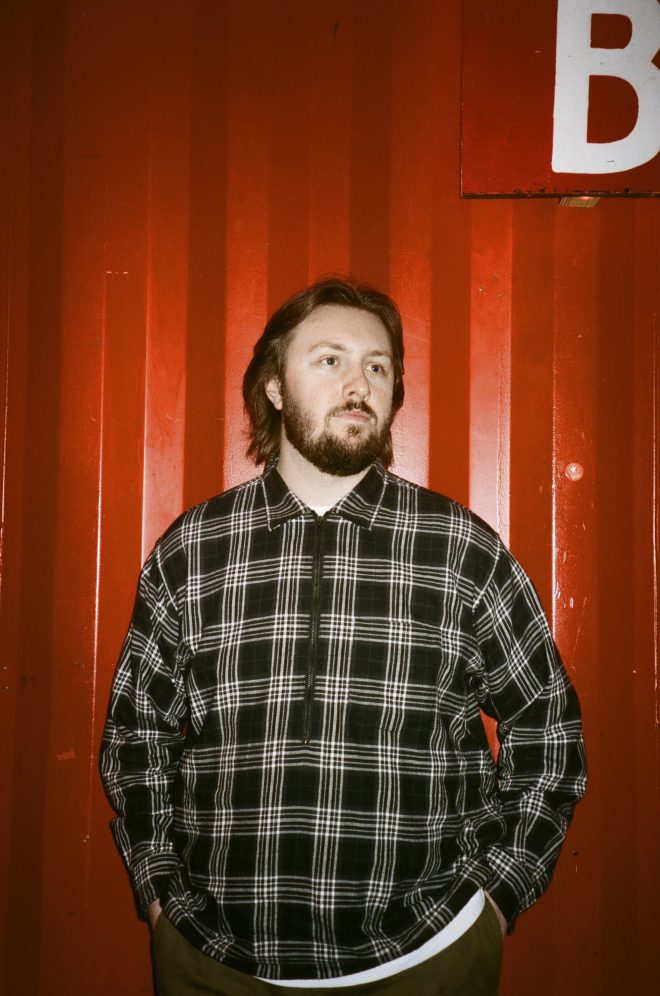
At its core, DJing remains a conversation. Not in the abstract sense, but in something immediate and physical. The exchange between booth and dancefloor defines the success of a set more than any technical precision. It is measured in response, in the way the room reacts without needing to be directed.
That response can take different forms. It is not always loud or visible. Sometimes it exists in subtle shifts, in the absence of distraction, in the way people move when they are fully engaged. These moments are not constructed. They emerge when the balance between selection and timing aligns.
For Inafekt, those moments remain the most significant. They define the reason for continuing, the reference point that everything else is measured against.
“What I’m really looking for is reciprocation, a genuine response to the music. That can show itself in lots of ways, no phones out, people dancing, someone shouting towards the booth, someone reaching over the decks for a fist bump. Any kind of interaction that shows the crowd is feeling what you’re playing is the best feeling as a DJ. One of the first times I really felt that connection properly was in 2023 at Badaboum in Paris. I’d only played in Europe a couple of times at that point and I was taking over from Skin On Skin b2b Swim, so I was already pretty intimidated. I’d flown in on barely any sleep and the hotel was right across the road from the club, so I set an alarm for thirty minutes before my set just to get some rest. But as soon as I started playing something just erupted in the room. It didn’t feel like everyone was focused on the DJ booth, it felt like the crowd were just completely going for it amongst themselves. That’s how DJing should feel. When the lights came up at the end loads of people came over to say they loved the set, and that was the first time I really thought, wow, that is absolutely proper. I’ve been chasing that feeling ever since.”
CONTROL, INDEPENDENCE, AND WHAT FOLLOWS
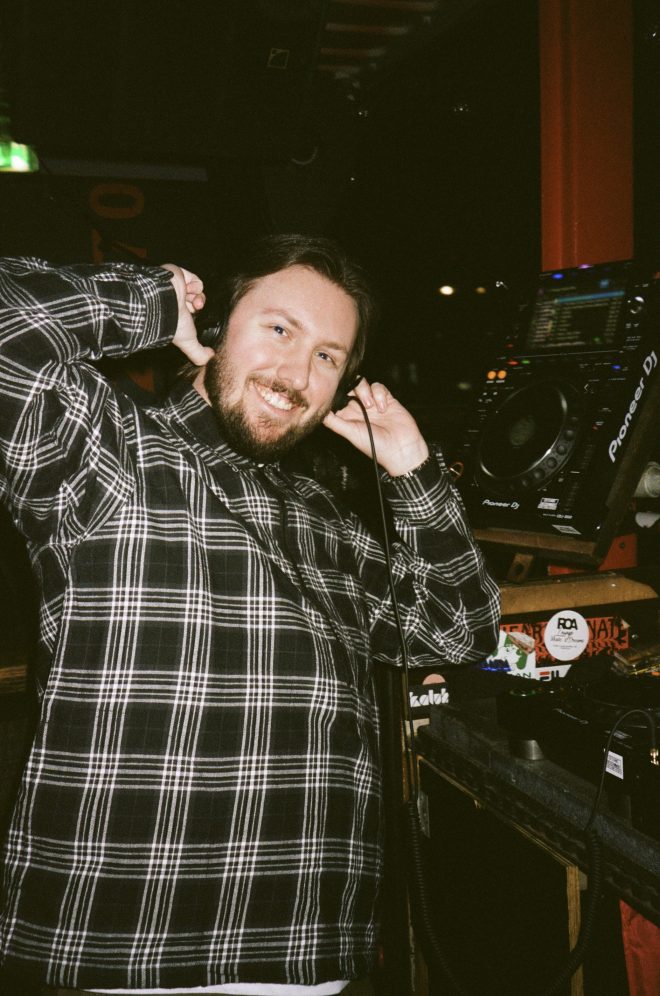
As the project expands, new structures begin to form around it. Touring introduces new environments, each with its own expectations. The challenge becomes maintaining the same instinct while adapting to different contexts. The risk lies in becoming too comfortable, in allowing repetition to replace exploration.
Inafekt’s response leans toward discomfort. Placing himself in unfamiliar situations becomes a way of maintaining sharpness. It forces decisions that cannot rely on habit, reinforcing the importance of instinct over routine.
“Playing in different countries has influenced me massively and I find it fascinating whenever I get the chance to play somewhere new. Different parts of the world respond to music in very different ways. I love the reception I get in the Netherlands for example. I played Bret recently and because of the lineup I was on I decided to take a bit of a risk with the set, slowing the BPM down and taking the energy a bit deeper after the artists before me had been playing much harder. The crowd really went with me on that journey and when something like that works it reinforces the trust you have in your instincts as a DJ. I actually like putting myself in situations where I’m slightly outside my comfort zone. Feeling too comfortable can be dangerous.”
That same need for control has led toward building something more independent. The decision to launch a label is less about expansion and more about ownership. It creates space to release music without compromise, to define output without external pressure.
“My label Fate will be launching around the same time as this article. In all honesty I didn’t expect to start a label this early in my career, but a few things pushed me in that direction. The way some parts of the industry operate now has changed quite a lot, sometimes getting signed can come down to things like how many views you have, and I’ve also spent upwards of eighteen months waiting for music to be released. That made me realise I wanted more control over my own output. The name actually came about in quite a funny way. A couple of years ago I bought a cap that says ‘Do you believe in fate?’ and people always ask me that question when I wear it. My answer has always been yes. I think if you’re meant to do something you’ll eventually find your way there, but the path to get there is your free will. The decisions you make along the way shape how everything actually unfolds. When I was thinking about starting the label I happened to be wearing that cap, and my girlfriend Marney just said, ‘Why don’t you just call it Fate?’ It stuck instantly. The label is really about returning to what I originally imagined Inafekt being. To begin with it’ll mainly be a platform for me to release music that’s been sat gathering dust for a while, along with some collaborations with friends.”

The balance between reach and credibility remains unresolved, but intentionally so. The experience of moving through larger platforms has provided visibility, but not necessarily fulfillment. The shift now leans back toward spaces that feel more immediate, more connected to the roots of the culture.
There is a recognition that scale does not always translate to impact. That distance can dilute the very thing that made the project resonate in the first place. The focus returns to proximity, to rooms where the exchange between artist and crowd remains intact.
“When it comes to major labels it can sometimes feel like a bit of a game. I played that game for a while and it definitely brought some recognition, but it didn’t really satisfy me creatively. At times I felt like I was making things that weren’t completely me, and once you’re in that world there’s a lot of baggage that comes with it. Even now people still request some of those bigger tracks when I’m playing, but I steer away from them. At the moment I’m much more focused on getting my artistry across and playing music that reflects where I am right now. For me, success leans much more towards credibility. That’s what leads to the grassroots gigs that this whole culture was built on. I’d take a dark, sweaty room full of energy any day over a big stage where you feel miles away from the crowd.”
