


Lazare Is Chasing Emotion, Not A Formula
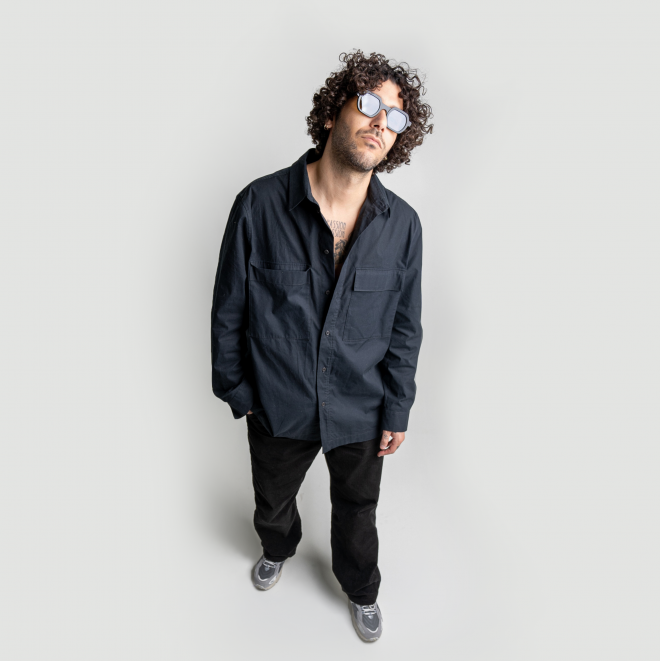
After the breakthrough of “Muhuuuu,” “Bloom” and “Children of the Sun,” the Cannes-born producer found his music moving across international dancefloors at speed. Instead of repeating the records that opened those doors, Lazare is building a sound between house, indie dance and melodic electronic music, shaped by Mediterranean warmth, nostalgia and the need to keep evolving.
Success has a way of making an artist’s development look more calculated than it really was.
Once a record breaks, early experiments become part of a strategy. Changes in direction are reframed as reinventions. The uncertainty of learning, following instinct and occasionally getting things wrong is cleaned up into a neat story leading towards the breakthrough. Lazare does not see his music that way. There was no moment when he decided to abandon his earlier influences.
“This evolution happened very naturally,” he says. “I never woke up one day and decided to leave my Afro influences behind to create something different.”
What changed was the amount of space he gave to vocals, melodies and atmosphere.
“Over the years, my taste evolved, just like the emotions I wanted to express through my music,” he says. “I started giving more space to melodies, vocals and atmospheres, while keeping the rhythmic energy that has always been part of my early productions.”
“Muhuuuu” was the record that brought those instincts together.
It worked on the dancefloor, but its impact was not based entirely on pressure. The track carried something more vulnerable beneath its energy, proving to Lazare that emotional depth did not have to weaken a club record.
“I think ‘Muhuuuu’ marked a real turning point,” he says. “That was the moment I realised I could combine dancefloor energy with deeper emotion in the same track.”
“Bloom” and “Children of the Sun” confirmed the direction. Together, the releases placed Lazare somewhere between house, indie dance, melodic sounds and the traces of the Afro-influenced production that defined his earlier work.
It is a recognisable identity, but he refuses to treat it as finished.
“I don’t believe my sound is fixed,” he says. “It will continue to evolve as I evolve.”
That attitude becomes harder to protect once a record starts moving.
AFTER THE BREAKTHROUGH
Before “Muhuuuu” and “Children of the Sun” began appearing in major sets, Lazare was making music without any guarantee that it would travel beyond his own circle. The goal was simply to create something that people might play and feel.
“I was simply making music with the hope that people would play it and connect with it emotionally,” he says. “I had no guarantee that it would ever reach such a wide audience.”
Then the tracks left the studio. They were supported by established artists, played in clubs and festivals, and carried into places Lazare had never expected to reach so quickly. Hearing those records return through international crowds gave him a different level of trust in his instincts.
“Seeing those tracks travel around the world, being supported by major artists and hearing them on dancefloors everywhere gave me a huge amount of confidence,” he says. “More than anything, it proved to me that it’s possible to connect with people by staying true to your instincts.”
Confidence was followed by pressure. After a successful release, the industry immediately wants to know how the artist intends to repeat it. Labels, audiences and teams start looking for the element that can be reproduced: a vocal structure, melodic phrase, drop or atmosphere capable of generating the same response.
“After a track performs well, it’s easy to start wondering how to recreate the same result,” Lazare says. “There are more expectations, more attention and more responsibility.”
The risk is obvious. An artist finds a formula, repeats it until it stops working, then discovers that the breakthrough has become a limitation. Lazare had to stop numbers and external opinions from entering the studio with him.
“My goal isn’t to keep making the same record over and over again,” he says, “but to preserve the honesty and emotion that allowed those songs to exist in the first place.”
The challenge is not recreating the success. It is protecting the freedom that made it possible.
MEDITERRANEAN MEMORY
Lazare grew up in Cannes, on the Mediterranean coast of southern France. The city is usually framed through cinema, wealth and spectacle, but the influence he describes is more intimate. It comes from the light, the sea, the heat and the silence that arrives when the summer season ends.
“There’s the light, the sea, the summers, but also that feeling of nostalgia when the season ends and everything becomes quiet again,” he says. “That contrast between energy and calm often finds its way into my music.”
His records frequently carry that tension. There is movement, but also a sense that the moment is temporary. A track may feel warm and euphoric while carrying the melancholy of knowing that the night, the season or the relationship behind it cannot last forever.
Lazare is not trying to reproduce literal memories. He is chasing emotional fragments.
“I think I’m trying to recreate certain feelings,” he says. “A sunset, a moment of freedom, an evening shared with friends, those moments when you’re unusually aware of the passing of time.”
That emotional language remains present even when the music becomes heavier or darker.
“Even when my music becomes darker or more intense, it usually keeps a sense of warmth and hope,” he says. “That probably comes from my roots and from growing up in the south of France.”
The warmth gives his music accessibility without stripping away its club foundation.
BETWEEN THE UNDERGROUND AND THE CROWD
Electronic music has always had a complicated relationship with popularity.
Artists are expected to grow, but not to appear too interested in growth. Melody is celebrated until too many people recognise it. A record can be praised for connecting with a crowd, then dismissed once that crowd becomes too large.
Lazare does not see the underground and mainstream as opposing worlds.
“I’ve always loved the freedom and authenticity of the underground scene, but I’ve also been drawn to melodies that immediately connect with people,” he says.
That balance became part of his identity without being planned.
His records are designed for dancefloors and electronic music listeners, but they do not require an intimate knowledge of genre codes. A vocal or melody can offer an immediate way into the track while the production underneath remains detailed and controlled.
“I’m not trying to make commercial music,” Lazare says. “I’m trying to create something with a universal emotion.”
For him, accessibility does not need to mean simplification.
“A track can be subtle, elegant and interesting for electronic music lovers while still having a melody or vocal that resonates with someone who’s less familiar with the scene,” he says. “When those two worlds naturally come together, that’s where the magic happens.”
The key word is naturally.
Electronic music is full of records where a vocal has clearly been added to chase scale. Lazare’s strongest work avoids that feeling because melody is not placed on top of the production. It is part of the track’s emotional architecture.
A SIGNATURE WITHOUT REPETITION
House music remains Lazare’s foundation, but the project now exists at the intersection of several scenes.
“House music is still my foundation, but it’s enriched by indie dance, melodic elements and some colours inherited from my earlier Afro influences,” he says.
He has no interest in reducing that combination to a single genre.
“What connects all my records is the emotion, the energy and the atmosphere I try to create.”
His next music will push further into vocals, melodies and songwriting. That does not mean abandoning the dancefloor. The tracks still need to function physically, even as their emotional range expands.
“I want to make music that feels more mature, more personal and sometimes more unexpected,” Lazare says. “I want to keep developing my work around vocals, melodies and songwriting while maintaining strong dancefloor energy.”
His ambition is for listeners to recognise a Lazare record before seeing the name attached to it. That requires a signature, not a formula. A formula repeats the same surface details. A signature survives change because the perspective behind the music remains clear.
“My ambition is for people to recognise a Lazare track without even having to read the artist’s name.”
WHAT TOURING TAKES
The public image of touring is built around access and movement: new cities, large crowds, festival stages and the appearance of constant acceleration. The reality is more repetitive.
Airports, delays, limited sleep and long periods away from home can drain the same energy required to create music.
“Life on the road has taught me discipline, adaptability and the importance of protecting my energy,” Lazare says. “Behind the images of travel and performances, there are countless airports, short nights and long periods away from home. If you want a long career, you need to find a healthy balance between touring, the studio and your personal life.”
The road has also changed how he produces. Crowds in different countries respond to different parts of a record. One audience may react immediately to percussion, while another waits for the vocal, melody or emotional release.
“Every culture and every crowd reacts differently,” he says. “Some audiences respond more to rhythm, others to melodies or vocals.”
Those reactions follow him back into the studio. Touring has also reinforced the universal nature of dance music. People who share no language or background can still understand the same change in tension, the same melody and the same release.
“People who don’t speak the same language can still share exactly the same emotion on a dancefloor.”
BUILDING PAST THE MOMENT
Rapid growth can make every opportunity feel urgent. Another collaboration, another show, another release or another campaign can appear to be proof that a career is moving in the right direction. Saying no can feel like wasting momentum. Lazare has learned that longevity depends on restraint.
“A career isn’t built on one successful track or one period of high visibility,” he says. “It’s built through consistency, a clear artistic identity, the right team and the ability to make the right decisions at the right time.”
That includes rejecting opportunities that do not fit the direction of the project. He now tries to assess decisions against a five or ten-year horizon. Does the opportunity strengthen the identity? Does it create real development, or simply temporary exposure?
“I’d rather build something solid and meaningful than chase every trend,” he says. “The biggest challenge is continuing to grow without losing the freedom and passion that made me fall in love with making music in the first place.”
THE NEXT CHAPTER
Lazare sees the recent success as an opening, not a conclusion.
“What excites me the most is the feeling that this is only the beginning,” he says. “My recent success has opened new doors, but more importantly, it has given me the freedom and motivation to push my artistic vision even further.”
New releases and collaborations are already taking shape, expanding the project through the same combination of emotion, melody and energy.
His ambition reaches beyond one sequence of successful records. He wants to build a catalogue that can survive changing trends, perform on the world’s biggest stages and develop a complete artistic universe around the music. France remains part of that vision, particularly Cannes.
“One day performing on a major stage in Cannes would obviously have a very special meaning for me,” he says. “I don’t want Lazare to be remembered for one song or one moment,” he says, “but for a strong artistic identity that keeps evolving while remaining instantly recognisable.”
The records have already proved they can travel. The next task is making sure they continue to move without circling back to the same place.
