


Andrew Azara: Let´S Stop Chasing The Industry
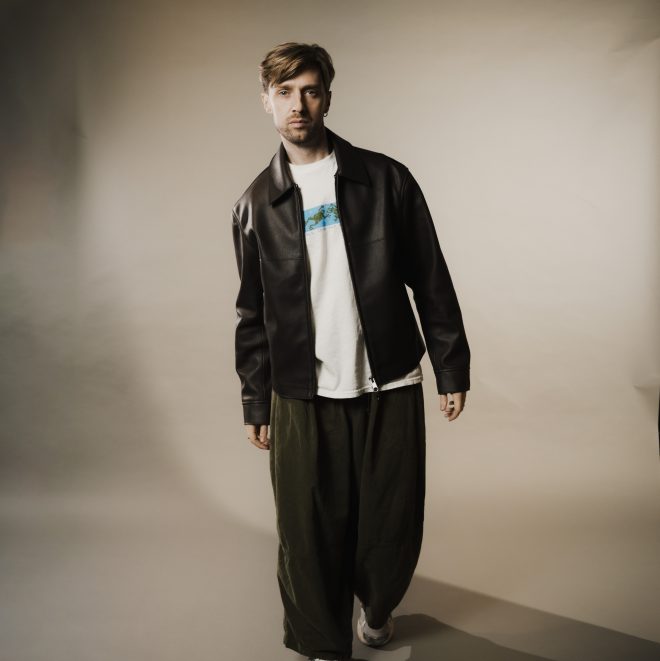
After more than 150 releases, Andrew Azara isn’t talking about overnight success. He’s talking about patience. While electronic music increasingly rewards instant visibility, the Irish artist has quietly built his career through consistency, relationships and a belief that longevity will always outlast hype. Now, with major collaborations, a first U.S. tour and growing international recognition, that philosophy is beginning to pay dividends.
There comes a point in every artist’s career when momentum starts to feel different.
Not because the music suddenly improves, but because years of invisible work begin surfacing all at once. New opportunities appear, collaborations become conversations instead of ambitions, and the industry finally catches up with what the artist already believed.
For Andrew Azara, 2026 feels like that moment.
The surprising part is that very little has actually changed.
“I can’t believe it’s already 150 tracks,” he says. “I really feel like all this hard work over the years was just planting the seeds for what’s to come. I’ve always believed in the long game instead of chasing trends, and I feel like these moments are now representing exactly that.”
The philosophy behind the project has remained remarkably consistent since its beginnings in 2018.
“When I started Andrew Azara, it was always about quality music, quality DJ sets, branding, building strong relationships, longevity and creating an authentic fanbase. None of that has changed now in 2026.”
What has changed is the response.
Over the past two years, his productions have increasingly found their way into the sets of established artists across the electronic spectrum. Support turned into recognition. Recognition turned into conversations. Conversations became collaborations.
“Especially last year, I could see almost every release being played by some of the biggest names. It’s been an honour to receive that support, but it’s an even bigger honour to have some of those same artists now reaching out because they want to collaborate. For me, that’s another sign that believing in the long game really does pay off.”
THE DANGEROUS SIDE OF COMPARISON
Like many artists, Andrew Azara’s biggest battle wasn’t creative.
It was psychological.
The years immediately following COVID became unexpectedly difficult, not because the opportunities disappeared, but because social media made it seem as though everyone else’s career was moving faster.
“One of the biggest struggles for me came after COVID,” he admits. “I was constantly comparing myself to other DJs who were travelling the world and playing all these amazing shows, while I wasn’t.”
Instagram became both a necessity and a trap.
“It’s something every artist needs nowadays, but it also has a big shadow side. When you keep focusing on all the things you don’t have, or really want, it becomes frustrating. You see colleagues getting more shows and making it look effortless, but you never see what’s happening behind the scenes.”
Eventually, the comparison became exhausting.
“For a while it created a really negative mindset, especially when you’re stuck in that loop.”
The turning point came when he stopped measuring himself against other artists and redirected that energy inward.
“I learned to turn that comparison into motivation instead. Once I made that shift, my mental health got a lot better, I started writing better music and things slowly began to fall into place. Focusing on everything I can do, instead of looking at what everybody else is doing, changed everything.”
Looking back, he now sees that period as one of the defining moments of his career.
“It’s actually something I haven’t really spoken about publicly before.”
COLLABORATION AS CONVERSATION
If 2026 represents a new chapter for Andrew Azara, collaboration sits at the centre of it.
Rather than treating collaborations as strategic career moves, he sees them as opportunities for creative dialogue.
“For me, collaboration is so important. I really feel the industry has moved much more towards it over the past couple of years, which is great to see.”
What matters isn’t matching genres.
It’s bringing together different ways of thinking.
“It’s mainly about trying to bring two different artistic styles together to create something authentic. Less about genres, and more about seeing what happens when two producers with different ideas come together to create something fresh.”
This year’s schedule reflects that philosophy.
Collaborations with Héctor Couto and Traumer sit alongside a remix for PIV and an upcoming EP for Joey Daniel’s label, each exploring a different side of his musical identity.
“Héctor has his own style, Traumer has his own style, and I don’t think I really sit completely inside either world. I’ve always liked finding that middle ground between different sounds rather than fitting into one box.”
For him, the common thread isn’t stylistic consistency.
It’s creative chemistry.
“It’s about finding what both artists bring to the table and creating something that still sounds natural for both of us.”
KNOWING WHEN TO SAY NO
As more producers begin reaching out, Andrew Azara has become increasingly selective.
Opportunity alone is no longer enough.
“It’s definitely an honour to have more and more artists reaching out to collaborate, but I also don’t feel the need to say yes to everything. It’s important that it feels like the right fit creatively.”
Maintaining a recognisable artistic identity still depends on solo work.
“I always try to focus a lot on my solo material because that’s what really represents your artistic voice. Collaborations, remixes and edits are something I love doing, but I like them to make up less than half of what I release.”
That balance allows outside influences to enter without overwhelming the project itself.
“That way I can bring in new influences and ideas while still making sure people know what an Andrew Azara record sounds like.”
With several collaborations already lined up, he’s equally excited about returning to solo releases.
“I’m definitely scheduling a few solo EPs as well. With all the music I have lying around, I’m sure there are some great releases coming later this year and early next year.”
AMERICA IS NEXT
Among this year’s milestones, one stands apart.
Andrew Azara is preparing for his first proper U.S. tour.
“I’m honestly so excited. I’ve been dreaming about my first proper USA artist tour for a long time, so seeing it finally happen is a pretty special feeling.”
Unlike European weekends built around quick flights and short appearances, this tour offers something much deeper.
“Usually in Europe you’re flying somewhere for a weekend, but this will be almost three weeks travelling across the States, seeing new cities and having completely new experiences.”
Cities like New York, Miami and Chicago have lived in his imagination for years.
Now they become part of the journey.
Musically, however, he isn’t planning to reinvent himself.
“I don’t think I’ll approach the sets too differently. Good music connects anywhere in the world.”
That said, American audiences will hear plenty of music nobody else has yet.
“I’ll definitely be testing a lot of unreleased music, so it feels like the perfect opportunity. Maybe I’ll learn more about American audiences during this tour and understand what I need to adjust for future tours. Let’s see how it evolves.”
THE ITALIAN CONNECTION
While America represents new territory, Italy has quietly become one of Andrew Azara’s strongest markets.
The reason, he believes, has very little to do with streaming numbers.
It’s about energy.
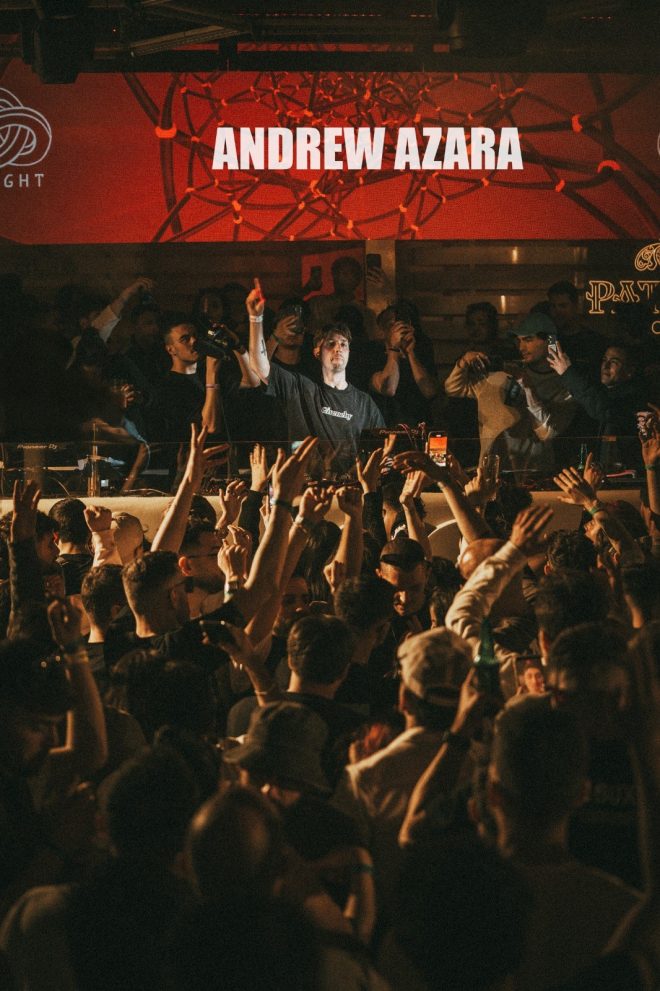
“Italian crowds have this amazing energy. They really come to dance, and as a DJ there’s honestly nothing better than looking up and seeing everyone completely lost in the music.”
One particular performance remains unforgettable.
“There’s a set of me playing in Italy on YouTube. I got so surprised by that energy that I couldn’t stop smiling. It was one of the best experiences I’ve ever had there.”
Of course, it’s not just the dancefloors he remembers.
“The hospitality is always amazing. Every time I go there they spoil me with incredible pasta, wine, espresso and a lot of Italian love.”
Then he laughs.
“One time they even brought me salami while I was playing. That was hilarious.”
Experiences like that inevitably influence his performances.
“It has definitely influenced my DJ sets because I naturally enjoy playing with a bit more energy, and Italian crowds really respond to that. Ireland has a very similar feeling.”
REDEFINING SUCCESS
For years, Andrew Azara believed career progression could be measured by one thing.
Support from bigger DJs.
Today, he sees that period very differently.
“For the first few years I was really focused on getting support from bigger DJs. I believed that would bring success.”
The support certainly helped his music travel.
But it didn’t necessarily build a career.
“It does help when people play your records or post support videos, but it doesn’t automatically push your career forward. The result was that most people saw me as a producer rather than a DJ or artist.”
That realisation changed everything.
Together with his management, he shifted the focus away from industry validation and towards building a genuine audience.
“Over the last couple of years we’ve focused much more on building a real fanbase and connecting directly with the people who listen to my music.”
The results have extended far beyond streaming numbers.
“More people now see me as a DJ and artist rather than just a producer, and that’s opened up completely new markets and opportunities.”
Ultimately, success has become much simpler to define.
“At the end of the day, the fans are the people buying tickets, coming to shows and supporting your journey. They’re the most important.”
After more than 150 releases, Andrew Azara isn’t chasing approval from the artists already at the top.
He’s building relationships with the people standing in front of the booth.
Because trends come and go.
Algorithms change.
Support moves elsewhere.
But an audience that genuinely believes in an artist tends to stay.
And for someone who’s always believed in the long game, that’s the only success worth building.
