


INDIRA PAGANOTTO | NL 2026 ADE SPECIAL EDITION
INDIRA PAGANOTTO | ARTCORE
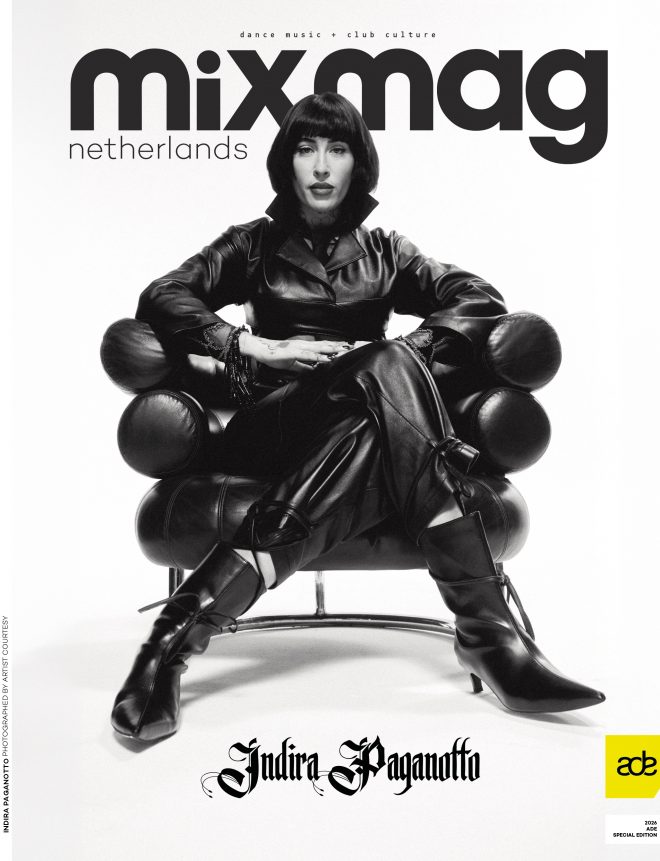
There is a point at which an artist’s world becomes too large to remain entirely their own. The music travels first. Then come the rooms, the people, the symbols attached to it. A private vocabulary develops a public life. For Indira Paganotto, that transition has happened gradually and then, seemingly, all at once.
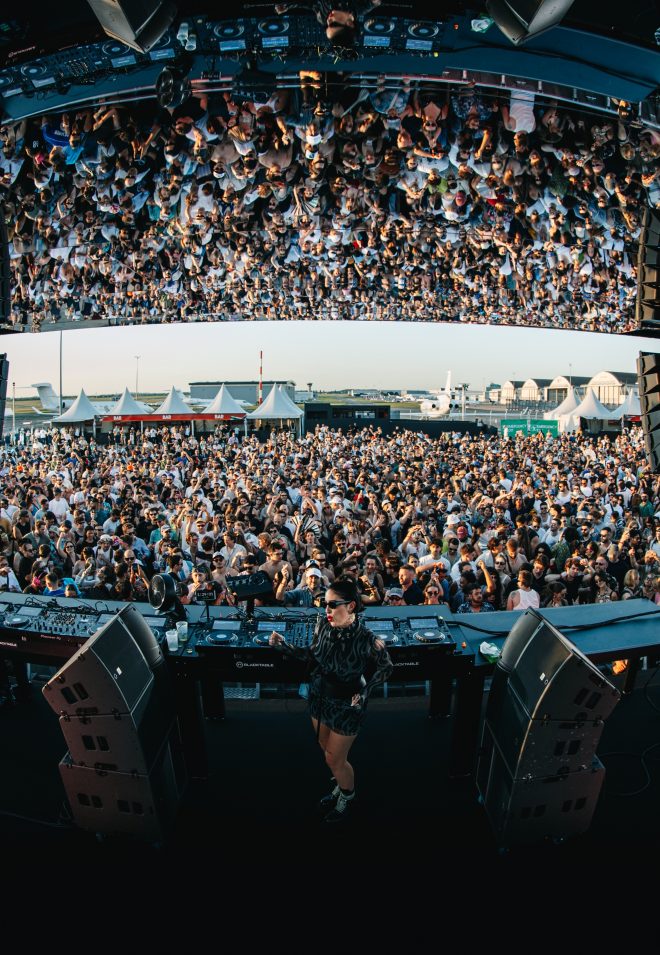
The scale surrounding her now can make the recent past appear like an abrupt acceleration. Bigger stages, ARTCORE showcases moving internationally, a fashion line, a label, physical projects and an audience that has adopted its own collective identity around her. Yet Paganotto understands the present through a much longer timeline. Almost twenty years separate the artist standing at the centre of ARTCORE today from the girl handling records from her father’s collection.
“Honestly, it’s been a very long journey full of different and beautiful experiences, not just last year, but since the very beginning of my career,” she says. “I started almost 20 years ago playing my father’s vinyl records, so imagine how much has happened since then.”
Visibility has arrived after the apprenticeship, not instead of it. That distinction matters. The years before the current international scale are not treated as an inconvenient prehistory to the bigger story. They remain active inside it.
“Now I finally feel like I’m enjoying the rewards of all those years of hard work. But this job never stops.”
What has changed is the number of directions in which that work now travels. Paganotto is designing pieces for the ARTCORE clothing line, developing showcases with her team and producing music while spending much of her life on tour. The last of those remains the most difficult to negotiate. Movement gives a DJ a career while depriving a producer of one of the things the studio often requires: stillness.
“Every day I want to give my Warriors new experiences, whether it’s designing every piece of the ARTCORE clothing line myself, creating new showcases around the world with my team, or making new music,” she says. “That last part is the hardest because I’m almost always on tour, and finding inspiration while constantly travelling isn’t easy. But music is what I love the most, so I do it with all my heart.”

Behind the expansion is a parallel exercise in protection. Paganotto speaks plainly about mental health and about the boundaries she has learned to impose around herself. The machinery of touring can produce extraordinary public moments while being remarkably repetitive in private: airports, transfers, hotel rooms, interrupted sleep, another venue, another departure.
“The most important thing is my mental health. I protect it with everything I have. The moment I feel someone is disturbing that peace, they leave my circle. Touring sounds glamorous, but it’s also lonely. Airports, hotels, festivals, clubs, little sleep, bad food… after so many years I feel like I’ve got a master’s degree in finding balance!”
Home operates according to another tempo. Paganotto describes a close family and the rituals that resume when touring stops: cooking with her parents and sister, disappearing towards the mountains or the beach. None of it is spectacular, which is precisely why it matters.
“The hardest part used to be being away from my family because we’re incredibly close. Now I handle it better, but every time I’m home, I spend days cooking with my parents and my sister, going to the mountains or the beach. That’s sacred for us.”

The cost has not disappeared simply because she has become better at managing it. Personal moments are still surrendered to the schedule. In return, there is the relationship that has developed with the people she calls her Warriors, alongside the trust of promoters and the possibility of carrying her music between countries and cultures. Paganotto does not pretend one cancels out the other. Both conditions exist at once.
What began with music at its centre has developed into something harder to classify. ARTCORE now contains records, artists, events, clothing, imagery, objects and an audience that does more than consume them. Paganotto had imagined parts of this architecture long before she possessed the infrastructure to build it.
“Honestly… this is exactly what I dreamed about when I was a child,” she says. “I always imagined creating my own clothing line, my own record label where I could release my music and give opportunities to new artists, and bringing ARTCORE showcases all over the world.”
Seen separately, these projects could resemble the familiar extensions surrounding a successful electronic artist. Paganotto does not describe them that way. The point is not diversification for its own sake. ARTCORE is increasingly the container through which different parts of her imagination are allowed to coexist.
“Today ARTCORE is much more than music. It’s my artists, my team who work with so much love behind every project, and my Warriors, who have turned it into a real community. I want ARTCORE to feel like home, a safe place where nobody judges you, where people come together through music, love and unity.”
There is a significant shift hidden inside that description. An artist can control a record. A community is different. Once people begin attaching their own experiences, friendships and memories to an idea, its meaning can no longer travel exclusively in one direction.
“The meaning of ARTCORE will always be sharing,” she says. “That’s why seeing our community grow every year makes me feel so proud and so full inside that it’s difficult to explain. It’s like watching your own child grow up and become an adult.”
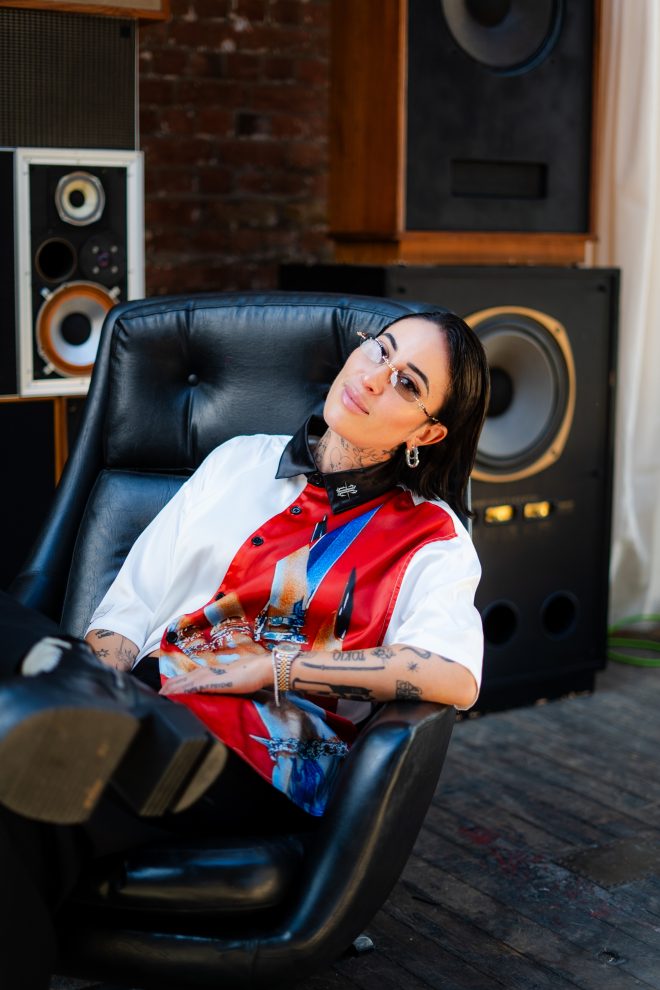
Growth creates another problem: how to make something larger without sanding away the characteristics that made people recognise themselves in it to begin with. ARTCORE is now entering environments of considerable scale. Festival stages and Ibiza bring different expectations, different audiences and a different level of machinery around an idea that Paganotto continues to describe in familial terms.
“Never lose our essence and always remember where we come from and why we started this project in the first place. Even as the team gets bigger, as we play legendary festivals, as we’ve entered the fashion world with such a great response, and as we take on different and diverse projects, we still follow the same path. Humility. Respect for the industry and the people around us. Keeping our family close, and our friends even closer.”
Success, in this reading, is something capable of producing its own distortion. The danger is not merely commercialisation. It is forgetting the conditions under which the project originally made sense.
“It’s about not getting carried away by the fever of success. Every day is a new day, and you have to keep working hard, without stopping.”
ARTCORE’s movement beyond sound has made that question of coherence more complicated. ARROGANTE, Paganotto’s fragrance, pushes the project into scent; fashion turns its visual vocabulary into something worn on the body. These objects do not need to imitate the music literally. Their relationship is more intuitive.
“I love everything that art itself encompasses. Everything I create might seem completely disconnected at first, but when you step back and look at it as a whole, suddenly everything starts to make sense.”
There is no elaborate internal doctrine deciding what can and cannot enter this universe. Paganotto describes the process almost as compulsion. Ideas arrive and she follows them.
“Honestly, my hyperactivity makes me think and create way too much. I love being busy with new and exciting projects, and I love challenges that keep me fascinated by what I’m doing every day. I don’t like following rules. I’ve been very independent since I was a little girl, always questioning everything and everyone, and I’m still exactly the same! I always follow my intuition. If I feel something, I have to do it.”
Instinct may begin the process, but an increasingly complex organisation has to turn it into reality. Paganotto seems aware of the contradiction, and laughs at it.
“I’m very lucky to have the team I have because they have to put up with me… they’ve definitely earned their place in heaven after all these years!”
For all the objects accumulating around ARTCORE, music remains its deepest archive. Arte Como Amante, Paganotto’s debut album, makes that unusually explicit. Rather than documenting a single moment in her development, the record folds different periods of her life together.
“My latest album, Arte Como Amante, has been one of the most beautiful and intense projects I’ve ever made in my career.”
Some tracks were designed with direct physical impact in mind. Paganotto describes the approach using a Spanish expression: going “straight into the mud.” Others had waited more than a decade to find their place.
“I also included tracks that I had created 13 years ago. They were some of the first songs I ever made, and I had kept them waiting for the right moment to release them.”
Those pieces complicate the idea of an album as a snapshot of the artist who releases it. The Paganotto heard on Arte Como Amante exists across years. Earlier instincts encounter the producer she became later, without the older material being rewritten simply to make the timeline neat.
“There are still so many more from that period… I have around 300 unreleased tracks waiting in the vault, so maybe you’ll hear some of them in the future!”
The album itself was conceived through narrative movement rather than a simple sequence of functional club tracks.
“I tried to structure the album almost like a movie. It starts with nostalgia, then different stories unfold until everything reaches a complete climax, finishing with an epic track at 190 BPM. Pure fire!”
That arc says something about Paganotto’s relationship with intensity. Speed alone is not the destination. What matters is how the listener gets there. Nostalgia precedes impact. Narrative precedes climax.
She is already working on a second album, currently intended for 2028, but another part of her musical future is developing through collaboration.
For Paganotto, inviting another artist into the studio requires more than placing two recognisable signatures beside each other.
“Someone has to captivate me in a way I’ve never experienced before. For me, collaborating means sharing my most protected space, my studio, my music and my mind, with another person. It has to be someone I genuinely feel a connection with or deeply admire. For me, it’s almost a ritual where two worlds connect to create something completely new and inspiring.”
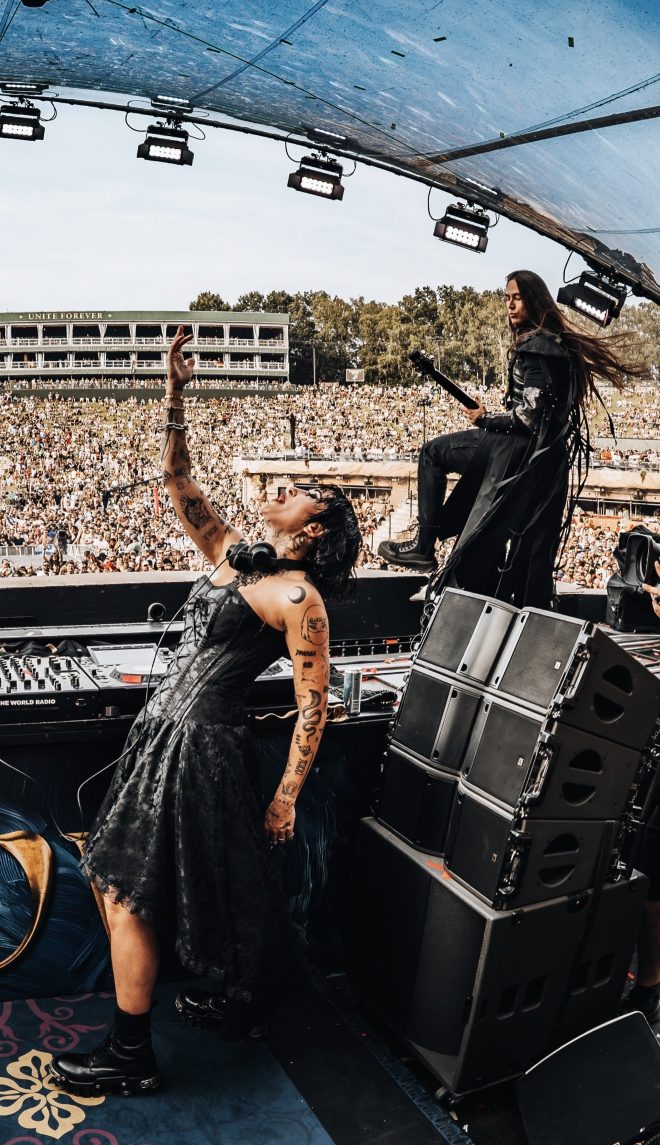
One of those encounters has brought her into direct contact with a musical language that has existed around her for years without previously entering her productions in this form. Paganotto is working with Harald Barrett, guitarist from the metal band Imminence, on three tracks, with vocalist Karima El Fillali also involved in the project. Paganotto invited El Fillali to perform one of the tracks during her Tomorrowland MainStage set, allowing that collision to reach the audience before its formal release.
“I’ve always been a huge fan of metal, rock and punk, but I never had the inspiration to cross those worlds until I met him.”
It would be easy to read these encounters as Paganotto moving away from the psychedelic vocabulary most closely associated with her. Her own understanding is almost the reverse.
Psychedelia predates the current appetite for harder and faster electronic music. It also predates ARTCORE. For Paganotto, it reaches back into family and childhood, making questions of trend largely secondary.
“I just follow my own instincts, my own instructions and my own truth. My musical taste is also deeply connected to who I am. It’s something I was born with. It runs through my veins, I inherited it from my father. So I can’t really do anything else.”
Then comes the statement in its most concentrated form:
“PSYTRANCE AND PSYTRANCE TECHNO ARE MY MESSAGE BY BLOODLINE.”
Perhaps that is why expansion has not produced a desire for resolution. Nearly twenty years after those first records, Paganotto has built enough structure around her instincts for them to exist far beyond the DJ booth. ARTCORE can now be heard, entered, worn and smelled. Other artists can release through it. A community can recognise itself inside it. The idea has acquired physical dimensions.
“My desire to create is infinite. I have a whole world of ideas that I still want to explore, so honestly, even I don’t know exactly what’s coming next.”
For an artist who has spent years turning instinct into infrastructure, perhaps knowing too precisely would defeat the point. Paganotto has never sounded particularly interested in arriving at a finished version of ARTCORE. Each new form simply creates another surface on which the original impulse can leave a mark.
She offers one promise anyway.
“The only thing I can promise is… it will be legendary.”
