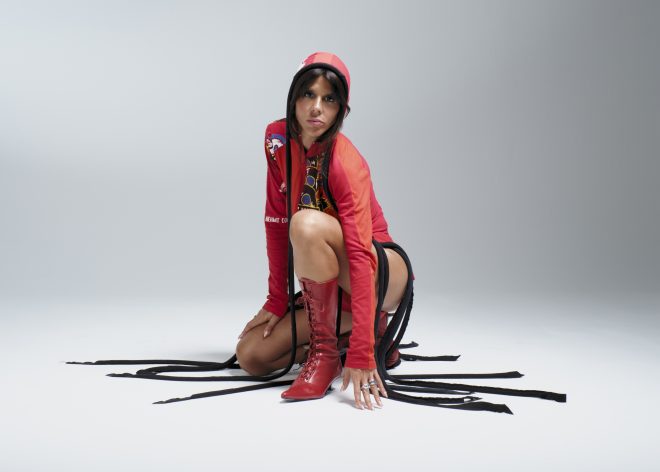


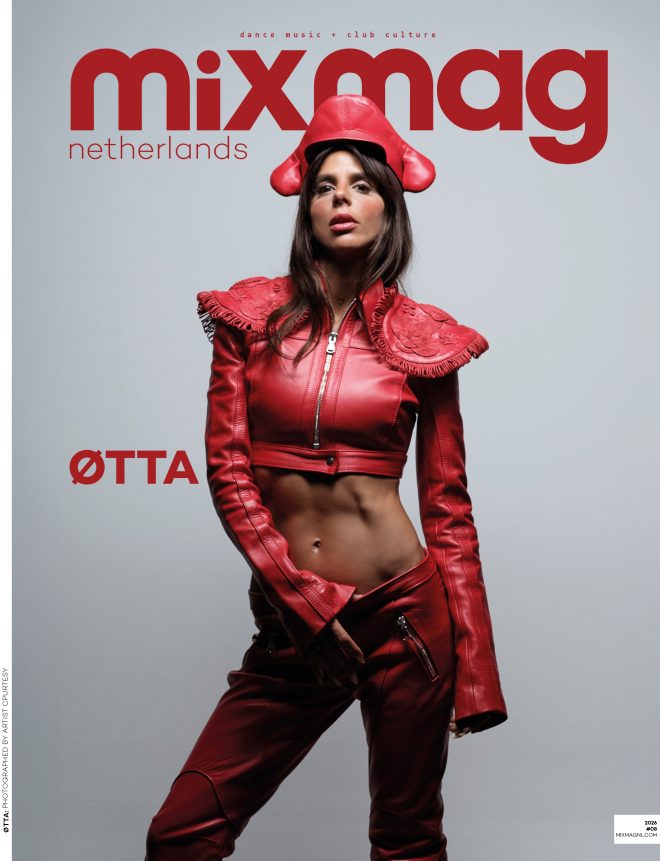
OTTA | NL 2026 #08
ØTTA: PELE DE MAR
Before a single track was written, ØTTA already knew what PELE DE MAR needed to hold. Her debut album would begin with her own story, bringing together the places, cultures and experiences that have shaped the way she sees and makes music.
That instinct for building from an idea comes partly from her background in architecture, where she learned to establish a concept before making the decisions around it. For PELE DE MAR, the process took a simple form: a circle of Post-it notes, one for each track, mapping different places in her life. Portugal, where she was born. Brazil, a formative part of her cultural upbringing. London, where she spent ten years. Paris. Barcelona, where she lives today.
Those places became part of the record without needing to tell the same story. What connects them is the idea behind its title: what stays with us after we leave somewhere. Memories, people, rhythms, and cultures accumulate over time, becoming part of how we understand ourselves and what we create.
That perspective runs through PELE DE MAR and into what surrounds it now. Collaborations with Lua De Santana, Bibi Babydoll, and FIAH opened the record to other voices, while the PELE DE MAR World Tour gives ØTTA the space to bring the project into a headline setting for the first time after more than a decade on the road.
Speaking to Mixmag, ØTTA reflects on the making of her debut, the influences that have stayed with her, collaboration and the community around HOTTIES, the visibility that followed Boiler Room, and why, for now, she is more interested in living PELE DE MAR than rushing towards whatever comes next.
PELE DE MAR existed as an idea before it existed as an album.
The process began with the concept itself. Before moving into individual tracks, ØTTA established the framework that would hold the record together.
"I've always known that if I ever made a debut album, it had to tell my own story before it told anything else. I'm a very conceptual person. I studied architecture, where every project begins with a strong idea and every creative decision serves that concept. I've carried that way of thinking into music. So before I wrote a single track, I already knew what the heart of this album had to be: an honest portrait of who I am, shaped by every place, every culture, and every experience that has left its mark on me.
"I remember sitting down with a circle of Post-it notes, one for each track. Each one represented a place that shaped me: Portugal, where I was born; Brazil, which has always been part of my cultural upbringing; London, where I spent ten years; Paris and Barcelona, where I live today. Together, they became a portrait of the experiences that shaped me.
"That's what PELE DE MAR means to me. It's not just the sea as a landscape, but what the sea leaves behind: the salt on your skin, the humidity, the memories, the people, the rhythms and the cultures you carry with you long after you've left.
"I realised that we're all shaped by those traces. What makes us unique isn't trying to be different, but embracing the combination of experiences that only we have lived. The places we've called home, the people we've loved, the cultures we've absorbed, they all become part of us. PELE DE MAR is my way of celebrating that. The things we carry with us are what make each of us one of one."
PLUS ONE, Candy22, and PELE DE MAR belong to different moments of the same story.
Each project captures ØTTA at a particular point in her life. Seen together, they reveal an evolution that has happened gradually rather than through deliberate reinvention.
"I've never been comfortable with labels or the idea that an artist should stay within one genre. That was never my way of thinking. Music, like people, is shaped by everything it encounters, and I've always believed that trying to fit yourself into one category goes against that.
"When I look back at PLUS ONE, Candy22, and now PELE DE MAR, I don't see things I left behind. I see different chapters of the same story. PLUS ONE had the rawness of someone discovering how to express herself through music. Candy22 was where my Portuguese and Brazilian influences began to emerge more naturally. PELE DE MAR feels like the most honest expression of who I am today.
"The way I see the world in my thirties isn't the way I saw it in my twenties, and naturally my music has evolved with me. I don't believe artists should stay exactly the same, because people don't. Every creative expression should be loyal to who you are at that moment. As our experiences, emotions, and perspectives evolve, honest art evolves with them. To me, that's not reinvention; it's authenticity."
Brazilian musical traditions entered ØTTA's world long before she began producing music.
That relationship reaches back to her upbringing and the music and culture that surrounded her growing up. It remains present in the instincts she brings into the studio today.
"I've never really thought about it as a negotiation between heritage and innovation because, in my mind, they're not separate things.
"I don't sit down and decide to make a 'Brazilian' track or album. Brazilian musical traditions aren't something I consciously insert into my work; they're part of my upbringing. Growing up in Portugal in the '90s, so much of the Portuguese-language music, television, and culture that surrounded me came from Brazil. I also have family there, have spent a lot of time there throughout my life, and still visit every year, so those rhythms became part of my musical instinct long before I ever thought about becoming a producer.
"When I write music, I'm often going back to the first rhythms I remember hearing as a child. I'm not trying to recreate a tradition or modernise one; I'm simply drawing from everything that has shaped me. Brazil is one of those influences, alongside Portugal and the other places I've lived and called home. Together, they've all shaped the way I hear and make music.
"I think innovation comes from honesty rather than intention. If you're creating from a genuine place instead of trying to follow a formula, the result will naturally become something that belongs to you."
Collaboration brought other voices into the world of PELE DE MAR.
Lua De Santana, Bibi Babydoll, and FIAH each entered a record that already had a defined concept. Their presence created space for the project to move beyond ØTTA's perspective alone.
"The conversations actually started before any music was made. Once I had defined the concept for PELE DE MAR, I started looking for artists who shared a similar approach to creativity. I wasn't searching for the biggest names, but searching for people with a strong artistic identity, artists who are deeply connected to their own roots and create from an honest place. That's what drew me to Lua De Santana, Bibi Babydoll, and FIAH.
"Because so much of the album was shaped by my time in Brazil, it felt important that Brazilian voices, and Latin American voices more broadly, were part of telling that story. Rather than trying to speak for a culture that isn't mine, I wanted to create music alongside artists who live it, bringing their own perspectives and experiences into the record.
"Creatively, collaboration is always an exercise in trust. Once someone else enters a song, it stops belonging entirely to you. They bring melodies, lyrics, and ideas that you could never have imagined on your own, and your role becomes listening as much as directing. I learned to embrace that dialogue because that's where the most exciting ideas emerge."
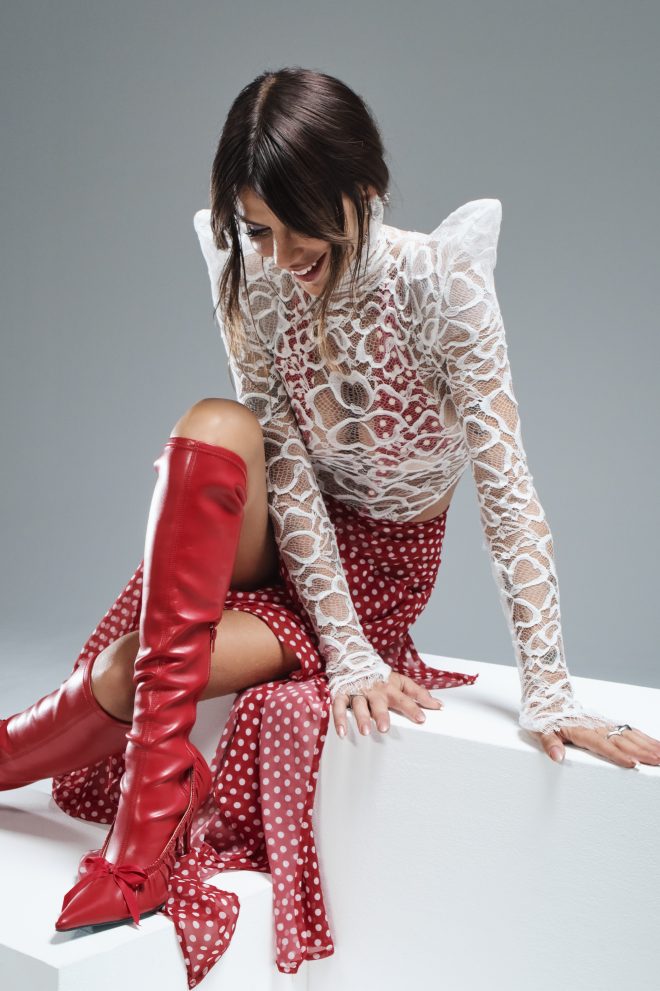
HOTTIES became something shared.
What began as a space for ØTTA's own creative expression gradually developed a life beyond its founder. That shift also changed the way she thought about the community around it.
"I don't think HOTTIES became a cultural home because I set out to build one. It happened naturally, through the people I met along the way and the communities that welcomed me long before anyone knew who I was. They became the family I chose. They gave me a place where I could be myself, and that shaped not only the artist I became, but the kind of platform I wanted to build.
"When I created HOTTIES, I wanted somewhere I could express myself without compromise, not just through music, but through every creative decision, from the visuals and typography to the values behind it. But once people begin to see something you've created as their home too, your priorities change.
"As a woman in electronic music, I've often been told to tone myself down or that I was 'too much.' I know what it feels like to search for a place where you're accepted exactly as you are. That's the responsibility I feel with HOTTIES: protecting that feeling for others. It's about making thoughtful decisions, supporting artists who share those values, and creating an environment where people feel respected, represented, and free to be themselves. To me, that's not an extra responsibility but simply what a home should be."
Greater visibility did not change the way ØTTA wanted to make music.
Boiler Room expanded the audience around her work, but also placed experimentation under a brighter light. Navigating that visibility became part of learning how to keep moving creatively.
"That moment definitely brought more visibility, but it didn't change the way I make music. If anything, it reinforced something I'd always believed: people connected with my work because it came from an honest place, not because I was trying to fit into a formula. The biggest mistake I could make now would be trying to recreate that moment instead of continuing to evolve.
"Of course there's pressure. As artists, we're discovering ourselves while being exposed to the world, and that's not an easy place to experiment from. Every new idea is judged in public. But I don't think longevity comes from repeating yourself; it comes from staying curious and accepting that not every experiment will succeed.
"I remember one of my teachers at Point Blank music school in London telling me that the mistake is never the problem; what matters is what you do after it. That stayed with me. Mistakes are how we learn, how we grow, and how we discover new parts of ourselves. If we become so afraid of getting something wrong that we stop taking risks, we stop being artists, we stop growing, and we become people trying to meet expectations.
"I think people connect with honesty more than perfection. After all, being human means being imperfect, and experimentation always comes with the risk of getting things wrong. That's why I don't think the pressure around us should dictate who we are or how we create. The moment you stop allowing yourself to make mistakes, you stop creating honestly."
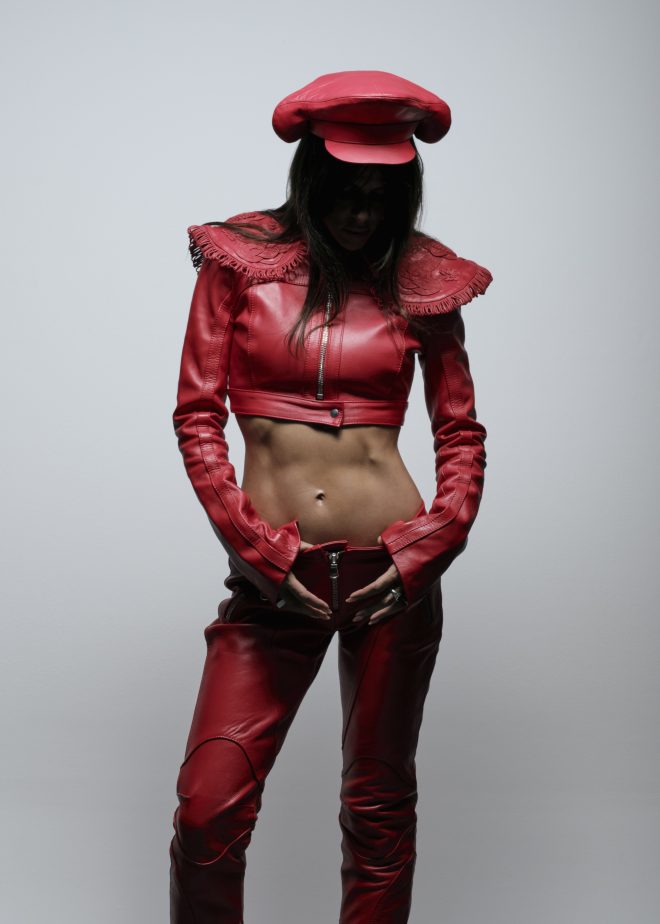
After more than ten years of touring, PELE DE MAR becomes ØTTA's first headline tour.
The format offers something different from the festival circuit that has shaped much of her time on the road. For the first time, the entire night can exist around one project.
"I think festivals introduce people to an artist, but a headline show gives you the chance to tell a complete story. That's what excites me the most. For the first time, I get to build an entire world around the music: the visuals, the atmosphere, the people I invite, the energy in the room. Everything becomes part of the same language.
"It also feels like the perfect moment to do it. After more than ten years of touring, releasing my debut album finally gave me something bigger to share than just a DJ set. PELE DE MAR is deeply personal, and this tour is my way of bringing that universe to life.
"More than anything, I hope these nights feel like a home that travels from city to city. I've been incredibly lucky to build a community all over the world, but festivals only give you a brief moment together. A headline creates space to connect in a much deeper way. That's what I'm most excited about: meeting the people who've been part of this journey and sharing something that feels ours entirely.
"I don't just want people to remember the music. I hope they leave feeling like they belonged to something, even if only for one night."
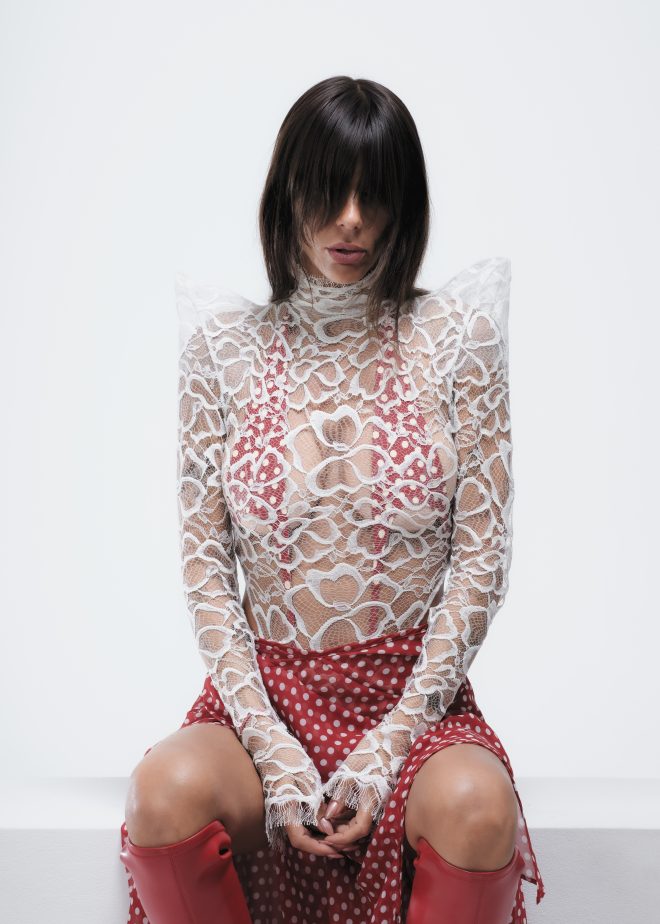
For now, the focus is not on what comes after PELE DE MAR.
The album's release has not immediately shifted ØTTA's attention towards another project. Much of its life is still unfolding through the tour and the encounters surrounding it.
"Ironically, one of the biggest questions driving me creatively today is how to stay present. We work in an industry that's constantly asking what's next: the next release, the next reinvention, the next milestone. I understand why, but I also think there's value in letting a piece of work breathe before immediately turning it into a stepping stone for the next one.
"Right now, my creative focus isn't on trying to outdo PELE DE MAR. It's on fully living it. Bringing it to life through the tour, seeing how it connects with people, and allowing those experiences to teach me something I don't know yet. I don't think an album stops evolving the day it's released; I think it keeps evolving every time it's shared.
"If there's something I hope this album gives me over the next few years, it's not a specific achievement or destination. It's the freedom to keep creating from a place of honesty instead of expectation. Every project I've made has been a reflection of who I was at that moment in my life, and I hope I never lose that. I'd rather let this chapter change me before deciding what the next one should be. For me, that's where the most meaningful creativity comes from."
What comes next begins with continuing to experience the world.
There is no fixed destination attached to the next chapter. For ØTTA, what eventually follows PELE DE MAR will depend partly on what happens beyond the studio.
"I'm most excited to keep experiencing the world. For me, being an artist is about telling stories, and to tell stories, you first have to live them. Every place, every conversation, every culture, and every person you meet offers a different perspective. Those experiences shape the way you see the world, and in turn, they shape the music you create.
"If there's one thing I hope PELE DE MAR gives me, it's the freedom to keep following that curiosity. I hope it allows me to keep exploring without feeling confined by expectations, trusting that every new chapter will naturally reflect where I am in my life and what I have to say.
"Where I hope that journey takes me isn't towards a particular milestone, but towards a relationship of trust with the people who listen to my music. If they're willing to come on that journey with me, even when the direction changes, then I know I've reached something really special. Music has always been my way of communicating, and if I can keep doing that honestly while staying free to grow, then I'll know I'm exactly where I'm meant to be."