


Vani Vachi:“The Only Constant Is That Nothing Stays The Same”

From London’s multicultural rave culture to Kyiv’s politically charged underground and Berlin’s relentless creative discipline, Vani Vachi has never belonged to one scene. Every city left something behind. Every chapter changed the way she hears music. Now, five years after becoming a resident at Kyiv’s influential queer party, Veselka, she’s undergoing another transformation with the launch of her label, VVREX, and a forthcoming EP that stretches her sound beyond conventional techno without abandoning the dancefloor.
“I think of myself as a discoverist,” she says. “Someone who explores and shares what they find. London is where I discovered electronic music in the first place. Kyiv is where I found a community that felt like home. Berlin is where I built structure. I used to think I belonged everywhere and nowhere. Now I think I’ve simply collected pieces from every place and put them together into something that’s mine.”
That refusal to settle into a single identity runs through everything she does. Vani Vachi isn’t interested in becoming another artist protecting a formula. The constant movement between scenes, ideas and influences has become the point rather than the obstacle.
“Kyiv changed me forever,” she says. “When I arrived, everything felt like it was growing. Electro, broken beats, techno, none of it had settled into fixed rules yet. The whole point of being a DJ was to surprise people. It was political. It was community. It was a refuge. I learned that music isn’t just entertainment. Music has power and purpose, and the job of an artist is to make the unfamiliar feel like home.”
Those lessons eventually pushed her beyond simply playing records. As a resident at Veselka, she watched how parties are built from the inside, learning that the DJ booth is only one small part of the experience. Programming, visual identity, lighting, venues and pacing became part of the same creative language.
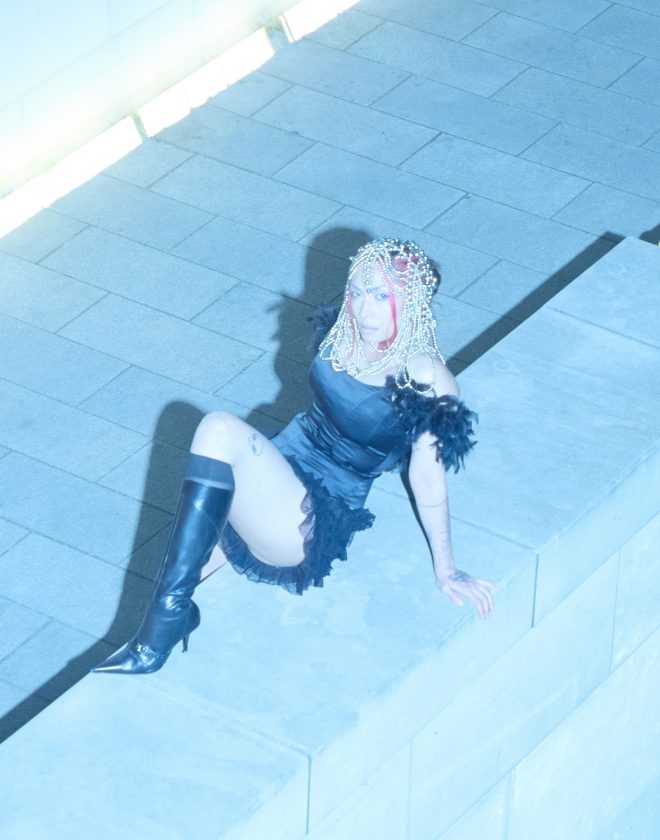
“I grew up alongside that project,” she says. “For years I was Vani Vachi from Veselka. It gave me everything: a crowd, a family, a place to experiment. But eventually I wanted something that belonged entirely to me. That’s why I started VVREX. I’m not only a daughter of Veselka anymore. I’m a mother of VVREX.”
The label isn’t driven by release schedules or algorithms. It’s an excuse to build complete worlds where records, visuals and parties speak the same language. Every release becomes another chapter inside a much larger creative universe.
“I don’t just want to release tracks,” she explains. “I want to build experiences. I love curating artwork, line-ups, creative direction, parties. I love creating one night where people step into something magical that doesn’t feel like the normal world anymore. That’s the best compliment I get, when people tell me they’ve never experienced something like it before. I want VVREX to be a safe space for people who don’t fit the formula. Not even close.”
That same instinct is changing her music. While techno remains the foundation, the next EP leans into vocals, emotion, and songs that survive after the lights come on. She’s no longer interested in making music that only exists between kick drums.
“I’m not just releasing for the floor anymore. I’m releasing for the ears,” she says. “After years of DJing I realised I actually have something to say. The dancefloor is a conversation. The studio is a mirror. Live shows happen in the moment. Production lets you question yourself, rewrite yourself, perfect things. They’re completely different feelings.”
The turning point came during her first live performance at Berlin’s RSO. Unsure whether vocals belonged in that environment, she took the risk anyway. The response rewrote her own assumptions.
“I honestly thought nobody was going to understand it,” she laughs. “Then the whole room exploded. I ended up climbing onto the table. That’s when I realised people aren’t looking for genre rules. They’re looking for emotion. I don’t believe in being a purist anymore. If it makes you feel something, it’s already done its job.”
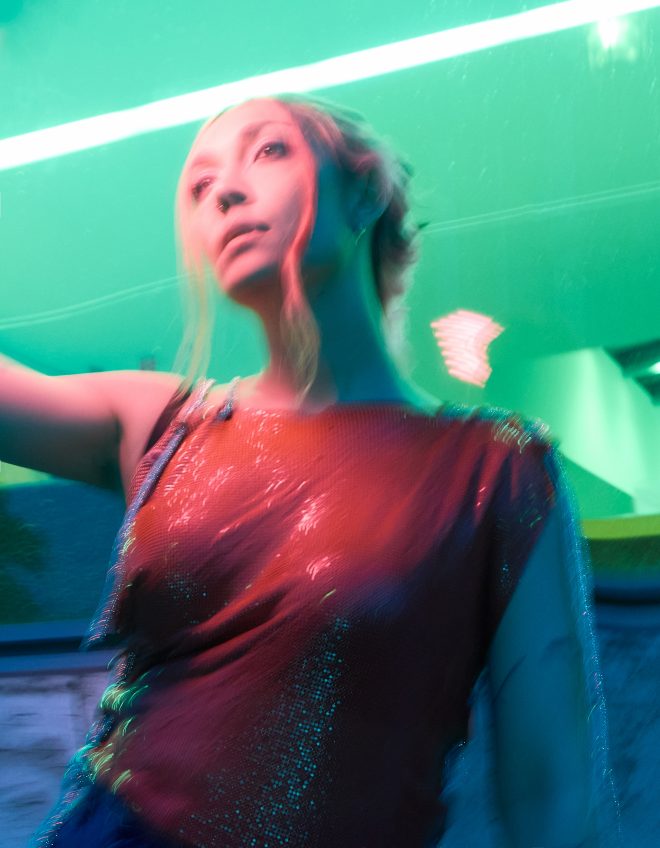
Her openness extends far beyond the studio. Vani Vachi sees no contradiction between underground clubs, fashion, visual art and pop culture. In her eye,s they’re simply different ways of telling the same story, and electronic music has spent too long pretending those worlds shouldn’t touch.
“I love pop,” she says. “I love the visuals, the vocals, the production, the complete worlds artists create. Being an artist was never just about music to me. It’s fashion. It’s identity. It’s community. It’s having something to say. Why would I limit myself to one medium?”
She’s equally direct when talking about the expectations placed on women inside dance music, expectations she felt herself the moment she started performing.
“When I first started DJing I dressed more masculine because it felt like armour,” she says. “Now I’d tell every woman to do exactly what she wants. Wear heels. Wear black. Wear nothing. Dress like power. Dress however you feel. None of that should have anything to do with whether people take your music seriously.”
For Vani Vachi, the industry’s biggest challenge isn’t commercial success. It’s forgetting why club culture existed in the first place. Algorithms have become more important than communities, while ticket sales increasingly dictate creative decisions. She believes electronic music deserves better.
“I wish we’d stop chasing ticket sales and start chasing innovation again,” she says. “Book younger artists. Build communities. Take risks. Selling tickets was never supposed to be the artist’s job because the club isn’t a solo show. When everyone builds something together, the promoter wins, the artist wins, and the crowd wins.”
Nothing about Vani Vachi suggests she’s interested in arriving anywhere permanent. Every city changed her. Every project changes her again. The next record almost certainly will too. As far as she’s concerned, that’s exactly how it’s supposed to be.
“The only constant,” she says, “is that nothing stays the same.”
