


The Yacht Week: Anatomy of a Floating Festival
From July 13 to 18, we were guests of The Yacht Week in Croatia for its 2ng a special route linked to Ultra Europe.
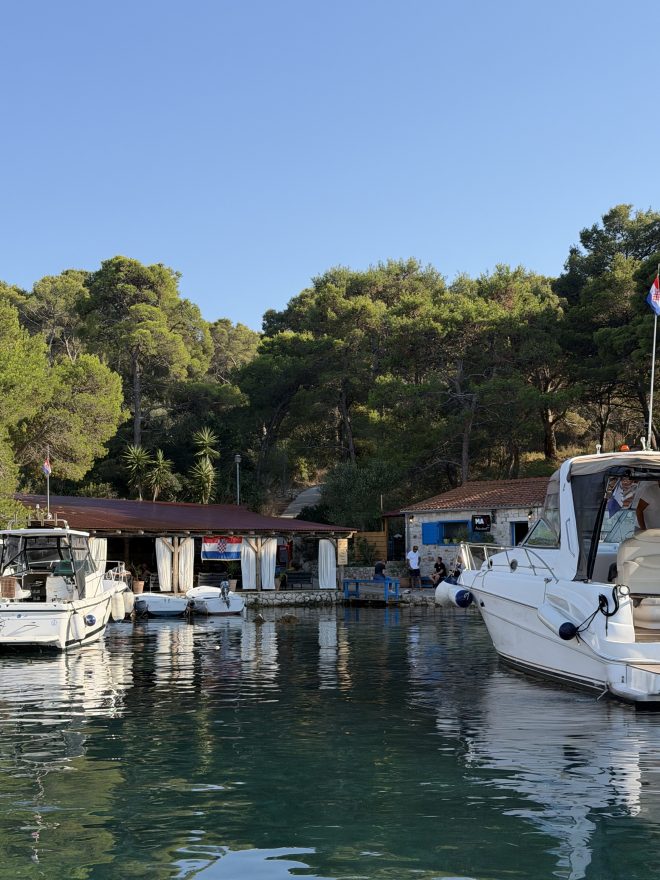
I boarded on July 13, just as Ultra Europe had returned Split to the morning light. Park Mladeži still held the echo of three nights built on a monumental scale, with towering stages and bass powerful enough to travel across entire neighbourhoods. Along the coast, however, the festival was about to change shape.
There were no barriers to cross and no maps to consult in search of the next stage. Just a row of boats preparing to leave the marina, the sound of lines being hauled aboard and the Adriatic stretching out ahead.
After the enormity of Ultra, The Yacht Week brought the musical experience back to an almost domestic scale: a handful of people on each boat, speakers already playing as we sailed and the sense that the journey was not simply an interval between two parties, but an essential part of the programme.
Founded in Croatia 20 years ago, The Yacht Week is often described through the images that have made it instantly recognisable: white catamarans, transparent water, swimwear, sunsets and floating parties. All of that is true, but it is not the whole story. Reducing it to a luxury holiday with a few DJs thrown in means overlooking its most interesting idea: transforming movement itself into a musical device.
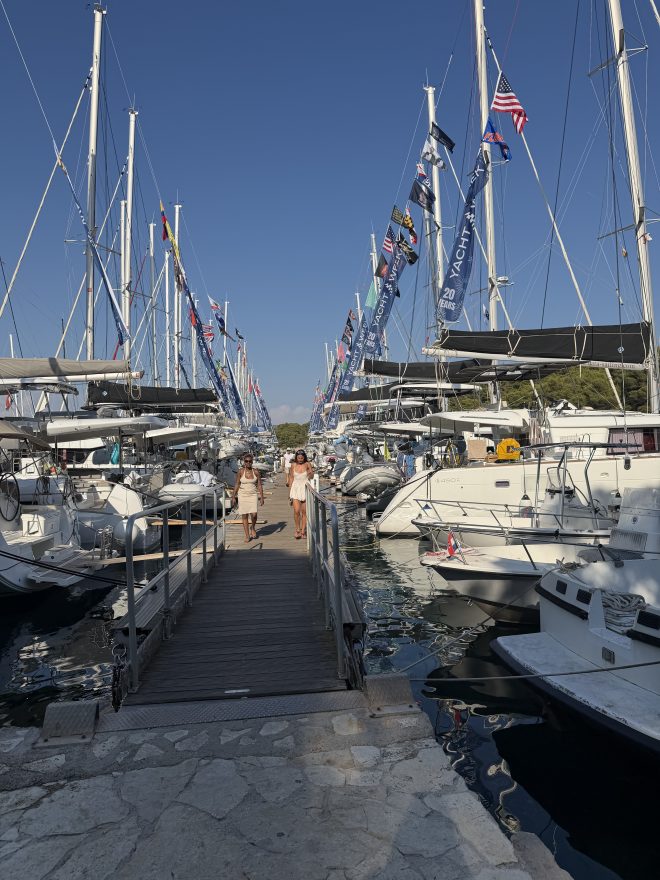
A traditional festival builds a temporary city and asks its audience to move through it. Here, the opposite happens. The entire festival travels, carrying people, sound systems, boats, rituals and expectations with it. The stage never remains permanently at the centre, because the centre is constantly shifting. It might be the deck of a catamaran, a floating platform, a beach club or a 19th-century fortress reached after a day at sea.
The coastline becomes a kind of geographical sequencer. Every island introduces a variation, every arrival changes the rhythm and every stretch of open water acts as a necessary pause between two more intense moments.
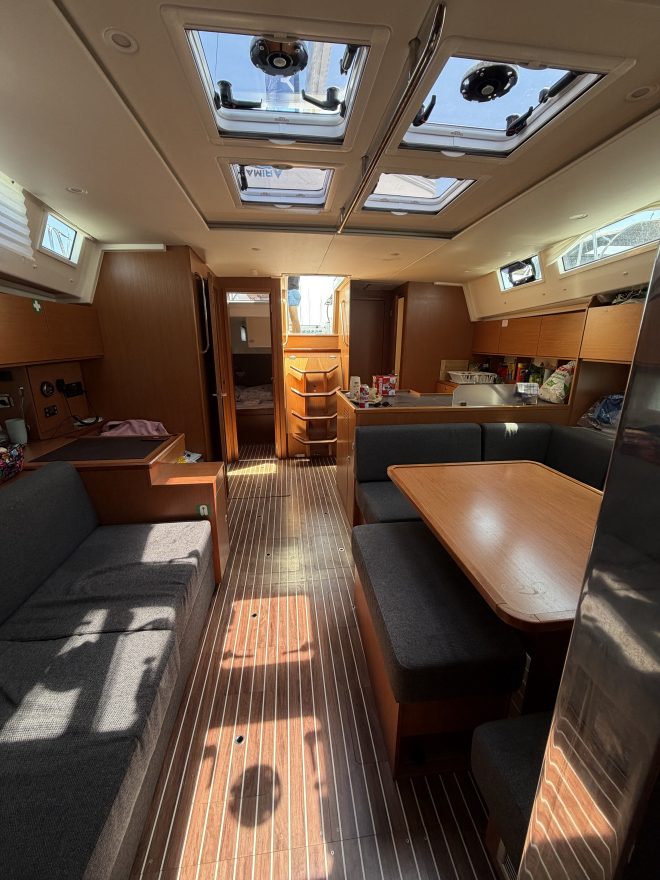
Life on board quickly removes many of the distances that define a festival on dry land. There is no clear separation between private and communal space. The boat is simultaneously a bedroom, a kitchen, a terrace, a means of transport, a meeting point and, at times, an improvised dancefloor.
The cabins are small, objects move with every wave and everyday life requires a discipline that promotional photographs inevitably leave outside the frame. Space, schedules, supplies and exhaustion all have to be shared. You learn how to move without getting in anyone’s way, how to sleep whenever the opportunity arises and how to recognise the moment when the sea asks for silence.
Yet it is precisely this compression that gives the experience its character. Within a few days, people from different countries begin to function as small crews. Encounters do not happen only in front of a DJ booth, but over breakfast, during transfers, while waiting to enter a harbour or while swimming between two boats.
Community is not an idea retroactively added by the event’s marketing. It is a practical necessity. On a boat, you cannot pretend to be alone for very long.
Our relationship with music changes too. On land, we can decide when to enter or leave a dancefloor. At sea, sound accompanies waking up, departure, navigation and arrival. It travels from boat to boat, overlaps with other music, fades into the wind and reappears from another vessel anchored a few metres away.
It is not always a frontal listening experience. More often, it is ambient, lateral and dispersed. Music does not constantly dominate the landscape; it blends into it.
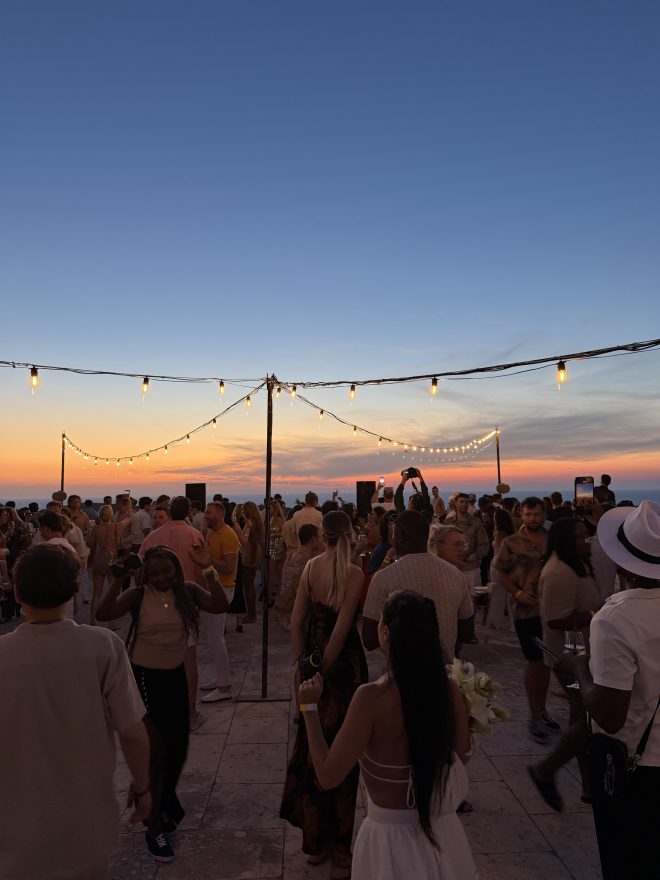
The partnership with Ultra Europe made this 20th edition of The Yacht Week particularly interesting from a musical perspective. The opening days had immersed the audience in the spectacular language of a major international festival, with a line-up moving between EDM, house and techno and featuring names such as Calvin Harris, Martin Garrix, Dom Dolla, John Summit, Sara Landry, Jamie Jones and I Hate Models.
Once we left Split behind, the scale changed dramatically. The sound lost some of its monumental dimension and gained a new sense of proximity. It no longer had to conquer a crowd of tens of thousands. Instead, it had to accompany a relatively small group through afternoons at sea, sunset parties and open-air nights.
The dominant musical language remained immediate: melodic house, tech house, vocal flourishes, rounded basslines and builds designed to keep the energy high. The Yacht Week does not present itself as a gathering for collectors or a laboratory dedicated to the more experimental fringes of electronic music. Its objective is different: to create a shared sonic ground for an international audience that also includes people who do not regularly move through the more specialised corners of club culture.
At times, this accessibility can feel predictable to listeners accustomed to more adventurous programming. Certain musical passages rely on widely tested formulas, with easily recognisable builds and tracks selected to produce an instant response. Yet when music leaves the traditional context of the club, even a familiar structure can acquire a different weight.
A bassline heard inside a stadium is spectacle. The same bassline, heard while 20 boats sway together in a bay, becomes a shared signal.
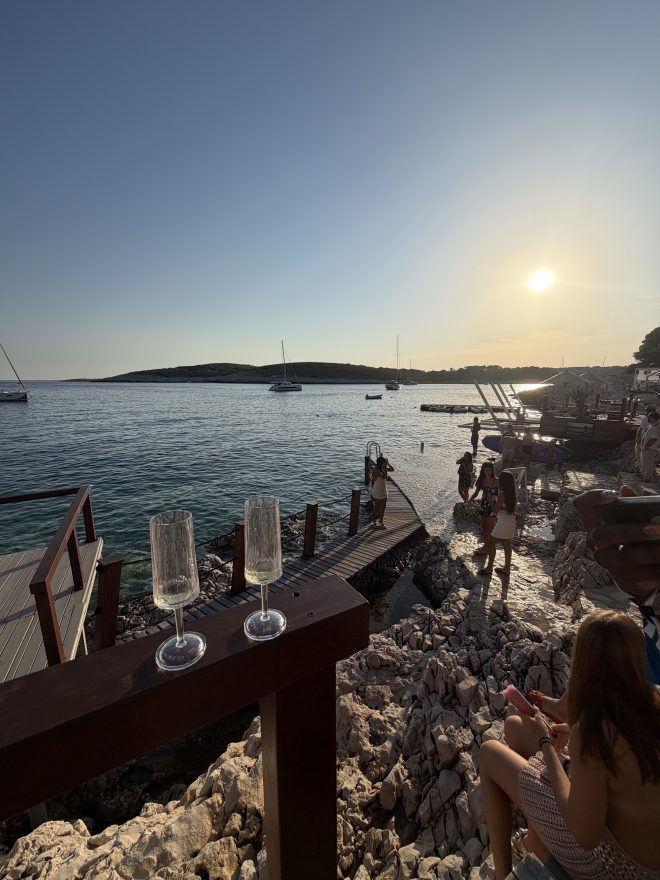
Every stop has a different temperature. Hvar introduces the journey’s most openly hedonistic side. Reaching Carpe Diem Beach by sea means crossing a precise threshold: you leave the harbour, board a smaller vessel and arrive on an island entirely organised around leisure, music and nightlife.
The venue unfolds across open spaces, vegetation and terraces overlooking the water. The party does not interrupt the day; the day gradually flows into it. You arrive while the sun is still high, watch the boats approach one after another and witness a seaside retreat transform into a dancefloor.
On the second day, arriving in Vis prepared us for the most successful moment of the entire itinerary. Fort George has towered over the island for more than two centuries. Its walls, built by the British in the early 19th century, enclose courtyards, passageways and terraces from which the sea suddenly appears distant, almost unreal.
After days spent on a constantly moving surface, entering the fortress produces the opposite sensation: the ground becomes stable again, the stone holds the sound and the night takes on a different density.
This is where The Yacht Week’s formula reaches its point of equilibrium. The value of the night does not depend solely on the musical selection, but on the long preparation that precedes it. Arriving in Vis, climbing towards the fortress, dinner, sunset and finally entering the dancefloor form a single sequence.
The music finds an architecture that was never designed to host it, but which ultimately amplifies its meaning. Bass gathers in the courtyards, lights trace the walls without erasing their material presence and the audience spreads through the different spaces instead of concentrating in a single area.
Fort George is not simply an evocative location temporarily loaned to a party. It is the moment when it becomes clear how profoundly context can transform listening. After days of open horizons, the music is suddenly contained. After the vertical light of the sea comes the darkness of stone.
The Yacht Week is often associated with luxury, but what we experienced did not entirely correspond to the polished image of enormous private yachts. The boats are comfortable, some more spacious than others, but life on board remains practical, communal and inevitably untidy.
The real privilege lies elsewhere. It is the possibility of waking up in front of a different island every morning. Of reaching a party by sea. Of diving into the water before breakfast. Of not having to reconstruct the route between hotel, festival and transport every day, because all those elements coincide within the same vessel. It is a luxury of continuity.
Naturally, the organisational machinery is far more precise than its apparent spontaneity might suggest. Transfers, moorings, activities and appointments form a tightly controlled choreography. At times, there is a sense that even freedom has been carefully scheduled and that certain moments have been designed to be immediately transformed into images.
But it would be too easy to dismiss this dimension as nothing more than a construction for social media. The format works because, beneath its photogenic surface, it creates a genuinely rare condition: for several days, it forces a group of friends, or strangers in our case, to share not only a party, but also the journey required to reach it.
The Yacht Week is not the most radical festival in terms of musical experimentation, nor does it attempt to be. Its originality lies in the relationship it creates between sound, travel and communal living. The programme cannot be separated from the route, just as the route would not carry the same meaning without a soundtrack capable of connecting the different boats.
At the end of the week, you return to dry land with a strange difficulty in measuring distances. After inhabiting a festival without fixed boundaries, a road seems too still, a room too quiet and a night too definitively over.
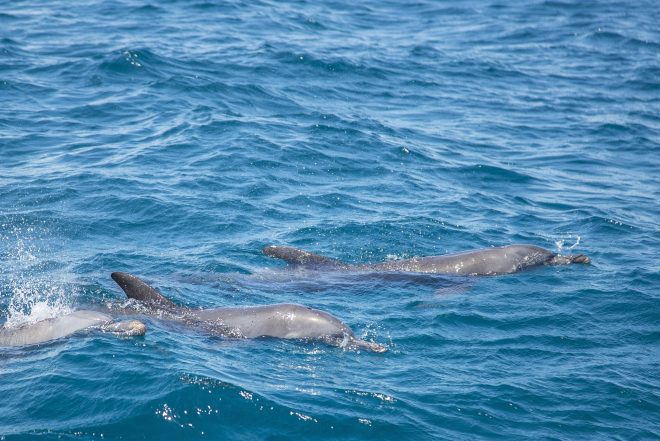
Perhaps this is The Yacht Week’s most distinctive quality: it does not promise to erase reality, but for a few days it changes its system of coordinates. Music continues to do what it has always done, giving a shared sense of time to people who do not know one another. Except that, this time, that time moves across the water... just like dolphins do! Provided you are lucky enough to spot them, as we were ;)
