


The Underground Has Changed. Maybe We Should Stop Pretending It Hasn’t.

Everyone wants to be underground. Artists, clubs, festivals and entire scenes continue to use the word as a marker of authenticity. But when underground culture can sell thousands of tickets, build global stars and operate through the same professional machinery as the mainstream, what exactly are we describing?
UNDERGROUND COMPARED TO WHAT?
Underground is one of those words electronic music uses as though everyone agrees on what it means. Imagine two artists. One has 8,000 followers, releases independently, throws parties for 200 people and works without a major booking agency or international PR operation, but makes relatively accessible techno. The other makes abrasive, experimental music, has 600,000 followers, commands five-figure fees, works with international management and appears on major festival line-ups around the world. Which one is more underground?
The answer depends entirely on what we think the word describes. If underground is determined by sound, perhaps it is the second artist. If it is about scale, probably the first. If independence matters most, the answer changes again. The problem may be that we are still using one word for three things that no longer necessarily exist together: underground music, underground culture and the underground music industry. Once separated, the contradictions become much easier to see.
Spend enough time reading electronic music press releases and another pattern becomes impossible to ignore. Raw. Authentic. Uncompromising. Community-driven. Underground. These words arrive attached to professional press photos, PR campaigns, booking agencies, management teams, social strategies, guest lists and carefully constructed visual identities. The underground has developed its own recognisable language: concrete walls, flash photography, industrial typography, black clothing, secret locations, limited tickets and the promise of something existing beyond the mainstream.
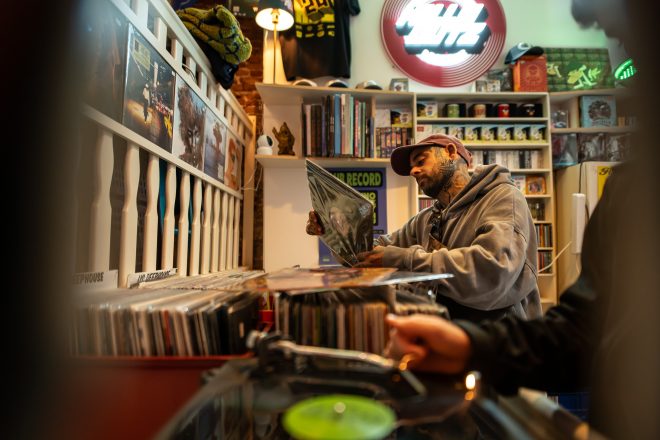
None of that makes a project fake. Artists need photographs and promoters need to sell tickets. Clubs need security, sound systems, technicians, bartenders, electricity and rent. DJs need to be paid. Even a warehouse party eventually discovers that authenticity does not pay an invoice. The romantic idea of an underground completely detached from money has always been questionable. What has changed is that underground culture has developed an aesthetic so recognisable that it can now be reproduced, packaged and sold like any other cultural identity. The question is no longer whether the underground can be marketed. Clearly, it can. The question is when its language stops describing something and starts selling it.
Electronic music has been through versions of this cycle repeatedly. Sounds emerge away from dominant culture, develop communities around them, establish their own spaces and eventually become desirable beyond those communities. House and techno travelled far beyond the environments that created them. Rave culture generated its own enormous commercial ecosystem. EDM turned electronic music into stadium entertainment. More recently, melodic techno expanded dramatically, while hard techno has moved from more specific circuits into some of the largest spaces in European electronic music. None of this necessarily means the original culture failed. It may simply be what successful culture does.
A scene creates a sound. The sound creates a community. The community creates desirability, and desirability creates scale. Scale attracts agencies, festivals, sponsors, media and money. Eventually, something that existed partly because it was outside the centre begins moving towards it. Pop, after all, has never inherently meant good or bad. It means popular. Electronic music sometimes struggles with this distinction because credibility within club culture has historically been tied to distance from the mainstream.
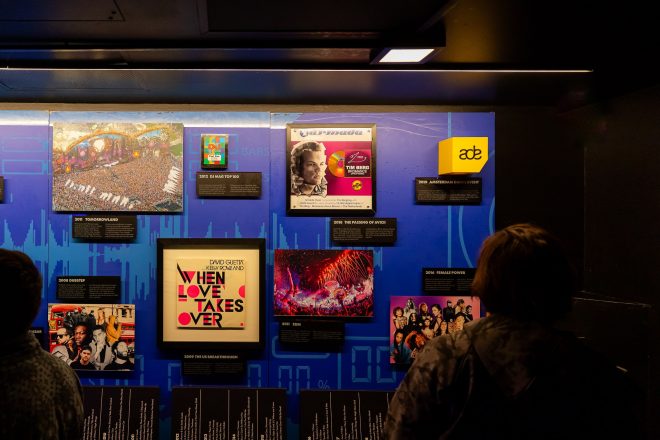
SUCCESS IS A STRANGE WAY TO LOSE CREDIBILITY
This is where underground culture can trap itself. We celebrate small artists, tell people to support independent labels and complain that promoters should take more risks. Then an artist succeeds. The rooms become bigger, the fee increases, an international agency arrives and festivals start calling. Suddenly, the growth everyone demanded becomes evidence that the artist has somehow lost authenticity. If commercial failure becomes a prerequisite for underground credibility, we are effectively asking independent artists to remain economically unsuccessful to prove that they belong.
That cannot be the answer. A promoter should be allowed to make money. A label should be able to grow. An artist should be able to pay rent, travel and charge more when thousands of people want to see them. Professionalisation does not automatically erase culture, just as sponsorship does not automatically destroy a party. A more useful question might be what happens to control as the money increases. Who chooses the line-up? Who owns the event? Who decides which partnerships are acceptable? Who controls the music, and who can still say no? Maybe money itself is not what moves something away from the underground. Dependency might matter more.
This also explains the strange category of the underground superstar. A DJ can sell thousands of tickets in Amsterdam, Berlin or London, command substantial international fees and have hundreds of thousands of followers while remaining almost completely unknown outside electronic music. They can be celebrities inside one cultural ecosystem and anonymous everywhere else: massive within the underground, invisible outside it. Trying to find an arbitrary point where underground ends quickly becomes ridiculous. Is it 100,000 followers? A €10,000 fee? Five thousand tickets? A festival headline? A brand partnership?

Scale alone cannot answer the question because underground only makes sense in relation to something else. Underground compared to what? An artist can operate at superstar scale within techno while making music that remains far removed from commercial radio or conventional pop culture. Conversely, an unknown producer with 70 monthly listeners is not automatically underground simply because nobody knows who they are. Obscurity and underground are not synonyms. Something else has to exist around the music: a community, an alternative culture, a set of spaces or values, perhaps an infrastructure operating outside or in opposition to whatever currently occupies the centre.
That culture is also what makes the underground commercially attractive. Music scenes do not only create records; they create belonging. Clothing, artwork, venues, language, ways of dancing and behaving become signals that allow people to recognise one another. Hard techno offers a particularly visible contemporary example: its visual language and fashion have become almost as recognisable as its tempos and production. Once those codes are recognisable, however, they are also reproducible. The industry does not necessarily need to invent the next cultural movement. It can wait for a community to build one, identify what makes it desirable and package those elements for a larger audience.
This is often described as dilution, and sometimes it undoubtedly is. A sound can be stripped of increasingly specific elements until what remains is accessible enough to enter popular culture. But sometimes the process is simply evolution. Either way, the people looking for something outside dominant culture rarely disappear when their scene becomes larger. They move. Different rooms open, different records get made, another tempo becomes interesting and another group decides that what came before has become too predictable, commercial or visible. The underground does not disappear when the mainstream absorbs parts of it. It relocates.
THE UNDERGROUND DOESN’T DISAPPEAR. IT MOVES.
There is also something uncomfortable about expecting artists themselves to resist this movement indefinitely. Of course, some DJs genuinely prefer 300-capacity clubs, extended sets and communities where almost everyone knows one another. Not every artist dreams of Tomorrowland, Awakenings or an arena. But creating music generally involves wanting somebody to hear it, and success naturally creates the possibility that more people will. Wanting to travel, earn a living and reach a larger audience does not automatically contradict experimentation, independence or community.
Perhaps the more revealing question is not how big an artist becomes, but what they are willing to change in order to become bigger. Do they change the music, the set, the venues, the partnerships or the people around them? Do they retain control of their project as the machinery grows? Most importantly, do they maintain a meaningful relationship with the culture that built them? Scale can tell us how successful something has become. It tells us considerably less about why it exists.
Music media cannot pretend to observe this process from somewhere outside it either. Magazines, radio, platforms, festivals, DJs and tastemakers have always participated in determining which underground movements become visible. A small scene receives coverage, an artist gets interviewed, a photographer documents its aesthetic, a festival books the sound and another publication notices. Visibility compounds until everyone eventually asks when the scene became mainstream. There is rarely one identifiable moment. We document emerging culture, but in documenting it we also amplify it.
Maybe underground was never supposed to be a permanent status. Perhaps it is better understood as a position relative to whatever culture currently occupies the centre. Something develops outside, underneath or in opposition to that centre, builds its own language and community and, if successful enough, eventually sends parts of itself towards the mainstream. Then something else begins growing underneath it. In that sense, underground is less a genre than a cultural position, and certainly not something that can be established simply by writing RAW across a press release.
There can be money underground. There can be professional teams, successful labels, ambitious promoters, large audiences and even superstars. The bigger those things become, however, the harder the word has to work. Maybe that is why electronic music refuses to let it go. Not because we have ever completely agreed on what underground means, but because being perceived as underground still carries cultural value. And as long as authenticity has value, someone will find a way to sell it.
