


Spacer Woman: Staying In Motion
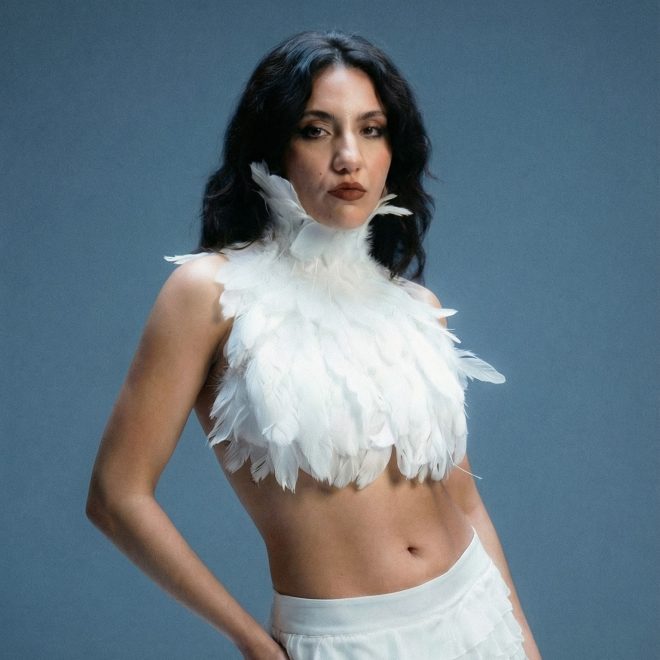
The first time Spacer Woman played in public, there was nothing to announce it as a beginning.. An off-location in Brandenburg, held together by trust, logistics and the collective willingness to disappear for a night. What mattered wasn’t who was playing, but how the room would be shaped once sound began to move through it.
Even then, her attention was fixed on how one moment leans into the next. She wasn’t thinking about tracks as units, but as instruments of emotion, capable of bending time and perception. The intention was never to make “people dance”, but to create a space where people could drift inward without being asked to “perform”. The dancefloor, for her, was already a site of interior movement rather than release.
That way of thinking would later dafine her as an artist. A preference for atmosphere over assertion, a belief that ambiguity could be held without needing to resolve itself into “spectacle”. The music didn’t need to explain where it was going, only that it was moving.
Our conversation unfolds the way Spacer Woman’s sets do: circling memory, pausing on doubt, allowing meaning to surface gradually rather than being extracted on demand. What emerges is not a career outlined in milestones, but a state of becoming that remains deliberately unfinished.
If something has stayed constant since that night in Brandenburg, it isn’t confidence or ambition. It’s the willingness to continue without certainty. To move forward without requiring the ground to fully stabilise first. Not as an act of bravery, but as a form of practice.
“Even at that first rave, I was already thinking about the set in terms of storytelling,” she says. “I never wanted to just play tracks. It was about taking people somewhere emotionally. I always tried to open a set with a certain feeling or message, something that creates connection rather than just energy.”
That idea of connection was never framed as spectacle. It was quieter than that. A slow hypnosis rather than a release. “It was never just about making people party,” she continues. “It was about creating a journey you could disappear into for a while.”
The language she uses hasn’t changed much since. Journey. Disappearance. Emotional pull. These aren’t metaphors added later to give coherence to a story. They were already operative. Even her early record choices reflected that inner logic. Italo, Indie Dance, Dark Wave. Artists whose music carried a certain melancholy, a softness inside propulsion.
“Looking back, I realise many of the sounds I loved then are still present today,” she says. “That darker, melodic, slightly nostalgic space still inspires me.”
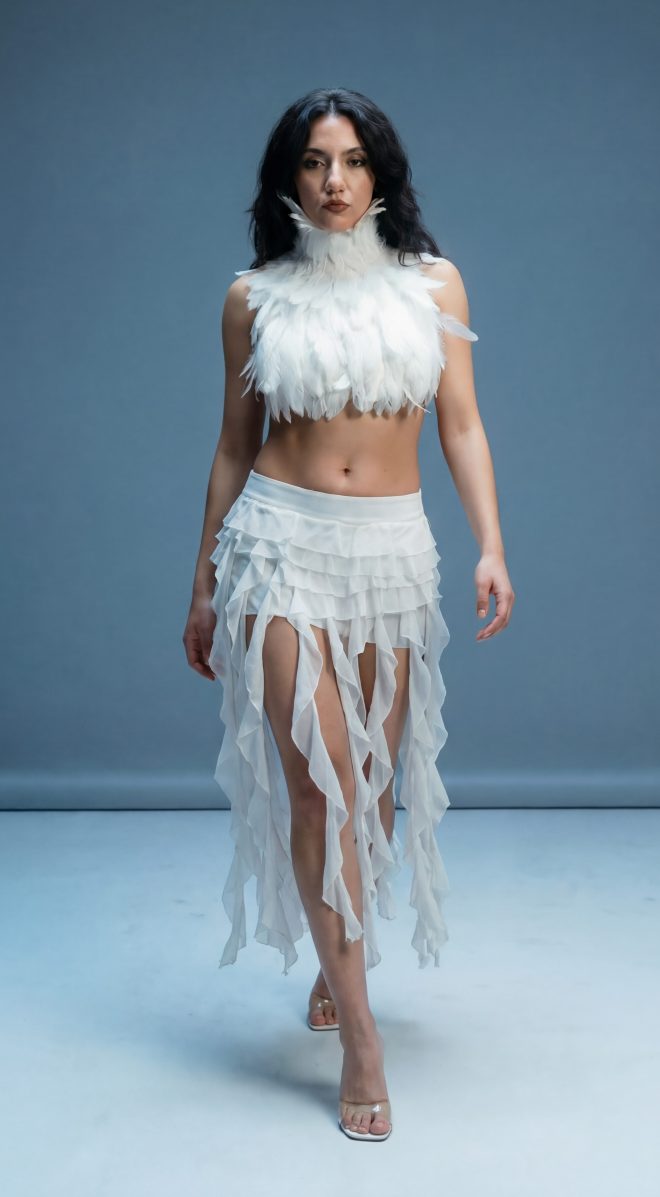
One memory stands out with particular clarity. Hearing J-Zbel’s Tunnel Vision at a festival, played by Adiel, just as she was heading back to her tent. “We were literally walking away,” she remembers. “And when that track came on, we ran immediately to the stage. That moment stayed with me. It describes my sound emotionally even now.”
What’s striking is how close that night came to not happening at all. The day before her first public set, panic took over. Not theatrically. Practically.
“I remember thinking very clearly, ‘I can’t do this,’” she says. “I almost cancelled.”
That feeling didn’t disappear with experience. It simply changed its role. “Now, years later, this is my life. Maybe what stayed constant is that I’ve always been scared, but I still did it anyway.”
That same pattern repeated when she moved to Berlin. Born in Izmir, raised in Bursa, later studying cinema in Istanbul, she arrived in the city already used to displacement. But Berlin demanded a different kind of patience.
“The hardest part wasn’t music,” she says. “It was integration. Learning the language, finding work, building stability, taking care of my mental health. Only once I felt grounded could I give space to my passion,” she explains. “
For years, adaptation was more important than pursuing music seriously.”
That delay reshaped her relationship with ambition. Instead of urgency, there was accumulation.
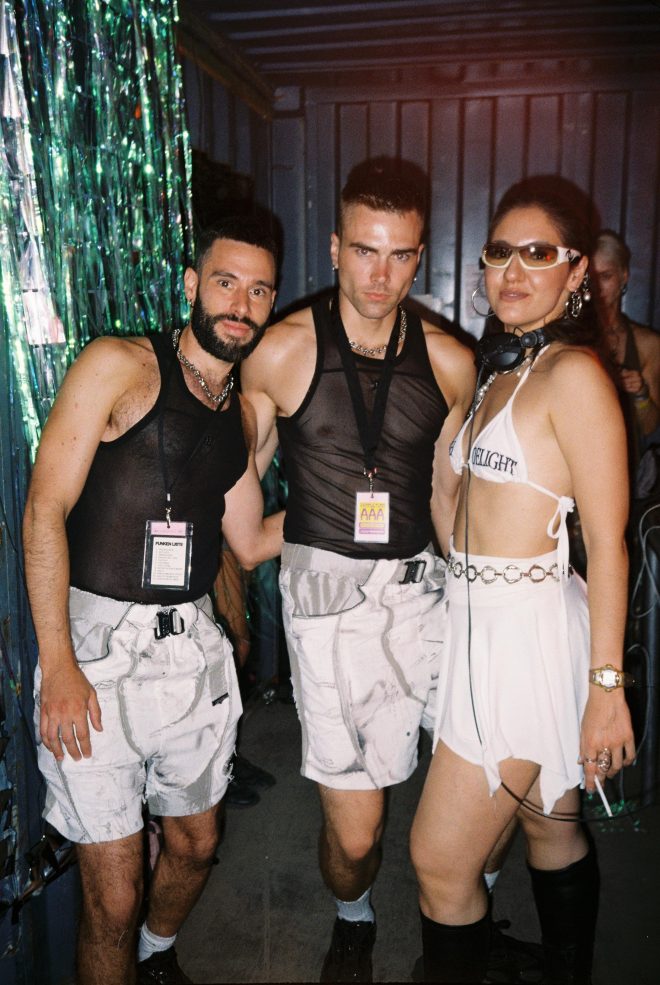
“Maybe that’s why my path took longer, but it also gave me stronger foundations. I experienced different scenes, cultures and perspectives before fully entering the club world. I never wanted fame or quick success, my motivation grew slowly, through working on myself, finding confidence and understanding where I belong creatively.”
That slowness carried through to With Every Step, her upcoming release on Ritmo Fatale. The track didn’t arrive through positioning or timing, but through relationship. Her connection with Kendal developed over years, grounded in shared values rather than momentum.
“Kendal and I have been in touch since around 2022. He’s someone I deeply respect, not only musically but also for how he builds community and supports artists because of their music, not their numbers. He constantly evolves and treats artistry as something bigger than just DJing, and that’s very inspiring to me.
When I made With Every Step, Ritmo Fatale immediately felt like the right home. Kendal followed the track from early versions to the final one with my vocals, and he trusted my vision completely. There was no pressure to adapt it; he simply supported the direction.
So the emotional identity of the track didn’t come from strategy, but from the fact that both sides naturally aligned.”
Across these moments, a pattern emerges. Not growth as escalation, but continuity. Fear doesn’t vanish. Doubt doesn’t disqualify. Things take time. And rather than resisting that, Spacer Woman has learned to work within it. To keep moving without demanding certainty. To let coherence form slowly, one step at a time.
The decision to place her own voice so openly at the centre of With Every Step didn’t arrive as a technical breakthrough. It came as a confrontation. Spacer Woman had worked with vocals before, but always at a distance, filtered or fragmented. This time, the distance collapsed.
“I’ve always wanted to sing,” she says, “but it took a long time to find the courage to come back to it.”
The track began differently. Vocal samples sat in the early versions, functional but impersonal. They carried texture, not truth. “Something was missing,” she explains. “It didn’t feel honest enough.” The realisation was uncomfortable in its simplicity. If the track was going to mean what she needed it to mean, it couldn’t hide behind borrowed voices.
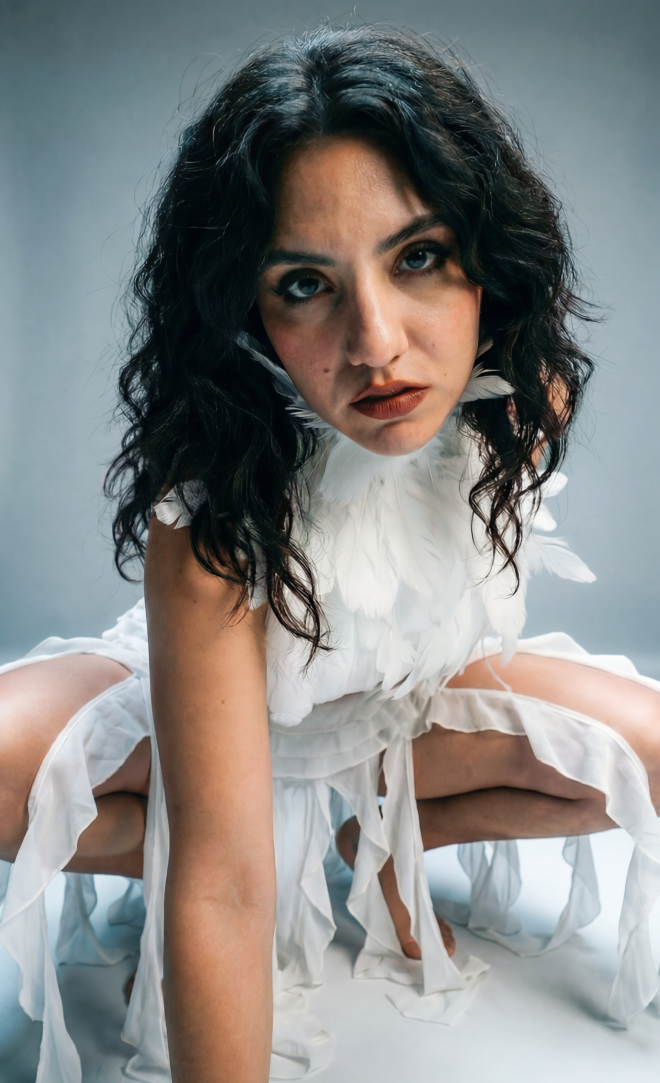
“I’ve used my voice before, but never this openly or melodically in the foreground. Singing was always something I wanted to do, but it took time to find the courage to come back to it.
The track first used vocal samples, but they didn’t feel personal enough. Something was missing. I realized that if I wanted the track to feel honest, it had to come from me. Even though I didn’t fully know how to do it, I followed my instinct.
It wasn’t an easy process. There were moments when people told me to drop the idea, and I almost did. But nobody else sees the vision inside your head, so sometimes you just have to trust your instinct.
I’m not doing it to impress anyone; I do it because I need it for myself. And if people connect with that, it becomes even more meaningful; that’s the beautiful part.”
Recording the vocals pushed her outside any sense of control. There was no formal training to fall back on, no technical authority to shield the emotional risk. “It wasn’t an easy process,” she admits. “There were moments when people told me to drop the idea, and I almost did.”
What kept it alive wasn’t confidence. It was necessity. “Nobody else sees the vision inside your head,” she says. “So sometimes you just have to trust your instinct.”
Placed next to Close Your Eyes, the track reveals another layer. The two records speak to each other quietly, less as opposites than as different interior states. Spacer Woman hears them as chapters rather than contrasts.
“They carry the same emotional voice,” she says, “but they tell different stories.”
With Every Step faces outward, even as it remains introspective. “It’s about continuing forward, no matter what happens or what others say,” she explains. “About resilience and trusting yourself.”
Close Your Eyes, by contrast, withdraws. “It’s more about letting go and turning inward,” she says. “Shutting everything out and entering a trance state where emotions guide you rather than thoughts.”
Together, they map a subtle shift. Not reinvention, but consolidation.
“Looking back at both tracks, I see my own growth,” she reflects. “I’m becoming more confident in my path and less willing to compromise creatively. Sometimes you don’t even know the idea yet,” she says. “But by working, experimenting and following curiosity, the missing pieces eventually fall into place.”
Vulnerability sits at the centre of that process, not as a theme but as a working condition. For Spacer Woman, it isn’t optional.
“If you want to create something honest, you have to be vulnerable,” she says. “The more you connect with yourself, the clearer your creative voice becomes.”
The real turning point arrived during the vocal sessions for With Every Step. The moment when abandoning the idea would have been easier than continuing.
“At some point, I was told again to drop it,” she recalls. “And I almost did.”
Pushing through that resistance reframed something fundamental. “The track is based on a very personal story,” she says.
“Turning that vulnerability into music showed me that honesty isn’t weakness.” She pauses. “It’s actually where meaningful art starts.”
Rather than smoothing those moments out, Spacer Woman now allows them to remain audible. They aren’t obstacles to overcome. They’re the terrain she works within.
The residency at PRNCPTL didn’t arrive as a solution. It arrived as a consequence. By the time it happened, Spacer Woman had already spent years circling the idea of belonging, questioning why it carried so much weight in a scene built on movement.
“I wasn’t specifically waiting to become a resident anywhere,” she says. “But I often questioned why we humans feel such a strong need to belong somewhere, especially when you feel like you don’t fully fit in.”
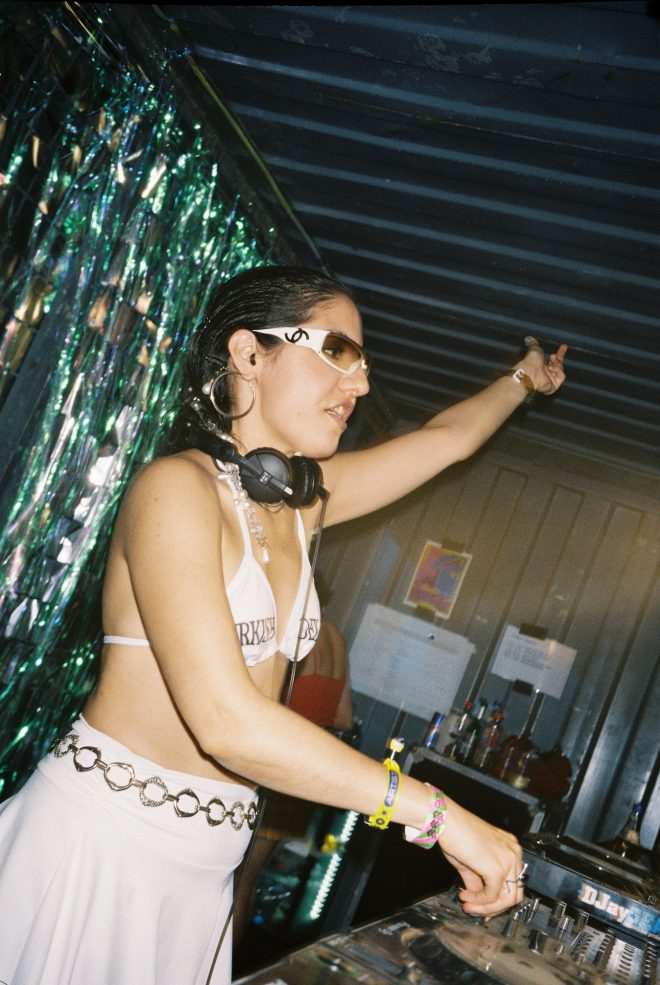
Despite being socially connected, she felt structurally alone. “For a long time, I felt lonely in the scene,” she admits. “I kept wondering if I would ever really belong somewhere.” The discomfort wasn’t dramatic, but persistent. An awareness of being present without being anchored.
Over time, that tension reframed itself. “Eventually I realised that maybe not fitting perfectly anywhere is actually part of who I am,” she says. When the residency finally took shape, it wasn’t corrective. It didn’t resolve anything. “It felt meaningful because it came naturally,” she adds, “not because I forced it.”
If there’s advice she would give to her younger self, it isn’t strategic. “Relax,” she says simply. “Things will happen at their own pace.”
That same patience defines how personal experience enters her music. For Spacer Woman, tracks don’t begin as club tools. They begin as internal work. Music has always functioned as a form of emotional processing, long before it became public.
“As a teenager, I escaped into albums,” she says. “I built emotional worlds through music when reality felt difficult.”
That instinct remains. Today, she works from introspection outward. “Everything starts with working on yourself,” she explains. Journaling, reflection and inspiration from film and visual art form the emotional framework. Rhythm comes later. The task is translation.
“I try to create tracks that carry emotional depth but still function in a club,” she says. “Melody and atmosphere come from personal experience, while rhythm connects it to the dancefloor.” The goal isn’t balance as compromise, but coexistence. “People can dance and still feel something real.”
That sense of emotional continuity surfaces clearly in her reinterpretation of In The Shadows by The Rasmus. The song mattered deeply to her growing up. Not nostalgically, but structurally.
“It captured the feeling of being an outsider,” she says. “Searching for a way out while trying to stay true to yourself.”
That feeling didn’t disappear with adulthood or scene access. “Even later in life and within the music scene, I often felt like I didn’t fully belong anywhere,” she reflects. Reworking the track became a way of speaking across time. “It was a way to reconnect with my younger self,” she says. “It’s nostalgic, but also healing.”
Community, however, remains central. Not as branding, but as survival. Chosen family in Berlin. Artists who offer reflection rather than validation. One presence has been formative since adolescence: Lady Gaga.
“I’ve always admired how Lady Gaga never compromised who she was, even when things were going wrong or people didn’t believe in her. Knowing that she was bullied, rejected, or told she wouldn’t succeed, and still kept pushing forward, is something that really stayed with me. She created her own opportunities and worked relentlessly until people finally understood her vision.
What inspires me most is that she’s not just a musician. She brings together music, fashion, performance, visuals, theatre, dance, all parts of her personality exist together in her art. That really resonates with me because I also don’t see music as just sound or something to dance to. It’s emotion, storytelling, healing, and creating moments that people can connect to.
Fashion and visual expression were never separate from the music. Long before clubs or studios, she was already staging herself.
“As a teenager, I used to set up my camera at home and do little photo shoots alone,” she says. “Trying out different outfits, different characters.”
It wasn’t performance aimed outward. It was exploration. So bringing that playful, expressive instinct into her artist identity now doesn’t feel like a reinvention. It feels continuous.
Another lesson she carries closely is about visibility. About the right to occupy space without apology.
“Especially as women, we’re often taught to stay small or quiet to avoid criticism. Seeing someone be unapologetic (Gaga) about who they are gave me courage to do things in my own way.”
What remains from that influence isn’t imitation, but orientation. Trust yourself. Stay with the vision even when it isn’t legible yet.
“If I can create moments through music that people remember not because of me, but because of how they felt in that moment, then that’s the most beautiful thing art can do.”
What Spacer Woman is building doesn’t ask for consensus. It doesn’t rush to define itself or resolve its contradictions. It moves through clubs, records and relationships with the same quiet insistence that shaped that first night in Brandenburg. Less concerned with arrival than with attention. Less interested in being seen than in being felt. The work continues not as a statement, but as a practice: listening closely, trusting motion, and allowing each step to remain open rather than complete.
