


RIVELLINO: “My Music Is Born From the Dancefloor”
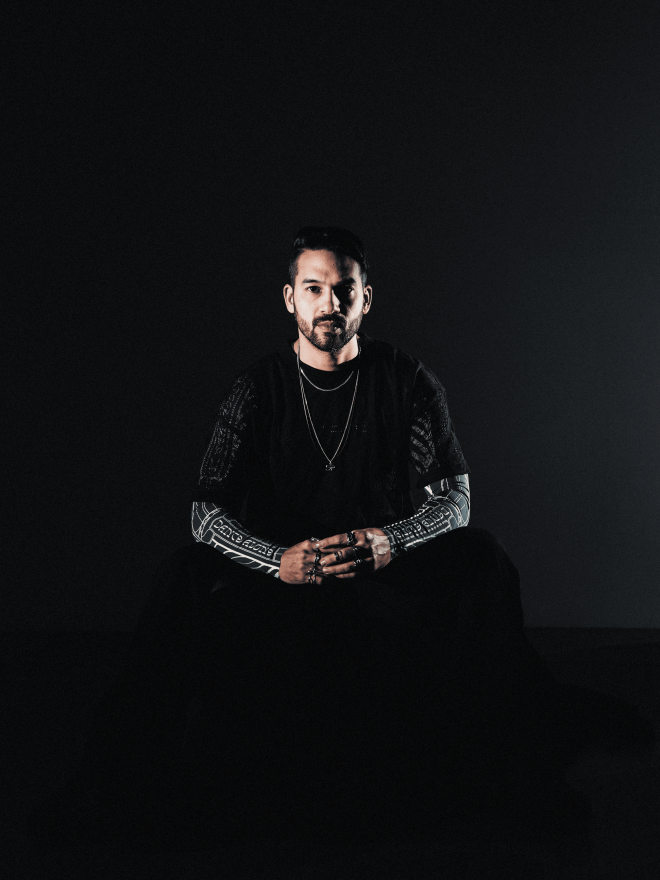
Rivellino belongs to a new generation of artists who understand electronic music not merely as a sound, but as a cultural and emotional experience. Born in Colombia and based in Barcelona for several years, his project exists at the intersection of Latin groove, Indie Dance depth, and an increasingly club-focused European vision. It is a duality that has ultimately shaped a distinctive identity within today’s electronic music landscape.
In this conversation, we discuss the influence of his Colombian roots and European club culture on his sound, the evolution of his more underground side, the importance of groove and storytelling within his sets, and the creative moment he is currently experiencing through releases on labels such as When Stars Align, Simulate, DSK Records, and the upcoming release of Demonizing on Fideles’ label. We also explore the support he has received from artists such as Solomun, CamelPhat, Raxon, and Trikk, his perspective on connecting with Central European audiences, the artistic freedom he finds in scenes such as Germany and the Netherlands, and his long-term vision as both an artist and a community builder through projects like Valhalla.
You were born in Colombia but have spent many years living in Europe. How have these two cultures influenced the way you understand electronic music?
I believe both have been fundamental in shaping who I am as an artist. From Colombia, I carry a deep connection to rhythm, percussion, and a highly emotional way of experiencing music, something that is very characteristic of my hometown, Cali. It is a culture where music is woven into everyday life, and that inevitably finds its way into my productions.
Europe, on the other hand, has allowed me to immerse myself in club culture, its origins, its true value, and the reasons why it was created in the first place. Living in Barcelona has exposed me to a wide variety of scenes, artists, and audiences, all of which have helped refine my DJing technique.
Today, I feel that my sound is the result of this fusion: Latin energy and groove coexisting with the depth, sophistication, and technical precision of the European electronic music scene.
What differences do you notice between Latin American and European audiences? Has anything about European club culture particularly surprised you?
They are very different audiences, and that is precisely what makes it so interesting.
In Europe, I feel there is a deeply established club culture. Audiences tend to be more open to discovering new music and connecting with sounds that move beyond the familiar. As a DJ who has always tried to surprise people, take risks, and build journeys through music, I find that incredibly stimulating.
One thing that has particularly stood out to me is the level of attention people give to a set. Not only to the music itself, but also to the technical and narrative structure behind it.
In Latin America, the connection to music is often more emotional and intense, but historically there has been a stronger tendency toward recognizable tracks. That said, this is changing rapidly. More and more collectives, clubs, and promoters are embracing adventurous programming and fostering a more mature club culture.
In my hometown, for example, projects like Sala Kbron are doing incredible work in this direction by creating spaces where artists can experiment and audiences are willing to be surprised.
Your sound moves naturally between melodic and underground territories, combining Indie Dance, Melodic House & Techno, and elegant touches of Afro House. How has your sound evolved over time, and where do you feel it sits today?
In my early years, I was heavily focused on the melodic side of electronic music, largely because my mentors, Kamilo Sanclemente and Golan Zocher, come from that world.
Over time, I began to feel the need to incorporate more groove, more tension, and a stronger dancefloor-oriented identity.
Today, I find myself in a place where I am trying to balance the unusual with the functional. I am interested in creating music that has depth, but that also works physically inside a club environment. I believe contemporary Indie Dance gives me the perfect space to explore that intersection between emotion and hypnosis.
Rather than following a particular trend, my goal is to build a sound that feels recognizable and genuinely my own.
Artists such as Solomun, CamelPhat, and Raxon have supported your music and played it in their sets. What has that experience been like for you? Does it create pressure, motivation, or a bit of both?
It is something I am incredibly grateful for because these are artists I have admired for many years and who have had a significant influence on my musical development.
When someone like Solomun, CamelPhat, or Raxon connects with one of your productions, you realize your work is reaching places that once felt very far away.
More than pressure, I experience it as motivation. Of course, you always want to keep growing and maintain a certain standard of quality, but I try not to become obsessed with external validation. My focus remains on making music that truly represents me and continuing to evolve as an artist.
There is something very physical about your music. The groove, the vocals, the percussion. Even your more melodic tracks feel deeply connected to the dancefloor. What do you need to feel in a track before you know it is finished?
I need to test it and observe the audience’s reaction.
When a track creates an almost immediate physical response on the dancefloor, I know it is finished.
I am fortunate enough to test my productions firsthand during my performances. If a track ignites the dancefloor, that is usually the signal that it is ready to be sent to labels and shared with other artists.
For me, groove is probably the most important element. I love records that tell a story while maintaining a constant connection to the dancefloor.
Your sets show a strong sense of storytelling, moving between groove-driven moments, underground energy, and emotional peaks. How much planning goes into your performances?
I try to find a balance between preparation and spontaneity.
I always prepare music and map out possible directions before a show, but once I am standing in front of an audience, I leave a great deal of room for improvisation.
Every dancefloor is different. What works one night may not work the next. For me, the most fascinating aspect of being a DJ is that ongoing conversation with the audience’s energy.
I like to think of every set as a journey that is built in real time.
Over the past few months, you have released music on labels such as CamelPhat’s When Stars Align, Massano’s Simulate, Raxon’s DSK Records, Magit Cacoon’s Mago Music, and soon Fideles’ imprint. How do you decide where each release belongs?
Every track has its own identity, and not every record belongs in the same ecosystem.
When considering a label, I try to understand whether there is a genuine connection between the music, the label’s artistic vision, and its audience. Beyond visibility or size, coherence is what matters most to me.
I have been fortunate enough to collaborate with a wide range of labels, and that has allowed me to explore different sides of my sound while maintaining a clear artistic direction
Tell us more about Demonizing.
Demonizing represents the creative space I currently find myself in.
It is a very distinctive track that combines Indie Dance and Afro influences with a darker, more club-oriented energy. There is a strong emphasis on groove, percussion, and a hypnotic synthesizer that evolves throughout the entire record.
From the very beginning, I felt it aligned perfectly with Fideles’ artistic vision, and I am extremely happy that it will be released on their label.
It is a production that clearly reflects where I want to take the Rivellino project over the coming years: a sound that feels different, unusual, yet highly effective on the dancefloor.
Central Europe has one of the deepest relationships with club culture in the world. How do you approach the challenge of connecting with audiences in places like Germany and the Netherlands?
What attracts me most about these markets is the artistic freedom they offer.
Germany and the Netherlands have a profound electronic music tradition and audiences with a deep musical understanding. That creates an environment where artists can take risks and explore less conventional ideas.
I would love to present a very honest version of Rivellino there. Perhaps a rawer, more underground, and more experimental side than what people usually see from the outside.
A large portion of the music I have developed in recent years comes directly from that search. That is why I feel these markets provide a very natural environment for the project’s evolution.
As your profile continues to grow in Central Europe, what do you think people still don’t know about Rivellino?
I think most people primarily know me as a DJ and producer, but perhaps they have not yet seen the full scope of my long-term artistic vision.
I am interested in building something that goes beyond individual releases or performances. I am passionate about creating experiences, connecting communities, and developing concepts with their own unique identity.
I feel that this more creative and conceptual dimension of the project still has a great deal left to reveal.
In an era where social media and short-form content influence so much of the music industry, how do you balance maintaining your artistic identity while adapting to new realities?
It is probably one of the biggest challenges artists face today.
We live in a world where everything moves extremely fast and attention spans are often measured in seconds. The challenge is finding a balance between staying true to yourself and continuing to connect with new audiences.
In my case, vocals play a very important role. I enjoy producing music that can be dark, hypnotic, or even slightly strange at times, but a powerful vocal can create an immediate emotional connection with the listener.
I use these more accessible elements as a gateway into a musical universe that remains deeply rooted in club culture, groove, and the dancefloor.
Rather than adapting to trends, I try to find new ways of communicating my identity while remaining relevant.
Alongside your career as an artist, you have developed projects such as Valhalla and Avalon, both focused on creating experiences and communities around electronic music. What have you learned from being on the other side of the industry?
It has helped me understand the scene from a much broader perspective.
When you organize events or develop your own concepts, you begin to appreciate aspects that often go unnoticed by artists: the complete audience experience, the importance of thoughtful curation, and the need for safe and inclusive spaces that allow communities to grow around a shared vision.
All of this directly influences the way I produce and perform. I constantly think about how the music will feel within a real-life environment, surrounded by people looking for an authentic experience.
Valhalla was born in Barcelona, but it feels like more than just an events brand. What is the philosophy behind the project?
Valhalla was created with the idea of building experiences where music, community, and artistic identity carry equal importance.
From the beginning, we wanted to move beyond the concept of a simple event and create a platform capable of connecting artists, audiences, and culture on a deeper level.
In the long term, I would like to see Valhalla continue expanding internationally, collaborating with new artists, venues, and cities while preserving the essence that defines it: musical quality, audience experience, and inclusivity.
What do you believe sets Rivellino apart from other artists within the new generation of Indie Dance and Melodic House?
I think what differentiates me most is the path I have taken through the scene long before receiving recognition as a producer.
My relationship with electronic music did not begin in the studio. It began on the dancefloor, inside clubs, at festivals, through event organization, and through years of observing how this culture truly works.
Today, there are incredible AI-powered tools capable of producing technically impressive music. But there is one thing technology cannot easily replicate: the accumulated experience of having lived the culture from the inside and understanding what it truly represents.
My goal has never been to chase trends. I have always tried to stay connected to the values that made me fall in love with electronic music in the first place: discovery, curiosity, community, and creative freedom.
Even when my music incorporates more accessible or melodic elements, I feel it always retains the underground spirit that has defined my journey as both an artist and a person.
Looking ahead to the rest of 2026, what do you believe will define the next chapter of Rivellino?
I believe the next chapter will be defined by an even clearer artistic identity.
I am working on new music that reflects the evolution of my sound, while also expanding my presence within the European scene through new releases and performances.
My goal is to continue growing organically, preserving the authenticity of the project and building a sustainable long-term career.
What is coming next is probably the most honest and mature version of Rivellino to date.
