


RIVA STARR | NL 2026 #08
THE FREEDOM TO MOVE
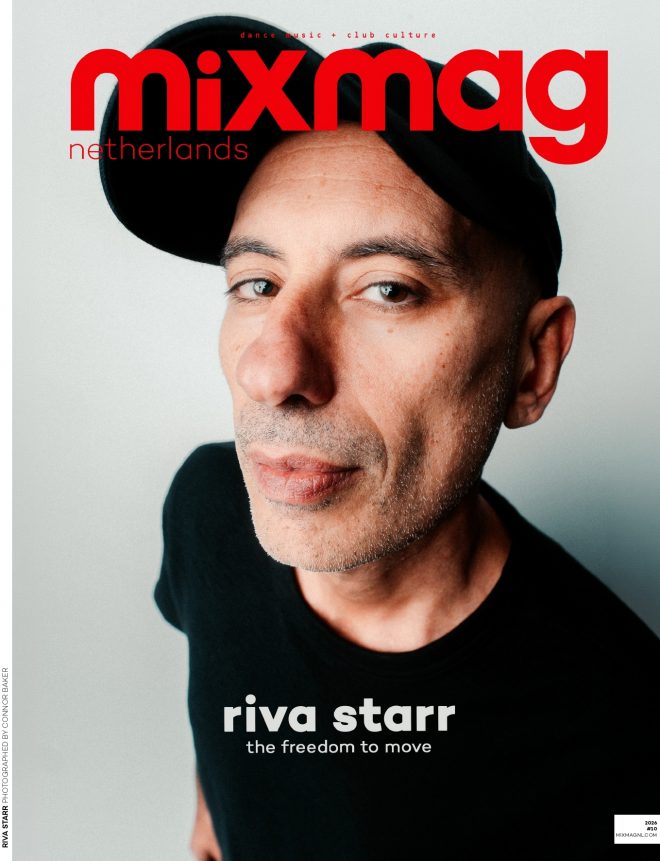
For Riva Starr, creative independence has never meant standing still. From walking away from the expectations surrounding his biggest records to building Snatch! into a home for new ideas, Stefano Miele has spent much of his career resisting the temptation to repeat himself. Now, with less to prove and an appetite for collaboration that continues to grow, he is discovering what freedom can mean when control is no longer the priority.
Success has a peculiar way of narrowing an artist’s possibilities. A record connects with an audience, a particular sound begins to attract attention, and suddenly the decisions that once felt instinctive become subject to expectation. The industry knows how to turn an unexpected moment into a repeatable formula. For Stefano Miele, better known as Riva Starr, resisting that process has shaped some of the most consequential decisions of his career.
The Italian producer has moved through several generations of electronic music without allowing any single period to determine what should follow. His catalogue reflects a sustained relationship with house, alongside excursions into techno, breakbeat, funk and soul. Yet the continuity lies less in genre than in the instincts behind the records.
“Oh God, that makes me feel old!” he laughs when asked about the pressure to remain relevant through changing musical trends. “I definitely felt that pressure more when I started, when I was still experiencing the changes of scenes and trends for the first time. Eventually I realised that people jumping from one bandwagon to the next were often just running around like headless chickens.”
The observation comes with the perspective of someone who has watched several musical movements pass through their moment of commercial prominence. Riva Starr understands the attraction of following what works. He has also experienced what happens when a successful record begins to dictate what an artist is expected to make next.
“I needed my own sound bible. My core has always been house, and techno through my Hyperloop project. The rest can evolve with the times, deep, tech, soul, funk, pop, whatever, as long as I’m the chef, not the trends.”
There is something revealing about that distinction. His identity is not attached to a fixed collection of sounds, but to the freedom to decide how those sounds belong together. And although he recognises that repeating a successful formula might have been commercially advantageous, the possibility has rarely interested him for long.
“Having had a few big records, repeating the formula was tempting, but I rarely did it. Maybe that was a mistake commercially, but it gave me credibility and freedom to keep moving forward.”
THE MOMENT AFTER THE HIT
Rave Repeat, his 2013 collaboration with Fatboy Slim and Beardyman.
The record travelled far beyond the underground environments from which much of Riva Starr’s music had emerged. Its success brought a considerably broader audience, along with invitations and expectations that could easily have established the direction of his following releases.
For many producers, that moment would have provided the foundation for an extended commercial strategy. Riva Starr remembers feeling something quite different.
“Definitely when ‘Eat Sleep Rave Repeat’ with Fatboy Slim exploded. It was everywhere, and suddenly I was getting endless requests to play more mainstream parties or make another record in the same style. Instead, I felt the need to go underground, so I made an album for Truesoul almost as a way of washing away all the industry noise I had accumulated.”
It was not a rejection of the record or its success. He enjoyed the experience, but recognised that continuing along the same path would mean allowing the reaction to his music to determine its future.
“I enjoyed the success, but then moved on without looking back.”
The decision recalls an earlier turning point. Before Riva Starr became his principal artistic identity, Miele had established himself producing breakbeat under the name Madox. As musical tastes shifted towards electro house, he found himself drawn instead to a different interpretation of house music.
“Rather than following everyone into electro house, I connected with people like Jesse Rose and Claude VonStroke, who were making this strange, exciting house music. That’s really where the Riva Starr sound was born.”
Both moments reveal a similar instinct. Rather than treating an established audience as something that needed to be protected at all costs, he allowed his curiosity to interrupt the trajectory already available to him.
The consequences were not always commercially predictable. But they established a relationship with music in which movement remained possible, even when staying in one place might have been easier.
BUILDING SOMETHING THAT CAN CHANGE
When Riva Starr launched Snatch! Records in 2010, that philosophy acquired a more permanent structure.
The label became a space where he could release his own music, explore collaborations and support producers whose work interested him without organising every decision around an external agenda. Its development has followed the same willingness to experiment that defines his individual productions.
“I run Snatch! with exactly the same philosophy as Riva Starr and my other projects: we have a vision, and we use the platform to develop it rather than simply follow trends.”
Over the years, that approach brought a number of artists into the label’s orbit during important stages of their development. Adam Port, &ME, Dennis Cruz, Michael Bibi and ANOTR all feature in his recollection of the music Snatch! helped bring forward.
One particular memory remains especially vivid.
“I even remember suggesting they change their original name because I felt they needed something more international, and then they came up with ANOTR.”
The anecdote says something about his involvement beyond the conventional responsibilities of releasing records. A label can provide a platform, but it can also become a place where artists receive the attention and encouragement needed to develop their own identities.
For Riva Starr, that relationship depends on maintaining a sense of purpose as the surrounding industry changes.
The volume of music now available presents an increasingly complicated challenge. Production has become more accessible, independent labels are easier to establish, and new technologies have introduced questions that would have been difficult to imagine when Snatch! began.
“It’s definitely more difficult now because there is simply so much music, and you also have to be more careful about AI-generated productions. But the fundamentals haven’t changed: I want great-sounding records, fresh ideas and either something functional in the club or genuinely innovative.”
His criteria are practical, but they also reflect a longer view of what a record can become. Immediate attention is not necessarily an indication of lasting significance. Some music reveals its qualities slowly, outside the momentum of a particular season.
“We’re not interested in chasing the flavour of the month. We’re thinking about the long haul, building a body of work that people can come back to years later and still discover something fresh.”
That commitment also gives Snatch! a role in his own development. The label allows him to approach projects with a degree of creative and practical independence that would not necessarily exist elsewhere.
His album Keep Me On The Dancefloor reflects that ambition. Beyond the recording process, considerable attention went into its physical presentation, including a gatefold double vinyl with artwork by David Shillinglaw.
For Riva Starr, the freedom to invest in those details is part of what makes the label valuable.
“Snatch! gives me freedom without anyone else’s agenda.”
THE ART OF LETTING GO
Independence has often been associated with complete creative control. Yet one of the more interesting developments in Riva Starr’s recent work has been his increasing willingness to share that control with other musicians.
Collaboration has become an essential part of his creative life, bringing him into contact with artists whose backgrounds and working methods do not necessarily belong to electronic music.
His enthusiasm begins with admiration, although musical ability alone is never enough.
“I’m a complete fanboy when it comes to artists I genuinely respect, so that’s always the first requirement. But the human side is equally important.”
A recent collaboration with Adam Port on VOD brought him together with JRM, a songwriter who has also worked with Frank Ocean. The encounter reflects his interest in introducing different musical perspectives into the studio, particularly when the participants do not share identical assumptions about how a record should develop.
“I like mixing the cards and seeing what comes out. Collaboration is almost the final level of production: you have to leave your ego at the door, understand everyone’s psychology and find harmony between different skills and personalities.”
There is a considerable difference between inviting someone to contribute to an established idea and allowing that person to change the direction of the music.
Riva Starr appears increasingly interested in the latter.
His experience working with musicians has taught him that a clear vision does not necessarily require controlling every detail. Particularly when making an album, he sees the producer’s role as something closer to directing a collective effort.
“It’s a bit like being the technical director of a football team: you have to choose the right players and understand how their individual strengths can work together to create the best team.”
The comparison captures both the discipline and the uncertainty involved. Selecting the right collaborators requires judgement, but the final result depends on what happens when those individuals begin responding to one another.
“You still need a clear vision, but you also have to give people enough space to bring something unexpected into the room. That’s where the magic happens. You never know exactly what the final result will be, and that’s the exciting part.”
It marks an interesting development in his understanding of independence. Earlier in his career, creative freedom often meant resisting the expectations of others. Now it also involves creating the conditions in which other people’s ideas can influence his own.
WHAT EXPERIENCE REMOVES
Riva Starr is equally candid when discussing his relationship with ego.
The first significant attention surrounding his music brought experiences that were difficult to anticipate. Television exposure, radio support in Italy and the sudden recognition of his productions briefly changed how he behaved.
“When I first started, I had a couple of years where I probably behaved a bit strangely because I was intoxicated by the response to my music, having videos on MTV, records on Italian radio and suddenly getting attention.”
He remembers that period without attempting to disguise its effect on him. The excitement of recognition gradually gave way to a clearer understanding of how easily it could interfere with the work.
“But I quickly realised that the music has to be the beginning and the end of the conversation. Ego can really blur your vision and damage the relationships around you.”
It is a particularly relevant concern in an industry where visibility and musical achievement have become increasingly intertwined. The pressure to maintain an image can consume considerable attention, sometimes at the expense of the relationships and creative processes that make the music possible.
Riva Starr does not believe ego should disappear entirely. Instead, he has developed a characteristically humorous way of distinguishing confidence from its more destructive counterpart.
“I think ego is a bit like cholesterol: there’s good and bad cholesterol. You need to get rid of the bad one while nurturing the good one.”
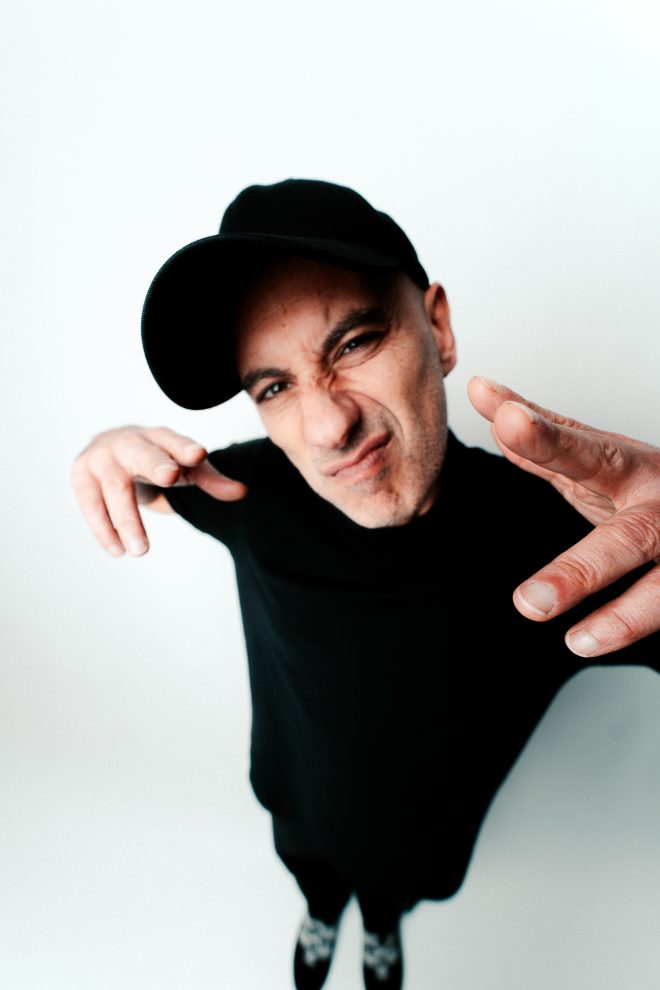
The analogy is funny, but the distinction is important. Artists need enough conviction to defend their ideas, particularly when those ideas do not correspond to established expectations. The difficulty lies in recognising when that conviction begins preventing them from listening.
“In an era where image, aesthetics and online hype can overshadow the music, I think it’s important to step back and remember why we’re here. The truly great artists I’ve met are usually the most humble.”
His enthusiasm for collaboration seems closely connected to that understanding. Working with other musicians requires a willingness to accept that the most interesting contribution may come from someone else.
Experience, in that sense, has not simply strengthened his confidence. It has also changed what he believes confidence should allow him to do.
NO FIXED DESTINATION
After decades of producing, releasing music, collaborating and running a label, Riva Starr could reasonably choose to work within the territory he already understands.
Instead, he remains attracted to situations where his experience offers no guarantee of knowing what will happen next.
“I’ve hardly followed the conventional house DJ/producer path anyway. I’m always moving. One day I can be completely immersed in a techno project like my life depends on it; the next I’m in a room with jazz musicians, fascinated by unexpected chords and insane melodies.”
The contrast is revealing. His interest in techno and jazz does not appear to come from an ambition to demonstrate stylistic versatility. What draws him is the opportunity to encounter unfamiliar approaches to rhythm, harmony and composition.
That curiosity continues to inform his collaborations, including his work with Close Counters on Push Your Luck. The project reflects his willingness to enter another creative relationship without treating the outcome as a declaration of a permanent new direction.
There is also a noticeable change in the way he speaks about his present position. The urgency that once accompanied commercial expectations has given way to a more personal motivation.
“To be honest, I feel like I’m only just starting to have fun. I’ve reached a point where I don’t feel I have to prove anything to anyone anymore.”
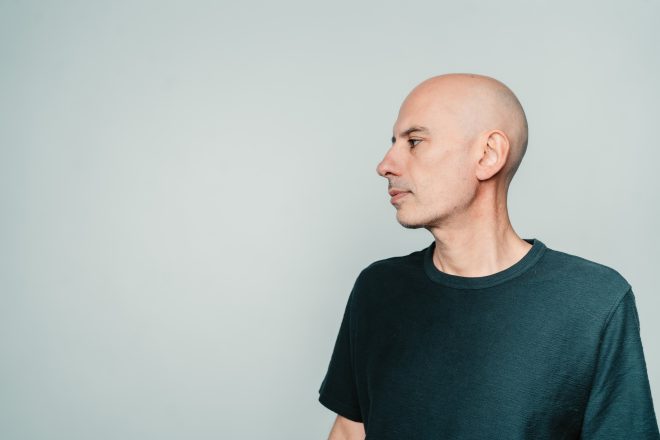
It is an unusual observation from someone whose career has already moved through so many different musical environments. Yet it makes sense when considered alongside the decisions that brought him here.
For years, independence required a certain degree of resistance. There were successful formulas to avoid, changing trends to navigate and expectations to confront. The ability to follow his instincts had to be protected.
Now, that same independence appears to offer something less defensive.
“Now I want to create things simply because I love creating them. I want to challenge myself, explore new territories and meet people from completely different corners of the music world who can teach me something and bring fresh energy into my universe.”
The desire to keep learning is perhaps the strongest connection between the producer who moved away from breakbeat to discover a different kind of house music and the artist who now finds himself fascinated by what jazz musicians might bring into a studio.
The circumstances have changed, along with the scale of his career and the people surrounding him. The curiosity remains.
And for Riva Starr, that is still enough reason to follow the next idea.
