


Nostalgix and the power of reinvention
ph: @tessapaisan
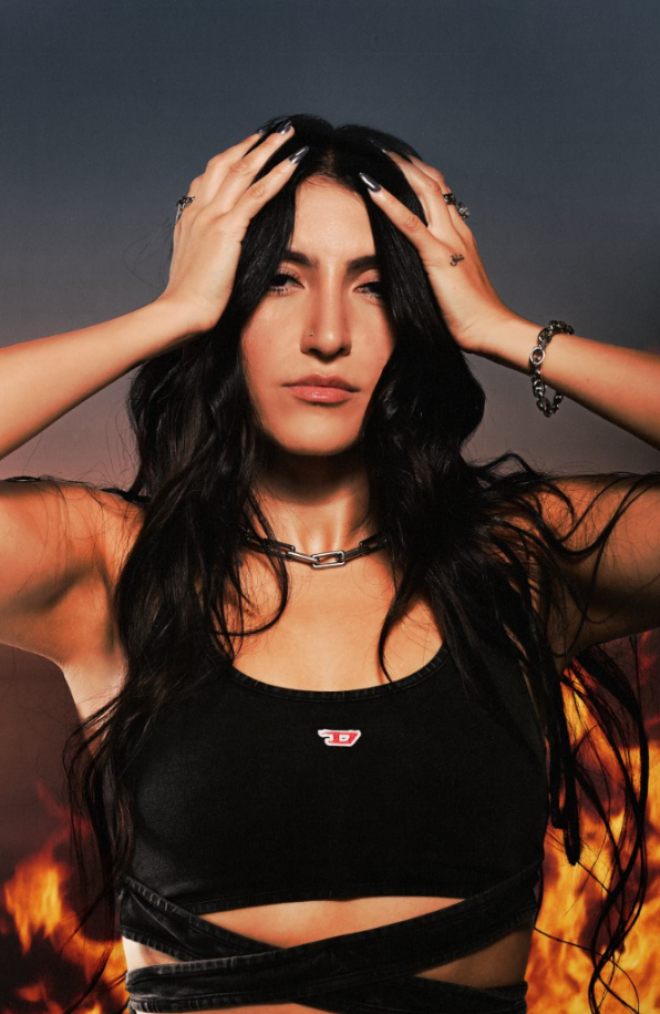
NOSTALGIX does not arrive at Inferno as a newcomer looking to define herself; she arrives as an artist ready to dismantle and rebuild. The album feels less like a debut and more like a controlled detonation, a moment where accumulated experience finally finds its most honest form. What makes this project resonate is not just its sound, but its intent. It is built on the idea that identity is not fixed, but forged through cycles of release, pressure, and renewal.
That perspective is inseparable from the path that brought her here. Moving between Iran, Canada, and Los Angeles is not just a geographical journey, it is a constant negotiation of voice, belonging, and visibility. Each environment imposed its own expectations, its own limitations, and its own possibilities. What emerges from that trajectory is a sharp awareness of power, not as dominance, but as the ability to stand fully in one’s own narrative.
Within electronic music, that stance carries particular weight. The space still operates within structures that often reward conformity, whether sonic or visual. NOSTALGIX’s evolution reflects a gradual but decisive refusal to fit into those pre-existing molds. What once required adaptation now translates into authorship, where identity is not adjusted to the industry, but asserted within it.
Inferno captures that transition in motion. Sonically, it expands beyond her bass house foundations into something more layered, more narrative, and more exposed. Emotion is no longer implied through energy alone; it is articulated through voice, texture, and structure. The result is a body of work that feels both immediate and intentional, shaped by a process that was lived rather than conceptualized.
In this conversation with Mixmag AE, NOSTALGIX opens up about the internal shifts behind Inferno, from navigating cultural identity and industry expectations to redefining leadership, autonomy, and vulnerability in her work. She reflects on the tension between control and release, the power of writing her own voice into the music, and the responsibility that comes with building a deeply connected community. What unfolds is not just the story of an album, but the architecture of an artist actively shaping her next form.
Inferno feels less like a debut and more like a declaration. When you say this album represents identity, reinvention, and self-definition, what exactly were you shedding, and what were you claiming for the first time?
ph: @shottbykyle.
First of all, thank you so much for having me!
To me, Inferno is about burning down every past version of yourself, all the hardships and experiences that shaped you. It’s about letting go of what was never meant for you so you can create space for the strongest, most powerful version of yourself.
It’s stepping into a room and claiming your power, saying, “No matter what I’ve been through, I’m going to take every challenge and turn it into strength.” It’s about standing tall in who you are and using everything in your past as fuel to become the best version of yourself.
I think one of the most beautiful things about being human is that we always have the chance to recreate ourselves and start over. But to do that, we have to leave behind the things that weren’t meant for us and burn down what didn’t work.
Letting go is what allows the best version of ourselves to step through that door and discover what’s truly waiting for us.
You were born in Iran, raised in Canada, and now operate out of Los Angeles. How has navigating multiple cultural systems shaped the way you understand power, visibility, and voice within electronic music?
Being born in Iran, raised in Canada, and now living in Los Angeles, I’ve experienced a lot of different cultures and perspectives. Not all those experiences were positive. I’ve been through a lot of hardship and change.
My family immigrating to Canada and later moving to Los Angeles on my own to pursue music meant navigating a lot of uncertainty and difficult moments along the way.
Those experiences forced me to find my strength and stand on my own two feet, even when it felt like the odds were against me. My background is a huge part of why I do what I do and why I speak so much about empowerment and becoming the best version of yourself.
I know what it feels like to come from a place where your voice can feel silenced or limited, so being able to stand in my power now, and encourage others to do the same, means everything to me.
Releasing Inferno during Women’s History Month feels deliberate. In practical terms, what does leadership look like to you in 2026? Is it visibility, ownership, mentorship, structural change, or something else entirely?
My perspective on leadership has changed a lot over the past few years. I feel very fortunate to be in a position where I can impact people through my music, my shows, and my platform, and I don’t take that responsibility lightly. Both my career and my personal experiences have really shaped how I think about what it means to lead and show up for others.
To me, leadership isn’t about being the loudest person in the room. It’s about being someone who shows up for their people, looks out for others, and operates from a place of strength, kindness, and love.
Real leadership is making sure the people around you are supported and taken care of.

ph: @tessapaisan
The electronic space still carries the weight of being historically male-dominated. Have you felt pressure to conform to certain archetypes, either sonically or visually? And if so, how did you resist that without compromising ambition?
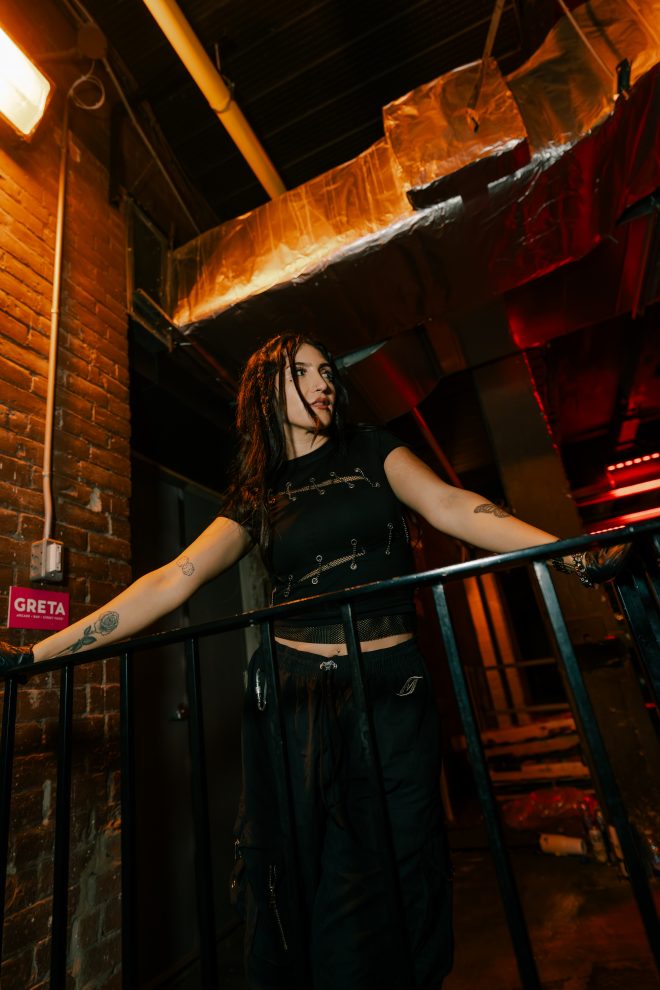
Earlier in my career I definitely felt pressure to dress a certain way. Being in a male dominated industry, it sometimes felt like the way to fit in was to downplay your femininity. I would wear really baggy outfits, oversized shirts and pants, because I didn’t want to be seen as too girly or too revealing on stage.
As I’ve grown more confident in myself as an artist, that mindset has completely changed. Now I wear whatever makes me feel good and empowered. Sometimes that’s still baggy clothes because they’re comfortable when I’m jumping around on stage, but other times it’s about expressing myself and embracing being a woman on stage.
At the end of the day, it’s about wearing what makes me feel like the best version of myself.
You’ve spoken about maintaining control over your music, image, and narrative. In an industry driven by metrics and branding, what does creative autonomy look like behind the scenes? Where do you draw non-negotiable boundaries?
I’m definitely a very hands-on type of artist. Every detail matters, from the songs I finish to lyrics, merch designs, stage visuals, or artwork. I see everything I create as a piece of art, and I like to have a strong vision for how it all comes together.
Over time, I’ve learned that perfection isn’t always possible, and it’s more important to share your work than to get stuck on the last 10%. Creative autonomy for me means being deeply involved in every aspect while also knowing when to let go.
Trusting that what you’ve made is good and moving on to the next thing. It’s a balance between control and release.
Sonically, Inferno expands beyond your bass house roots into something more genre-fluid and cinematic. Was that evolution instinctive, or did it require you to consciously dismantle parts of your earlier sound?
That evolution felt very natural because bass house has always been my foundation. It’s what drew me to dance music and will always be my love.
But over the past few years of releasing music and touring, I’ve really enjoyed exploring different sides of myself in both my productions and performances.
Inferno allowed me to share multiple layers of who I am. From emotional records to songs featuring my vocals, beyond just bass house.
I’m excited for fans to experience the full project, and to hear the story the album tells from start to finish.
As both producer and vocalist, you’re shaping the emotional architecture of each track from the inside. How does writing your own voice into the music change the power dynamic compared to producing instrumentals alone?
Oh my god, vocals make everything so much more personal. As a producer, I can make beats and drops all day, but when I write and record my own vocals, I’m putting my real experiences out there.
It’s scary and vulnerable. With “Fall Apart,” I was sharing a deeply human side of myself.
But that vulnerability also makes the music powerful, capturing moments and emotions that would never exist without my voice.
Adding vocals changes everything. It turns a record into a personal story, not just a beat.
The title Inferno suggests transformation through fire. Was there a specific moment in your life that felt like that ignition point, the moment where everything burned down so something stronger could be built?
Inferno really resonates with me because it mirrors a transformative period in my life. A time where I had to let go of a lot of things.
Versions of myself that I loved or thought I needed. Making difficult decisions that ultimately shaped who I am today.
While creating the album, I was living that transformation in real time. It was painful, lonely, and challenging, but it also became a source of inspiration.
Inferno is about burning down what no longer serves you so something stronger, more authentic, and more beautiful can rise in its place.
Your fan community is often described as high-energy and deeply connected. What responsibility do you feel toward that community now that you’re stepping into album territory, where storytelling becomes more personal and vulnerable?
Gix Nation is everything to me. I truly wouldn’t be here without them.
With Inferno, I’ve poured my heart, energy, and everything I have into the album to give fans something special.
The story and messaging of the album are about resilience, transformation, and empowerment, and I hope it inspires them to push through hardships, start over when needed, and pursue their goals.
I want fans to know they’re not alone, and that they can take action in their own lives to become the best version of themselves.
Debut albums can either define an artist or confine them. Once Inferno is out in the world, what part of you is already thinking about what comes after? Are you building a legacy, a movement, or simply the next chapter?
Making Inferno has been an incredible learning experience. I’ve pushed past limits I didn’t even know I had and grown as an artist every single day throughout the process.
This album has connected me to my creativity in its purest form and opened my eyes to what’s possible.
I’m beyond inspired for what comes next. More music, more storytelling, more art. Inferno is just the beginning, and I can’t wait to explore this next chapter.
