


Nicole Moudaber
The Quiet Power of Choice

There is a particular calm that comes after survival. Not relief, not victory, but clarity. For Nicole Moudaber, that clarity does not arrive as stillness. It arrives as moments made intentional. After decades spent proving, pushing, and carving space where none was offered, she now moves with a different gravity: less reactive, more deliberate, deeply internal.
Time has altered her relationship with urgency. Where earlier years were defined by momentum and resistance, this chapter feels governed by calibration. Nicole Moudaber is no longer chasing expansion for its own sake; she is editing her world with care. What remains is no less intense, if anything, it's more focused. The sound is heavy where it needs to be, looser where it can breathe. The vision is sharper because it's no longer defensive.
There is a confidence that comes from having outlived expectations. From understanding that relevance is not sustained through constant reinvention, but through coherence. In that sense, Nicole's current moment is not loud. It is intentional. Intention, in a culture obsessed with acceleration, is its own form of resistance.
At this point in her life and career, expansion is no longer about scale. It's about alignment. The clubs are still full, the tours relentless, the sets as commanding as ever, but the energy behind them has shifted. What once demanded force now flows from choice. That choice, increasingly, is about creating environments where freedom can be shared rather than defended.

MoodCollective did not emerge as a radical departure. It arrived as recognition. A realisation that Nicole was already inhabiting multiple music and emotional worlds all at once, techno house, intimacy and spectacle, physicality and introspection. The imprint became a way of naming something she was already living.
“This year I found myself moving fluidly between techno and house… I realised I was already living in both worlds again,” she reflects.
The hesitation came not from uncertainty, but from listening too closely to external voices. When she stopped, the decision became obvious. “The moment I stopped listening to the noise and turned back into myself, everything clicked.”
Trusting instinct has always been central to her story, but in this moment, it takes on a quieter confidence. MoodCollective is less about reinvention than reclamation: a return to intuition after years of navigating expectation.
MoodCollective functions as both a psychological and a musical space. It reflects a period where permissions are no longer sought externally. The imprint's rapid momentum, already several releases deep, with support cutting across scenes, feels like a launch and more like confirmation. This is what happens when alignment replaces strategy.
Importantly, the project is not framed as a correction or escape from the past. MOOD remains foundational. MoodCollective simply acknowledges that identities, like sounds, are not static. They expand, contract, overlap. Nicole’s decision to honour that fluidity publicly signals a maturity that many artists never reach, the confidence to let multiplicity exist without explanation.
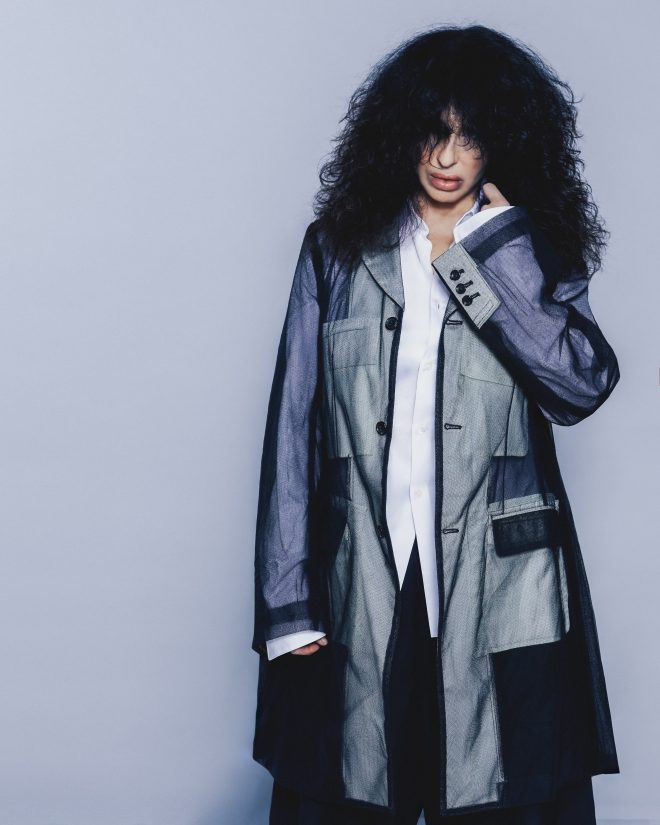
Nicole's relationship with freedom was forged under pressure. Early on, liberation meant survival, asserting presence in a landscape that did not readily make room for her. As a woman in a male-dominated industry, resistance was not optional; it was structural.
“Back then, liberation was about breaking through barriers, external ones, but also the ones I placed on myself,” she says.
That fight shaped her voice, her sound, her uncompromising stance. But it also came at a cost. Over time, resistance evolved into something more internal, more refined.
“Today, freedom is a choice. It's trusting my instincts without hesitation. It's saying no without guilt and yes without needing permission.”
This shift, from confrontation to discernment, marks the most significant evolution in her trajectory. Strength no longer needs to announce itself. It simply occupies space.
This distinction is crucial when considering Nicole’s presence in electronic music history. Her authority was never granted; it was constructed, brick by brick, through consistency and refusal. That process demanded sharp edges. But longevity introduces a different challenge: how to remain powerful without remaining hardened.
Her articulation of freedom today suggests a reconciliation between force and softness. The fight did not disappear; it transformed. What once required confrontation now requires discernment. What once demanded volume now demands clarity. In this way, her evolution mirrors a broader, often unspoken reality for women who survive male-dominated systems long enough to redefine them from within.
The freedom she describes is not abstract. It is logistical, emotional, and embodied. It is the freedom to curate environments, to choose collaborators, to define pace. It is the freedom to take up space without narrating why that space is deserved.
The word collective becomes meaningful here. For Nicole, it signals a turning outward after years of solitary endurance. “It's about stripping away ego and creating something bigger than any one person,” she explains.
Connection replaces opposition. Groove replaces defence. The dancefloor becomes a site of shared release rather than assertion.
MoodCollective’s energy is unapologetically physical. Nicole speaks openly about wanting music that is felt rather than analysed, music that invites sweat, movement, repetition. “You feel it in your body, not just your head,” she says.
This emphasis on embodiment feels intentional at this stage of her life. It is pleasure without apology, release without explanation.
The same instinct shaped her recent collaboration with ZLATA. Born from a chance connection and a moment of levity, “Report to the dancefloor” captures a chemistry rooted in contrast. Different sonic angles meet in the same physical space, producing something both driving and emotional.

Away from production, stillness has become a practice rather than an afterthought. Touring no longer runs on pure adrenaline. Grounding comes through small rituals: podcasts to quiet the mind, astrology for perspective, deliberate slowing amid constant motion. “The faster everything moves around me, the more intentionally I slow myself down,” she notes.
This balance, between velocity and care, runs quietly through everything she is building now.
Perhaps the most revealing act of this period is her decision to write a book. Long perceived as unbreakable, Nicole has chosen to sit with vulnerability, to revisit moments she once rushed past.
The writing forces a different kind of listening. One without tempo, without audience feedback, without the armour of performance. From someone whole like has unfolded in perpetual motion, this pause becomes radical. The book reframes her story not as a sequence of achievements, but as a continuum of survival, adaptation, and self-authorship.
Significantly, this vulnerability does not dilute her authority; it reframes it. Strength becomes cumulative rather than performative. The woman behind the artist is not revealed as fragile, but as complex. Someone who has learned that endurance does not require emotional absence, only honesty. “It showed me how much I survived, not just achieved," she admits.
The process reframes strength not as armour, but as endurance with awareness.
Even now, after everything, the physicality of sound still anchors her. “When the kick drum hits, nothing else matters,” she says simply.
The immediacy remains sacred. But the horizon has widened.
The future she envisions extends beyond her own presence. It is about infrastructure, opportunity, and impact, labels that nurture, artists that grow, and communities that sustain themselves.
For Nicole, legacy is no longer symbolic. It is infrastructural. It lives in systems that function without her constant presence, in artists who outgrow their platforms, in communities that carry values forward independently. This shift from center-stage to architecture marks one of the most significant transitions in her career.
Her humanitarian work reinforces this perspective. It is not positioned as charity adjacent to music, but as a continuation of the same ethical impulse: create access, reduce barriers, build an environment where others can thrive. The dancefloor and the classroom are not opposites here. They are both spaces of possibility.
It is also about responsibility. Through her work with Encore for Humanity in Malawi, building schools, feeding children, and bringing electricity, purpose takes on tangible form.
“My purpose now is bigger than the next gig,” she reflects. “It's about impact and leaving something meaningful behind.”
Nicole Moudaber has nothing left to prove. What drives her now is not validation, but intention. In choosing where to place her energy, musically, emotionally, and humanly, she demonstrates a different kind of power. One that does not demand attention, but earns it.