


GEA
Voice as voltage
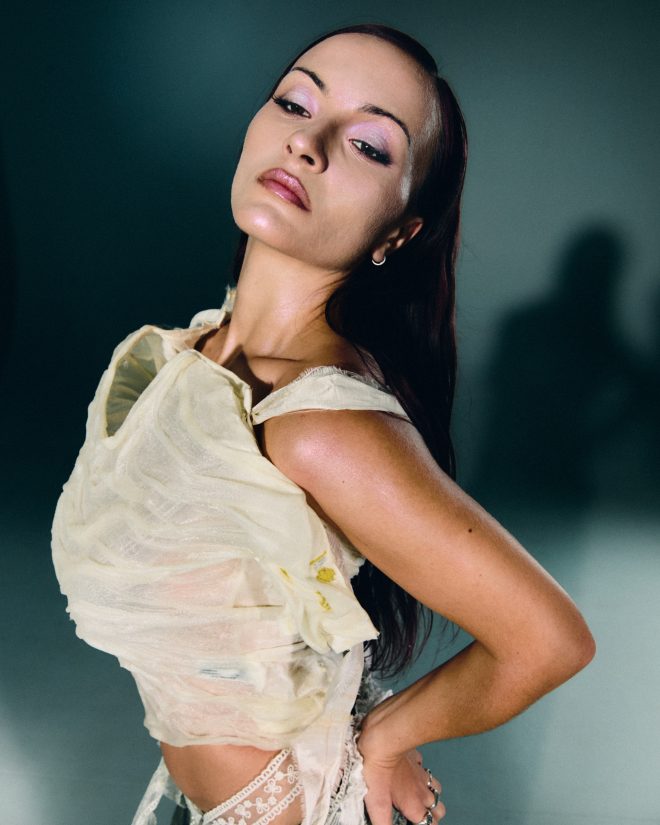
GEA’s sound does not arrive quietly. It hits with the physical insistence of rave culture and the emotional clarity of someone who has spent years learning how to listen to herself. Pumping techno, acid pressure, hard trance euphoria and rap-inflected vocals collide in a project that feels lived-in rather than designed. There is nothing ornamental here. Every element exists because it has to.
Raised inside Spain’s rave and free party ecosystem, GEA absorbed electronic music not as a genre but as a social language. Tekno systems, distorted acid lines, analog machines pushed to their limits, long nights where repetition became hypnosis. That environment shaped not only her taste but her relationship with sound itself. She learned early that music could be both physical and emotional, technical and instinctive, communal and deeply personal.
“Acid is a fundamental element in my sound, and the minor tonalities that define rave culture sit right at the heart of GEA.”
Those minor tonalities matter. They explain why her tracks feel charged with tension even at their most playful. The harmonic minor scale runs through her productions like a nervous system, giving weight to kicks that might otherwise just bounce. Hard Trance later entered the picture, not as nostalgia but as joy. Basslines designed to lift bodies, off-beat hats placed exactly where they need to be, simplicity treated as discipline rather than limitation.
GEA’s sound is not about maximalism. It is about choosing the right tools and trusting them. Acid Tekno gives her precision. Hard Trance gives her emotion. Hip Hop and Soul give her voice. Classical music gives her structure. She does not hide those influences or try to dissolve them into something abstract. She lets them coexist.
“To me, this blend of Acid Tekno and Hard Trance is a very playful combination, where the emotional side of Hard Trance meets the tight technicality of Acid Tekno.”
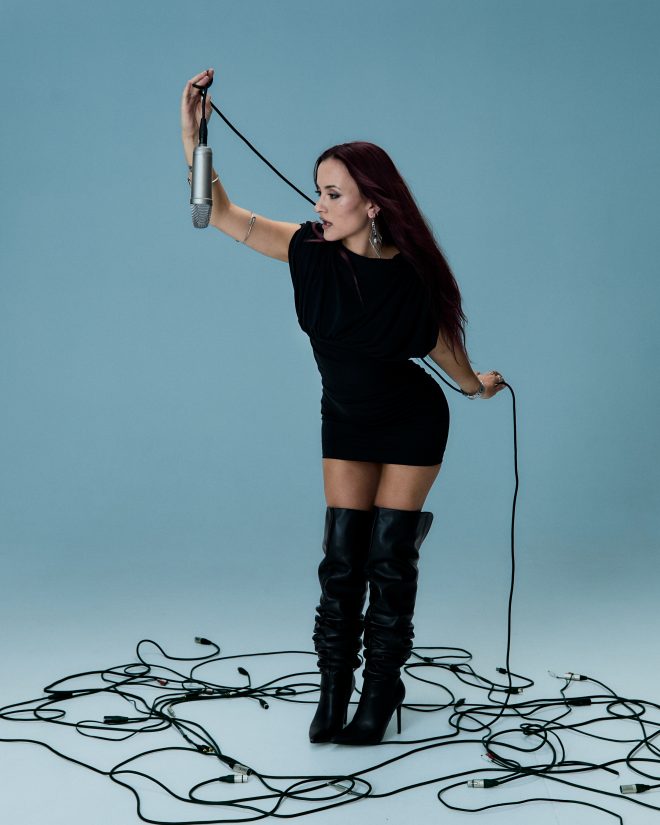
What makes GEA distinct is not just the blend, but the moment she stopped fighting it. There was a period where she resisted her own instincts, trying to sound closer to her references, trying to fit inside expectations that were never meant for her. Letting go of that pressure unlocked something far more dangerous than technique: confidence.
“Once I stopped trying to sound like my references and let go of that pressure, I finally amplified my creativity.”
That shift echoes across everything she does, especially her relationship with vocals. Unlike many electronic producers who treat vocals as texture or garnish, GEA builds her tracks around them. Her voice is not layered on top of the music. The music is shaped to hold it.
Her musical education began long before clubs or raves entered her life. Fifteen years of classical training, piano, violin, harmony, classical singing, left her fluent in structure and discipline. At fourteen, she discovered rap and began writing lyrics, recording herself with a cheap microphone and a basic interface, experimenting inside Reaper with no roadmap and no permission. Electronic music arrived later, but when it did, it felt inevitable.
“The idea of singing on my productions came from the need to create instrumentals that could adapt to my voice and my message.”
That necessity pushed her into production. Studying music production in Girona gave her tools, but the real turning point was realizing that sampled vocals could never say what she needed to say. Recording herself was not a stylistic decision. It was survival.
“Adding my own voice, message, and lyrics is absolutely essential to my work. Without my vocal, I feel there would be no way to stand out or express what my music communicates.”
GEA’s vocals move between rap cadence and melodic release, often within the same track. Sometimes they cut sharply through the mix. Other times they dissolve into atmosphere, stacked and processed until they become pads, choirs, whispers that hover above the rhythm. She rarely uses synthetic pads at all. Her voice becomes the harmonic bed, especially in intros and build-ups, shaping space before impact.
This approach demands control, which is why she refuses to let go of the technical side of her work. GEA produces, mixes and masters her own tracks, not out of distrust, but out of intimacy. Every decision is personal. Every frequency carries intention.
“I see mixing and mastering as creative processes. You can define the entire personality of a track by the approach you take.”
There is a stubbornness to this autonomy, one she openly embraces. Delegation, for her, risks dilution. Mixing while producing allows ideas to remain alive, shaped while the emotional impulse is still fresh. Tracks often emerge already seventy percent mixed, their identity baked in long before any final polish.
“My tracks take form from my vocal cords to the hand moving the mouse, from the software and the last limiter in the chain to the piano keys and Serum.”
Her creative process resists ritual. Sometimes it begins with a kick, bass and drums locked into a key. Sometimes with a rhythmic phrase that appears almost uninvited. Once that spark lands, everything else follows it. Lyrics are written quickly, often staying close to their first form. Vocals must be recorded the same day the track begins, before the energy fades.
“When creation and performance happen in the same moment, something truly magical comes out.”
That philosophy extends naturally to the stage. GEA’s decision to bring a live microphone into techno spaces was not calculated. It came from absence. DJing her own tracks felt incomplete without the physical act of singing. What started as an experiment became one of the most defining elements of her performances.
“I needed a deeper level of connection with the crowd, and I also missed singing on stage.”
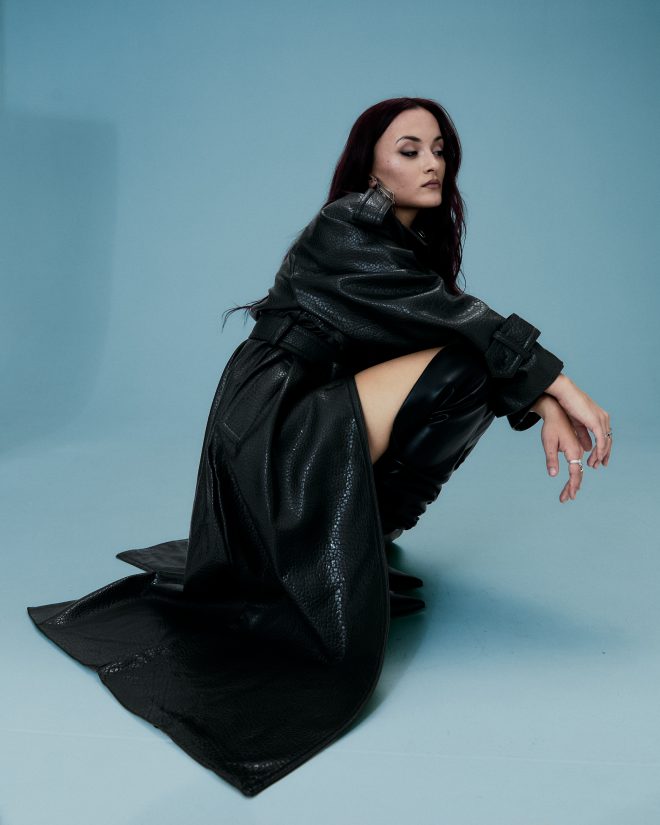
Integrating live vocals into high-volume club environments is technically unforgiving. Compression, FX chains, monitoring, timing. All of it had to be learned through trial and error. The goal was never spectacle. It was coherence. The vocal needed to feel embedded, faithful to the track, organic without tipping into pop theatrics.
On the dancefloor, the effect is immediate. Surprise first. Then recognition. In rooms where people know her music, crowds sing back. In places where they do not, curiosity turns into momentum. The voice cuts through the anonymity that often defines techno spaces, creating eye contact, vulnerability, presence.
“In the end, I’m a performer. Limiting myself to DJing would be restricting who I am.”
Certain nights crystallize that identity. June 2024 at Spook in Valencia was one of them. Warm-up duties turned into a two-and-a-half-hour set, people arriving early, lyrics already known. The microphone stayed off that night, but the connection did not need amplification.
Another moment arrived a month later at Tramunfest in Girona, playing to thousands in her own region. Home crowds carry different weight. They listen differently. They respond faster. For GEA, it felt like alignment.
“I felt more at home than ever, with the most genuine and connected crowd I’ve ever had.”
Despite a clearly defined aesthetic, GEA refuses stagnation. Curiosity drives her as much as identity. Recently, she has been lowering BPMs, exploring groove, sound design and lyrical space with renewed focus. House, Hard Groove, Drum and Bass, Dub, Rock. None of it feels contradictory. It feels preparatory.
Her upcoming eight-track EP reflects that openness. Latin influences, playful empowerment, genre shifts that deliberately avoid cohesion. Tracks in Romanian. Vocal-less experiments. Pop-adjacent moments. Dirty sound design paired with reggae-inflected delivery. Only two tracks sit close to her established signature.
“Staying in one lane would be limiting and caging myself, and I don’t allow that.”
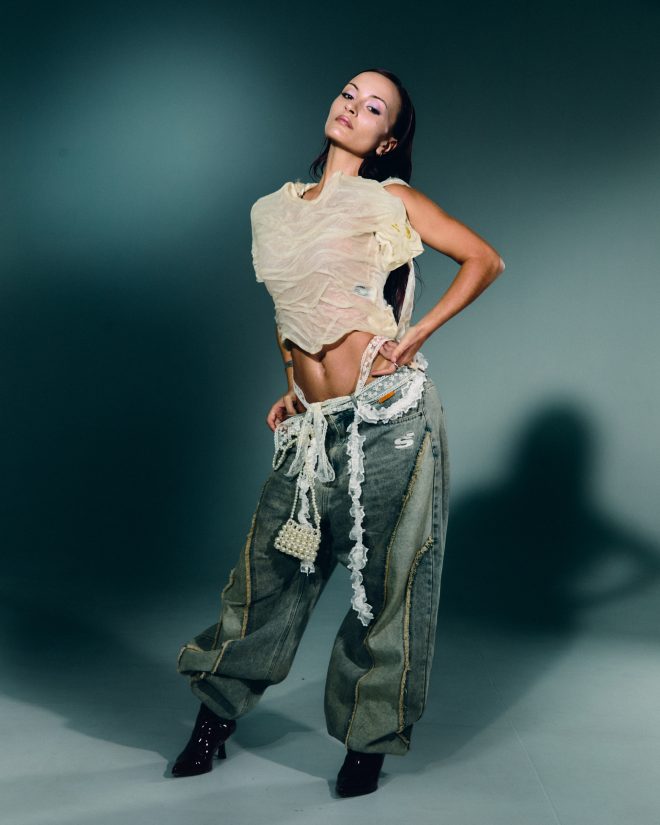
That same refusal to accept limits extends beyond her personal career. Ácida, the platform she founded to spotlight female DJs, emerged from a simple observation: women and queer artists were consistently underrepresented. Instead of waiting for change, she built infrastructure.
Three editions later, Ácida is not just a party series. It is an ecosystem. Women across every role, from DJs to lighting engineers to backstage management. The atmosphere, she notes, is different. Trust replaces competition. Energy circulates differently.
“You could feel it in the atmosphere. There was trust, sorority, and an electric, overflowing energy on the dancefloor.”
The ripple effect matters to her as much as the events themselves. Seeing other promoters adopt all-female lineups feels like progress, even if she remains clear-eyed about how much work remains, especially in production spaces.
Visually, GEA maintains the same level of authorship. Artwork, covers, concepts are largely self-directed. Drawing and painting remain private practices, creative reserves she does not feel obligated to monetize. Not everything needs to be visible to be real.
Her philosophy rejects ownership in favor of transmission. Creation, for her, is less about asserting self and more about allowing something external to pass through.
“The more ego I insert, the more soul the work loses.”
That belief does not diminish her ambition. It sharpens it. Her writing often draws from anger, heartbreak, exhaustion, the emotional debris of nightlife and intimacy. Heavy kicks carry playful intent. Darkness dances.
Looking forward, momentum is undeniable. International bookings are increasing. Collaborations are forming. An EP and album titled “EAZY.” is scheduled for March 2026. Audiovisual performances, analog machines, expanded live elements are already on her horizon.
There is no plan B. Only expansion.
GEA’s project does not ask for permission from techno culture. It speaks directly into it, voice first, body second, systems shaking behind her. In a landscape that often prizes anonymity, she insists on presence. In scenes that value repetition, she introduces narrative. And in a genre that rarely sings back, she gives the crowd something to say.
