


NEMS
Honesty, connection and feeling

There is a particular calm that surrounds NEMS when she enters a room. Not the quiet of restraint, but the confidence of someone who does not need to declare intention. Her presence settles gradually, through posture, through pacing, through the way sound is allowed to stretch before it tightens. Nothing feels rushed. Nothing asks for attention. The floor responds anyway.
Her world is built on movement, on rhythm understood as something physical long before it becomes technical. Dance, Afro-rooted sound, travel, intuition, all operate as connected forces rather than separate chapters. In this conversation, what emerges is not a depiction of ascent or definition, but a way of working. How instinct became structure. How listening became authority. How sound operates when borders are treated as irrelevant.
From the beginning, NEMS resisted the idea that sound should be compartmentalised. Dancehall, Amapiano, Afro House, Afrobeats appear in her sets not as statements but as continuations. They follow one another because they belong together in her internal logic, not because contrast is required. This approach did not come from theory or trend awareness. It came from refusal.
“My sound developed naturally,” she explains. “Early on, people told me to choose one genre and stick to it, but that never felt right. I connect deeply with Afro-rooted sounds like Dancehall, Amapiano, Afro House and Afrobeats, and for me they don’t exist in separate boxes. They belong together.”

the way her sets are now recognised. The shifts in rhythm and tempo feel intentional but unforced, held together by an internal consistency rather than an external rulebook.
“Looking back, trusting that instinct was important,” she continues. “Not limiting myself became part of what people now recognise in my sets. Moving between rhythms, moods and tempos keeps things alive, for me and for the crowd. What’s the fun in restricting yourself anyway?”
Long before DJ booths became familiar, movement was her primary reference point. Dance formed her relationship with music not as something to analyse, but as something to inhabit. That embodied understanding still governs how she builds a room.
“Before DJing, dance taught me how music lives in the body,” she says. “Movement, timing and energy were things I understood physically long before I understood them technically.”
As a result, her method sidesteps linear construction. Tracks are tools, not anchors. What matters is the arc, the pressure, the space between moments.
“I don’t really think in tracks,” she adds. “I think in flow, pauses, tension and release. Watching how bodies respond on the dance floor tells me everything I need to know. If the movement feels right, the music is doing its job.”
DJing itself entered her life quietly, during COVID, without audience or expectation. There was no strategy, no imagined future. Only curiosity and time.
“DJing started amid the COVID pandemic without a master plan,” she reflects. “It came from curiosity, from instinct, from wanting to explore sound without pressure.”
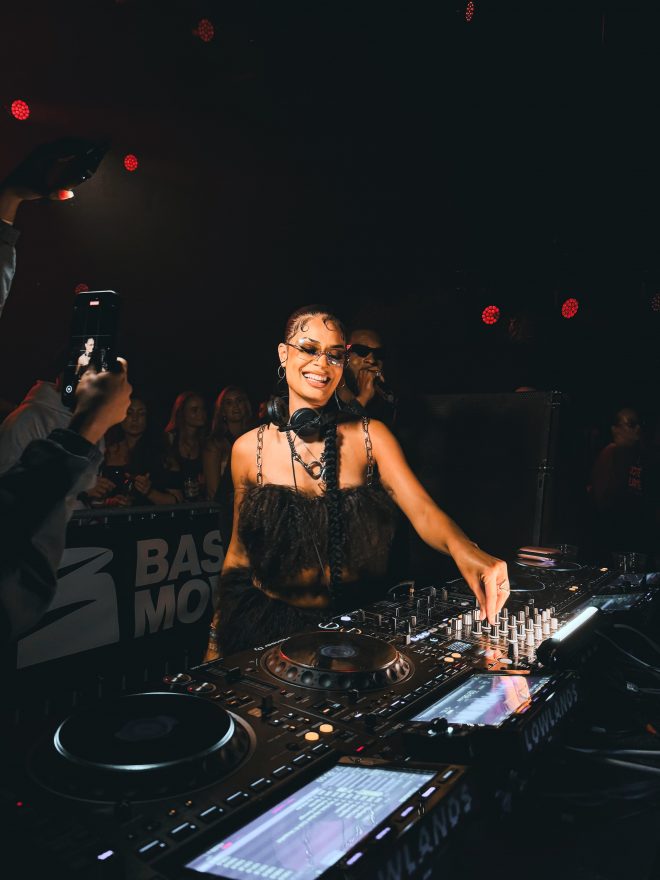
The moment it shifted was not marked by visibility, but by depth of response. When people stopped simply reacting and started staying present.
“The turning point came when people didn’t just dance, but really connected,” she says. “That response made it clear this was more than experimenting.”
As her path expanded internationally, that same attentiveness carried over. Playing across multiple cultural contexts sharpened her awareness of what translates and what does not. She approaches unfamiliar rooms by listening rather than imposing.
“Every crowd is different, especially across cultures,” she explains. “When I play in unfamiliar places, I listen first. To the room, the reactions, the energy.”
What she learned is simple but demanding. Rhythm travels easily. Expression does not.
“Rhythm works everywhere, but expression changes,” she continues. “Some crowds respond to subtle grooves, others to raw energy. Learning when to adapt and when to lead has been key. Isn’t that what DJing is really about?”
Across these experiences, a consistent technique develops. Instinct sharpened through observation. Authority built through restraint. A world defined not by labels or destinations, but by how sound moves people once it is given space to breathe.
Travel enters NEMS’ work quietly, without turning into aesthetic decoration. Cities do not become souvenirs in her sets, nor references to be named. They settle elsewhere, in confidence, in restraint, in how long she allows a groove to stretch before intervening. Touring, for her, is not a sequence of stages but a steady recalibration.
“Travel shapes everything I do, often without me realising it in the moment,” she says. “Fashion, street energy, food, language, all of it leaves a trace. Each city has its own rhythm, and parts of that always come with me.”
Those traces rarely appear as obvious musical quotes. They surface in pacing, in transitions, in how decisively she commits to a direction. The accumulation of places sharpens her gut feelings rather than distracting them. Standing still, creatively, is not part of her vocabulary.
“It shows up in my selections, my transitions, even in how confident I feel behind the decks,” she adds. “Standing still creatively has never really been an option.”

Behind the booth, NEMS’ presence is honest and grounded. There is no fabricated character, no exaggerated performance language. What reads as confidence is closer to surrender, a willingness to let intuition lead without overcorrection.
“My presence behind the booth comes from tapping into feminine energy and intuition,” she explains. “Less control, more feeling. Less performance, more connection.”
That approach reframes visibility. Rather than separating herself from the crowd, she works to dissolve that distance. The booth becomes permeable. The exchange stays active.
“Being connected to the crowd matters to me,” she continues. “I want people to feel included, not observed. Visibility comes with expectations, especially as a woman, but staying intuitive and grounded keeps that exchange honest.”
When connection fully settles, it announces itself subtly. There is no peak moment to point to. Thinking recedes. The mechanics disappear. What remains is circulation.
“A real connection is easy to recognise,” she says. “There’s a moment when thinking stops and everything flows.”
At that point, authorship becomes secondary. The set no longer feels owned. It moves on shared instinct rather than direction.
“I feel it when the exchange becomes instinctive, when the energy moves back and forth without effort,” she adds. “That’s when it stops feeling like a performance and starts feeling shared. Those are the moments that stay with me.”
Cultural roots sit at the centre of that exchange. NEMS’ Moluccan background and long relationship with Afro-influenced sound are not themes to be referenced, but foundations that quietly structure her musical language.
“My Moluccan roots and Afro-influenced sounds are at the core of my musical language,” she states. “Culture and identity guide my choices, whether consciously or subconsciously.”
Playing these sounds globally is not framed as exposure or mission. It is continuity, carried outward.
“Pushing Afro-rooted sounds on a global level feels like both an honour and a responsibility,” she continues.
As part of a new generation of women visible across international club circuits, resistance has been unavoidable. Doubt, questioning, underestimation have all appeared along the way. None of them shifted her path.
“Being part of a new wave of female DJs comes with visibility, but also resistance,” she reflects. “Being underestimated or questioned has been part of the journey.”
Those experiences did not harden her approach. They refined it.
“They sharpen focus and confidence,” she adds. “I hope my presence contributes to a scene where women can take up space naturally, without having to explain or defend their position.”
Across these thoughts, the outline of NEMS’ world becomes clearer. A practice built on listening rather than assertion. On intuition disciplined by experience. On spaces shaped carefully enough that people forget to watch and remember how to move.
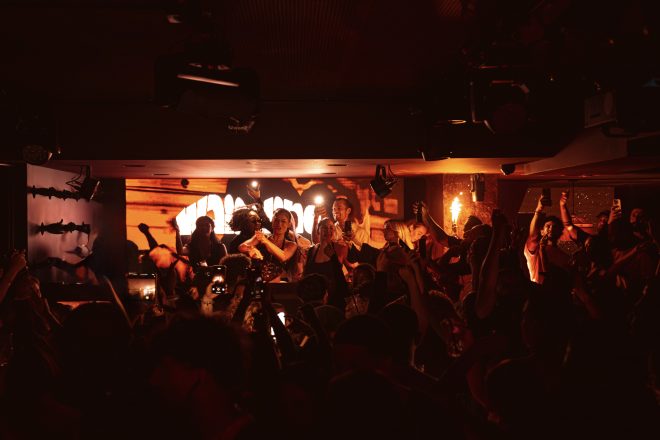
Responsibility, for NEMS, is not abstract. It is exercised in how space is held. Safety, joy, release are not values stated for effect, but conditions she actively constructs through pacing, ambience and awareness of the room. Her sets aim to remove friction rather than generating spectacle, allowing people to arrive fully in their bodies without self-consciousness.
“I want NEMS to stand for joy, freedom and expression on the dance floor, but also for safety,” she says.
“Creating a space where people feel comfortable to let go, move freely and be themselves without judgement is essential to me.”
That intention shapes how she plays as much as what she plays. It is present in the patience she allows a groove to develop, in the absence of aggression for its own sake, in the way the booth never becomes a barrier. The dance floor is treated as a shared environment, not a site of control.
“At the same time, the focus is on growth,” she explains. “Expanding internationally, releasing my own music, and building meaningful collaborations with other artists feel like natural next steps.”
What matters is not scale, but alignment. Process over projection. The work remains guided by intuition sharpened through experience.
“If the space feels right and the energy is honest,” she adds, “the music will always find its way.”
