


Lentekabinet Is a Reminder of What Dance Music Culture Can Be
From sustainability and inclusivity to adventurous programming and genuine community, Lentekabinet continues to demonstrate why it remains one of the most unique experiences on the European festival calendar.
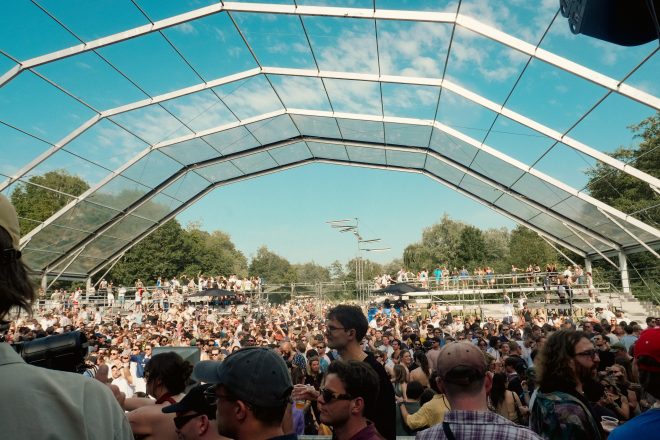
There are festivals that impress through scale, and there are festivals that leave an impression through intention. Lentekabinet belongs firmly to the latter.
Set among the forests and waterways of Het Twiske, just outside Amsterdam, the festival unfolds less like a conventional music event and more like a temporary community built around a shared understanding of what dance music culture can be. Before a single kick drum lands, the surroundings establish the tone: open skies, dense greenery, lakes reflecting the afternoon sun, and thousands of people moving through the landscape with a rare sense of ease.
In recent years, electronic music has experienced unprecedented growth. With that expansion has come a tendency toward excess—bigger stages, larger crowds, louder branding. Yet Lentekabinet seems remarkably uninterested in chasing spectacle for its own sake. Instead, its strength lies in the details. Not the kind that are immediately visible on social media, but the ones that quietly shape the experience of everyone who attends.
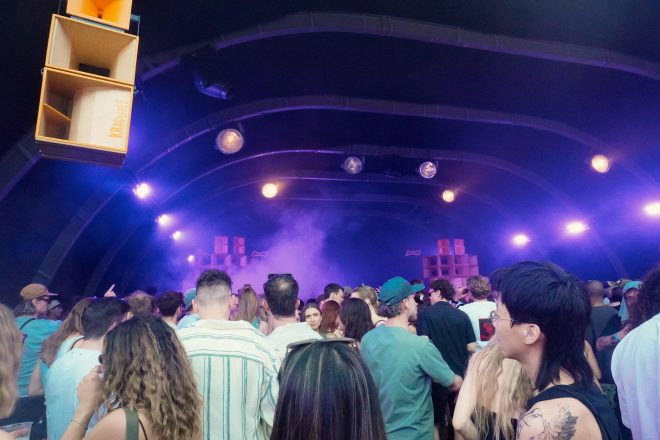
Free water stations, recycling initiatives, accessible transportation and well-organized infrastructure may appear secondary to the music, but together they create something increasingly rare within contemporary festival culture: trust. Attendees are not treated as consumers moving through a production line. They are treated as participants within a carefully considered environment.
That sense of care extends to the social atmosphere. Throughout the weekend, the crowd itself became one of the festival's defining features. In a cultural moment where conversations around inclusion often remain performative, Lentekabinet felt genuinely open. LGBTQIA+ communities were not merely welcomed; they were visibly woven into the fabric of the event. Self-expression appeared effortless. Fashion became playful rather than performative. Differences felt celebrated rather than tolerated.
Perhaps this is what makes the festival feel so distinct. The absence of judgment creates room for connection.
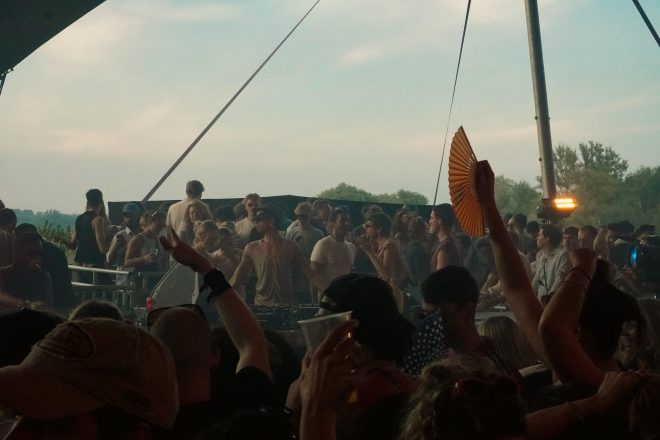

Dancefloors became places where strangers spoke to one another. Groups expanded throughout the day. Artists moved through the crowd as naturally as attendees moved between stages. The invisible barriers that often separate performer and audience seemed noticeably thinner here.
That relationship was reflected in the programming itself. Across the weekend, house, tribal rhythms, drum & bass, experimental sounds and emerging Latin club influences coexisted without hierarchy. Rather than following trends, the curation trusted audiences to remain curious. Every set felt connected to a larger narrative, gradually increasing intensity as the day evolved.
The result was a festival that understood pacing not simply as scheduling, but as storytelling.
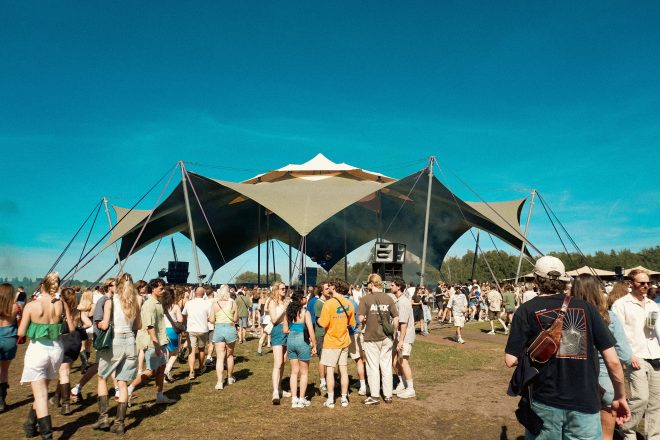
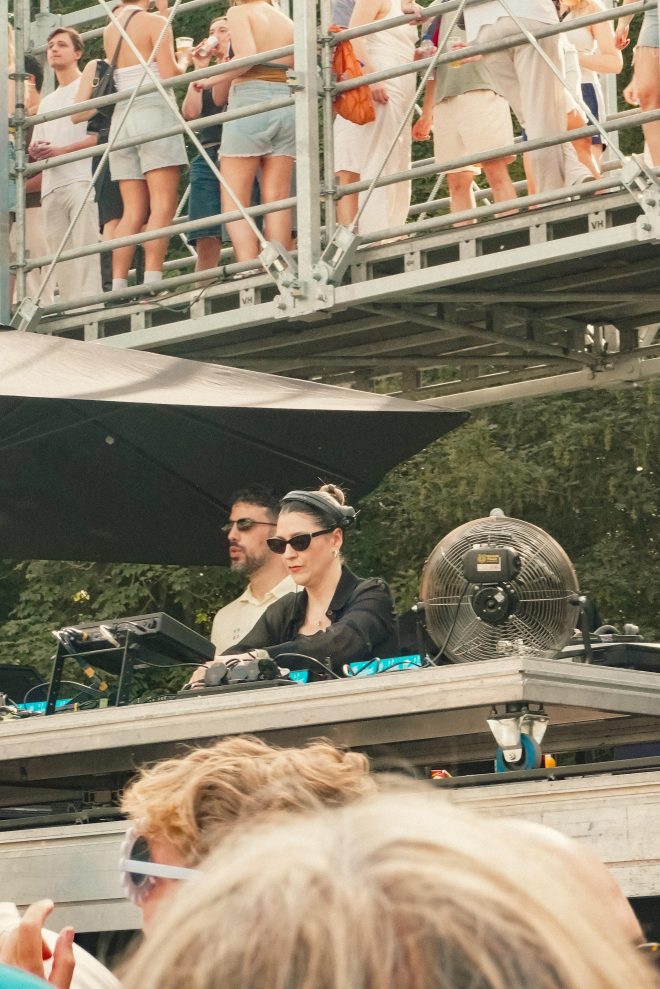
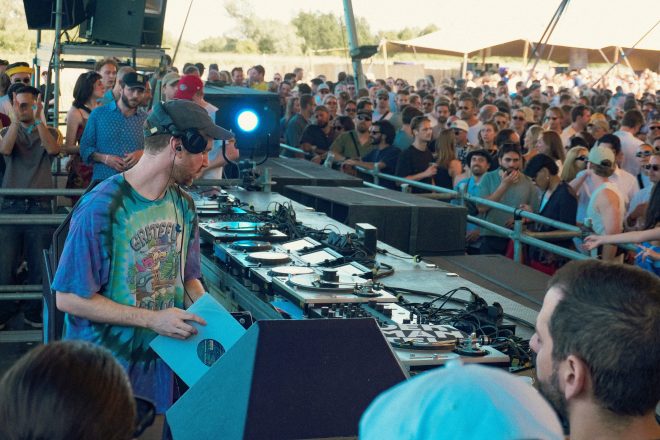
Among the many memorable moments, performances from Saoirse, Gabrielle Kwarteng and Chaos In The CBD demonstrated the power of artists who possess not only technical ability, but a deep understanding of how to read and shape collective energy. One of the weekend’s most celebrated gatherings came through the B3B featuring Bashkka, Paramida and tINI, a masterclass in chemistry, spontaneity and dancefloor intuition. Their seamless exchange behind the decks transformed the set into a collective conversation, reflecting the communal spirit that defines Lentekabinet itself. Equally compelling was the collaborative set from Verraco and CCL, whose adventurous approach blurred boundaries between club functionality and sonic experimentation. Their performance embodied much of what makes Lentekabinet so distinctive: a willingness to embrace risk, curiosity and unexpected musical directions without ever losing the crowd. Elsewhere, stages such as Swamp embodied the exploratory spirit that has become synonymous with Dutch festival culture—spaces where discovery feels just as important as recognition.
What became increasingly apparent throughout the weekend was that Lentekabinet's greatest achievement is not its lineup, production or location, impressive as all three may be. Its achievement is creating the conditions for genuine participation.
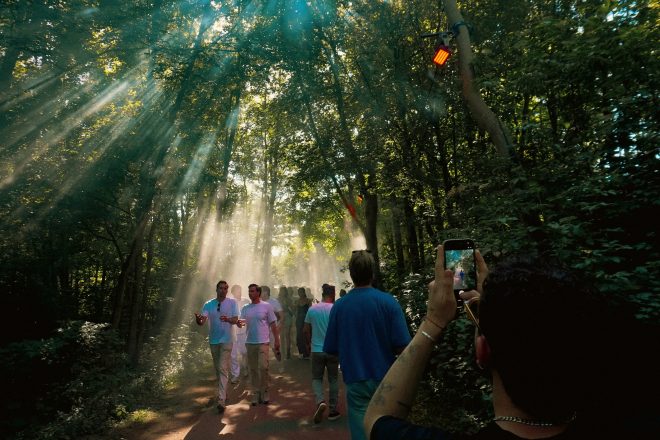
The festival asks very little from its audience beyond presence. To listen. To dance. To engage. To let go.
In return, it offers something that feels increasingly difficult to find in an era defined by constant documentation and digital performance: the opportunity to be fully immersed in a shared experience.
As the unofficial opening chapter to the wider festival season and a precursor to Dekmantel, Lentekabinet occupies a unique position within the European electronic music calendar. Yet reducing it to a warm-up event would miss the point entirely.
Lentekabinet stands on its own because it understands a simple truth that many festivals have forgotten: people return year after year not only because of who is playing, but because of how a place makes them feel.
For one weekend in Het Twiske, that feeling was freedom.
