


KRL MX isn’t interested in comfort
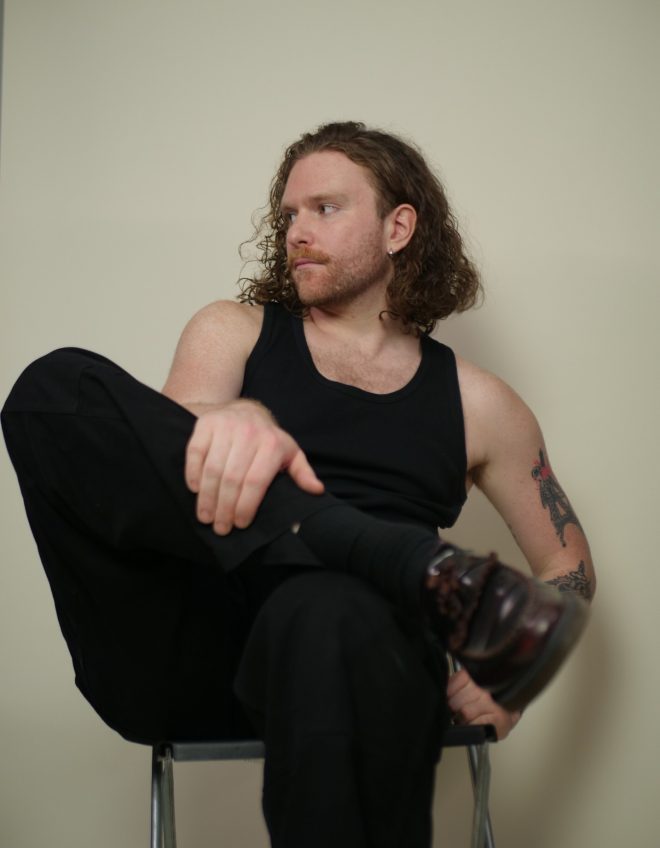
chno has never suffered from a lack of volume. What it risks losing is friction. While much of the scene chases formulas that satisfy algorithms, playlists and predictable dancefloors, KRL MX has spent the last few years moving in the opposite direction. His music is built on tension, discomfort and restraint, drawing as much from post-punk, architecture and cinema as it does from club culture. For the French producer, the goal isn’t to fit into electronic music. It’s to keep questioning it.
KRL MX didn’t grow up surrounded by electronic music.
He grew up surrounded by silence.
The French countryside wasn’t exactly overflowing with warehouse parties or underground clubs, leaving him to build his relationship with music alone, guided only by curiosity and whatever records he could find.
“Growing up in the French countryside, I was the only one listening to electronic music. My references were all over the place: SOPHIE, Ed Banger, Daft Punk, Brodinski’s Bromance, Frank Ocean, Babyshambles. It was a very personal, solitary relationship with sound, built entirely through listening.”
That isolation shaped more than his taste.
It taught him that music didn’t have to belong to one world. Pop, rock, electro, punk and club music could all exist inside the same imagination without needing permission from genre.
Everything changed when he moved to Paris.
Not because his influences changed, but because they finally became physical.
“The defining moment came when I moved to Paris and attended my first warehouse party, a RAW event in Blanc-Mesnil with Hadone playing. For the first time, I wasn’t just hearing this music. I was feeling it in a physical space, surrounded by people who actually understood it. That experience changed everything. It gave the music a body.”
The clubs became classrooms.
Years of touring followed, carrying him through different cities, audiences and conversations that quietly reshaped the way he approached production.
“That constant movement shaped my sound as much as any record or studio session. Music made on the road carries other people’s energy in it.”
The result is a body of work that refuses easy categorisation.
“I’ve always moved freely between the underground and the mainstream, and I think that openness is part of what defines me. I don’t see those worlds as opposites. The most interesting creative space is usually somewhere in between, where influences don’t cancel each other out, they collide.”
For all its intensity, his philosophy remains surprisingly simple.
“This music has to remain fun at its core. The moment it stops being that, something’s gone wrong.”
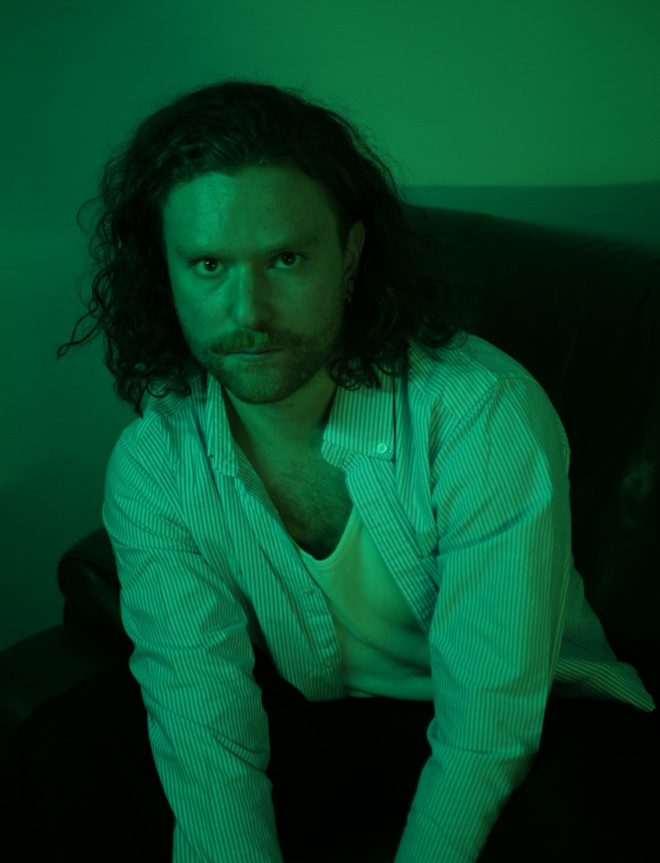
TECHNO HAS A MEMORY PROBLEM
Ask KRL MX about the current state of techno and he doesn’t immediately point fingers. Instead, he implicates everyone.
“We all contribute to the homogenization, whether we admit it or not. Certain structures work, certain elements get reused, and gradually, like any mass-market product, the music standardizes itself. It’s not always a conscious decision from anyone; it’s the invisible gravity of what gets booked, what gets played, what gets streamed.”
That pressure rarely arrives as an ultimatum.
It arrives quietly.
“You want to be part of the conversation, so you fall in line. That’s just human nature. The harder thing is noticing it happening before it’s too late.”
His solution isn’t to consume more electronic music.
It’s to consume less.
“I’ve been deliberately consuming less and less techno, or only music that feels far removed from my own scene. I find more inspiration in rock, post-punk, pop structure and film scores. Anything that reminds me that music can be built differently, that there are other logics, other emotions worth chasing.”
Stepping outside the scene has become his way of protecting what first attracted him to it.
“For me, staying raw means showing up where people don’t expect you. It means refusing to let the music become a product while pretending it’s still a statement. At its core, this music exists for two reasons: to express something, and to make people dance. That’s it. Everything else is noise.”
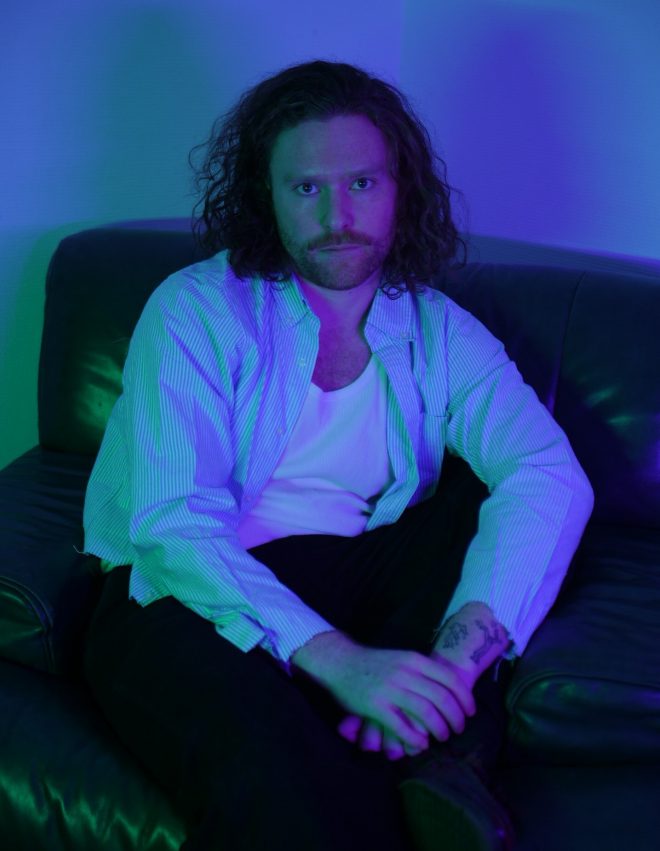
DEATH BY A THOUSAND SMALL COMPROMISES
Most artists describe pivotal moments where they consciously rejected industry expectations. KRL MX doesn’t believe that’s how compromise actually works.
“I’ve never really made a grand, calculated decision to go against the grain. It’s more subtle than that. It’s a series of small choices that accumulate over time, each one slightly off the expected path.”
Sometimes those choices look almost insignificant.
Recently, he released Motor on his own label: an electro record running at 125 BPM, far removed from the harder techno many listeners associated with him.
“No grand statement, just a track that felt right and needed to exist. That kind of move carries a risk: you might lose some of the audience that had you neatly categorized. But I think that’s exactly the point.”
Every instinctive decision has reinforced the same lesson.
“Authenticity is the only sustainable strategy. Trends shift, scenes evolve, what’s relevant today gets replaced tomorrow. The only thing that holds over time is a genuine point of view.”
The real danger isn’t obvious compromise.
It’s invisible adaptation.
“You don’t always get a clear choice between integrity and compromise. It just quietly reshapes your decisions until one day you don’t recognize what you’re making anymore. Staying alert to that is its own kind of discipline.”
CURATION IS EVERYTHING
KRL MX has released music across labels including 44 Label Group, Exhale, ISMUS, Gotec and Universal Germany, but choosing where a record belongs has never been about prestige.
“The process is usually organic. I produce a lot and share unreleased material constantly. The label choice comes from where I am artistically at that moment, or more often, where I want to go next. A track finds its home when the label’s identity and my current vision are pointing in the same direction.”
One label stands above the rest.
“Of all my releases, the ones on ISMUS have meant the most to me, more than signing to a major ever did. There’s something about placing music within a carefully curated ecosystem, built by an artist with a strong point of view, that carries a different kind of weight. It’s a statement of belonging, not just a distribution deal.”
That belief comes from his own upbringing as a listener.
“Labels like Ed Banger and Bromance shaped the way I think about music before I ever made any. They taught me that genre boundaries are arbitrary, that a coherent artistic identity matters far more than staying in your lane.”
As streaming floods the market with thousands of new releases every day, he believes labels are becoming important again for a different reason.
“Curation is everything. A strong label doesn’t just distribute music. It gives it context, visibility and credibility. It tells the listener that someone with taste already vouched for it.”
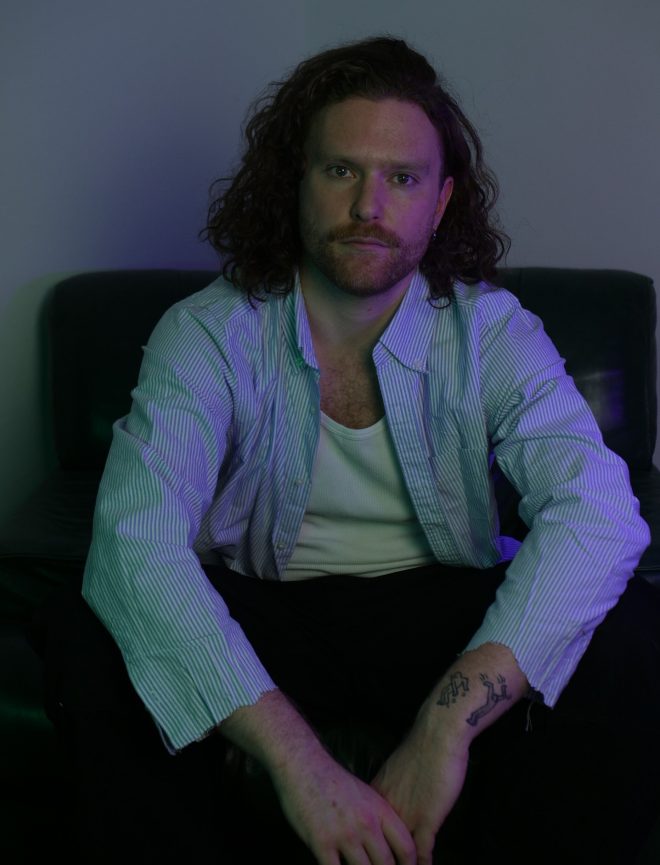
THE ART OF MAKING PEOPLE WAIT
KRL MX doesn’t want audiences to feel comfortable.
He wants them slightly unsettled.
“I want people to feel slightly uncomfortable, in the best possible way. Not lost, but never quite sure where the set is going next. For me, the worst thing a DJ can do is be predictable. The moment the audience knows what’s coming, you’ve lost them.”
His sets are built around restraint rather than instant gratification.
“I work a lot with frustration as a tool. Holding back when everything in the room is pushing you to drop, resisting the obvious peak, creating tension that doesn’t resolve when expected. The energy has to breathe, contract, surprise. A set that only goes up in a straight line isn’t a journey. It’s just volume.”
Preparation happens long before he reaches the booth.
“I never prepare a setlist. But I know every track I own by heart, every possible entry point, every way two records can collide. That knowledge is what makes real-time decisions possible.”
The rest depends entirely on the room.
“The other half is reading the room: the way people move, where the energy sits, what the space is asking for at that exact moment.”
The connection itself can’t be forced.
“When it’s there, the set plays itself. When it’s not, your job is to build it from scratch. That’s actually where the most interesting things happen.”
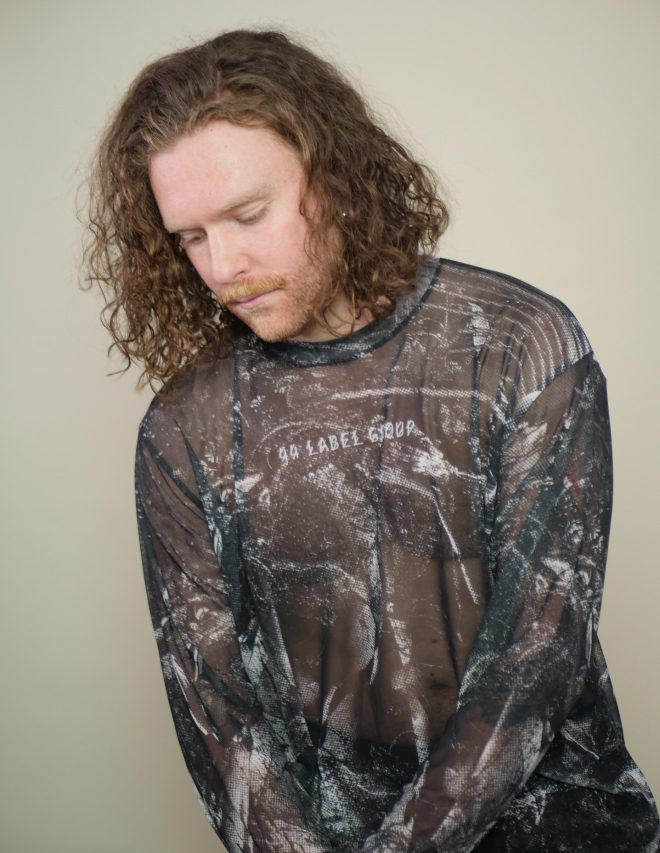
BUILDING THE NEXT GENERATION
Kapitalist Dance Club wasn’t created to become another outlet for his own productions. In fact, quite the opposite.
“Kapitalist Dance Club was never meant to be an extension of my own sound. As a DJ and producer, I have a clear artistic direction, but the label exists in a different space, one where I deliberately allow myself to go elsewhere. It’s dedicated to the next champions, not to my own aesthetic.”
The greatest satisfaction has come from discovering artists before the wider scene noticed them.
“I’m proud to have been among the first to release artists like Lola Cerise, SJUSH or Scythe, people who are now becoming serious players in the scene. That’s what the label is really for: spotting something before it’s obvious.”
He listens obsessively. Every demo. Every submission. Every possibility. But there is no pressure to fill a release calendar.
“I’d rather wait for something that genuinely needs to exist than fill a schedule.” He’s searching for something much harder to manufacture than technical ability.
“What I look for isn’t a particular sound. It’s a point of view. An artist who knows what they’re doing and why, even if they can’t fully articulate it yet. That instinct is either there or it isn’t, and no amount of production polish can fake it.”
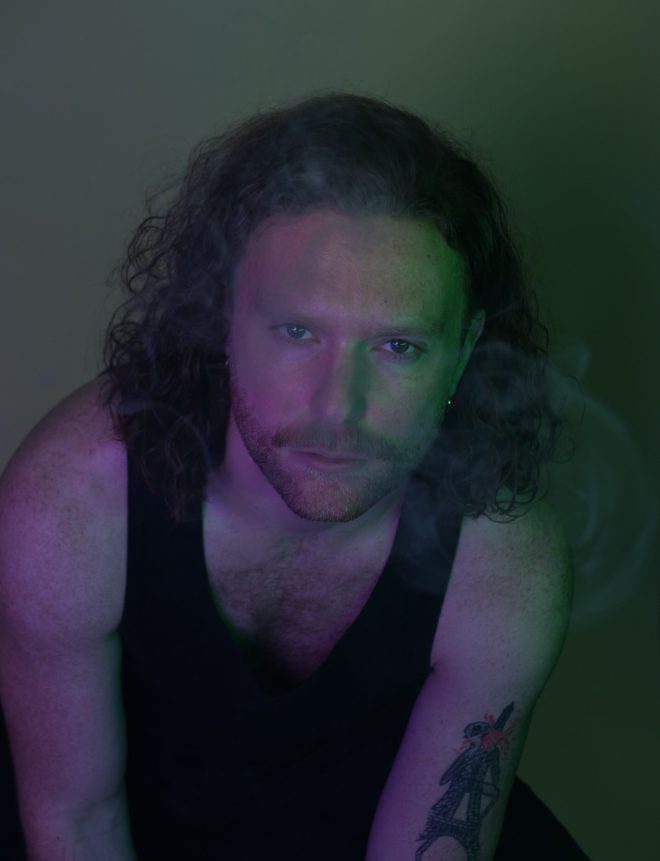
SOUND IS ARCHITECTURE
Ask KRL MX where his aesthetics come from and the conversation quickly leaves music behind.
“I can’t conceive of music without aesthetics. They’re the same impulse, just expressed through different materials.”
His earliest creative influence wasn’t a producer. It was his mother.
“My mother was an interior decorator, a talented one. That shaped my eye before I ever developed an ear. Growing up surrounded by deliberate choices about space, texture and form taught me that design is never decorative. It’s always structural.”
His references reveal the same obsession with reduction.
“In architecture, Tadao Ando, with concrete, silence and light used as a material. In furniture, the radical functionalism of Dieter Rams, whose principle that good design is as little design as possible feels directly applicable to a well-constructed techno track. In film, the cold precision of Michael Haneke or early Kubrick, directors who treat discomfort as an aesthetic tool.”
For him, clubs and architecture operate according to the same principles.
“A great club space and a great track are built on the same logic. Every element earns its place, nothing is there by accident, and the experience only works when the architecture disappears and all you feel is the effect.”
EXCAVATING INSTEAD OF SEARCHING
The future, he says, is becoming clearer.
“For the first time, I have a very precise vision of where my music is going: something darker, rawer, more reduced. That clarity is new. For years I was searching, accumulating influences, testing directions. Now I’m not searching anymore. I’m excavating.”
His upcoming EP reflects that shift.
“It’s not a departure. It’s a distillation. The process has been about removal more than addition. Stripping back until what’s left can’t be questioned. There’s something almost confrontational about that kind of honesty in music. It leaves nowhere to hide.”
Ultimately, what he hopes to contribute extends beyond individual releases.
“I want to remind people that this music was never meant to be comfortable. It was built on friction, on physicality, on the kind of intensity that doesn’t translate well to a playlist or a festival main stage. That conversation feels more urgent now than ever, not as nostalgia, but as a genuine alternative to where things are heading.”
Five years from now, he isn’t measuring success in scale.
He’s measuring it in coherence.
“I want to have built something coherent from end to end. A body of work, a label, a live experience that share the same DNA, the same refusal to compromise, the same commitment to depth over reach. Not bigger. Not louder. Just undeniably itself. That’s the only kind of legacy worth building.”
