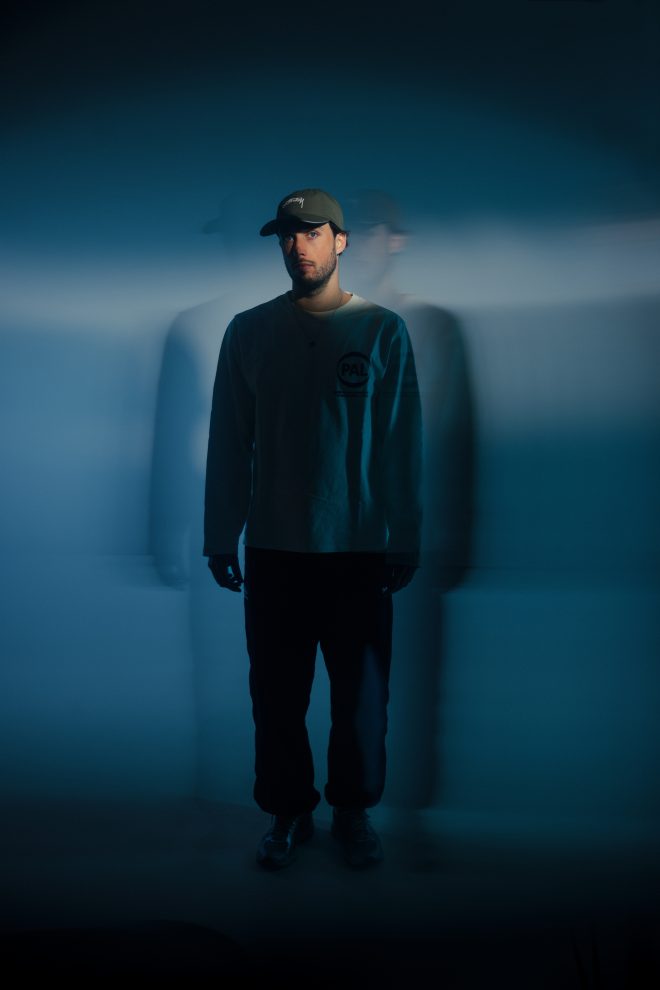


In motion: how Job De Jong built a sound that refuses to stand still

Job de Jong’s trajectory doesn’t unfold in straight lines, and that’s exactly where its weight sits. It moves through fragments, through nights, through decisions that don’t announce themselves as pivotal until much later. There isn’t a single breakthrough moment you can isolate, but a slow accumulation that begins to take shape over time. From early self-releases to the rooms he now occupies, the direction has never been about defining a sound too clearly. It has always been about staying close to a feeling and letting it guide everything else.
What becomes evident is the way his music responds to context without ever feeling forced or calculated. The shift from a club to a festival is not treated as a compromise but as a change in language. Energy behaves differently depending on the space, and his approach adjusts accordingly, stretching or compressing tension where needed. In smaller rooms, there is time to take risks and let details breathe, while larger stages demand a more immediate kind of impact. Neither is more important than the other; they simply ask for different decisions in real time.
There is still a tendency in dance music to categorize, to separate what is considered underground from what is seen as more accessible. Still, from his perspective, that line feels increasingly irrelevant. A track can be labeled one way or another depending on its structure, vocals, or simply where it is played. What matters more is how it lands, how it interacts with the room, and how it carries energy forward. His sets exist in that in-between space, where instinct and awareness constantly negotiate with each other. It’s less about choosing a side and more about understanding the moment.
Now, stepping into a period that includes a full Ibiza summer, a demanding touring schedule, and a growing catalogue of releases that feel increasingly focused, everything begins to converge without losing that openness. The years of building independently are still visible in how he moves today, in the absence of shortcuts and the patience that shaped his trajectory. There is no urgency to define himself too clearly, no need to force a narrative around growth. Instead, there is a sense of trust in letting things unfold at their own pace. That patience becomes part of the identity itself.
There is, however, a core that runs through all of this, even if he avoids framing it as something fixed or definitive. It sits somewhere between instinct and emotion, shaping both how he produces and how he plays. That consistency doesn’t come from repeating a formula, but from trusting a certain internal logic that remains intact across different environments. It allows his sound to evolve without losing its center, even as the context around it changes. The definition, if there is one, exists more in feeling than in structure.
“I don’t see my identity as something fixed. It’s constantly evolving, shaped by the moment and by how I feel. That’s something you can always hear reflected in my sound. To be honest, I’m not overly focused on defining a specific identity. Everything I do comes from instinct and emotion, and that naturally leads to a certain sonic signature. My filter for how I produce and select music is quite broad, but there’s always a consistent feeling running through it. Whether I’m playing a small club or a large festival, that underlying energy remains the same.”
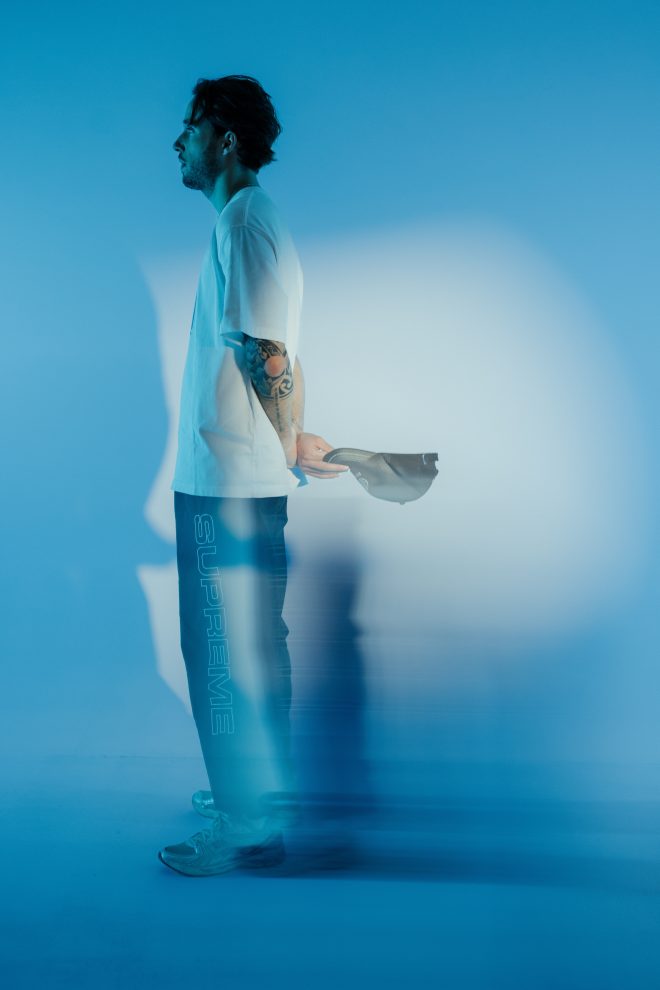
That instinct was not always paired with the same level of trust, and his approach behind the decks has shifted significantly over time. There was a point where preparation meant control, where every moment of a set was mapped out in advance through playlists and structure. Over time, that rigidity gave way to something more fluid, where reacting in real time became more important than following a plan. The difference now lies in familiarity, in knowing his music deeply enough to move through it without hesitation. That knowledge allows for risk, for deviation, and for moments that don’t follow expectation.
“In the past I was much more focused on preparing. I used to make playlists for every moment, but over the years that’s changed a lot. Now I focus much more on the moment itself and try to read the crowd. I know my music library inside out and spend a lot of time with it during the week. That allows me to react quickly in the moment. I still prepare a rough idea of what I might play, but you almost always end up somewhere unexpected.”
Some of those unexpected moments end up carrying more weight than anything planned in advance. The connection between ADE, Slapfunk, and Bret became one of those points where timing, instinct, and context aligned without warning. What started as a last-minute idea turned into something that would later define a chapter of his career. It’s the kind of experience that can’t be engineered, only recognized once it happens. And when it does, it tends to stay with you.
“This has to be at Bret, no doubt about it. I had a track reserved with Brawther and Tristan da Cunha for a VA on their label. Not long after that it was ADE, and on the Monday after ADE we always go to Slapfunk, where they were playing that time. The night before, I made something new for that day. I called the track ‘MB’ (Monday Bret). It ended up being played that day, and I signed it with them in the booth on the spot, which later became an EP on their label SLABS. Around Easter the test presses came in, and hearing it again at Bret on that same system really felt like a full circle moment.”
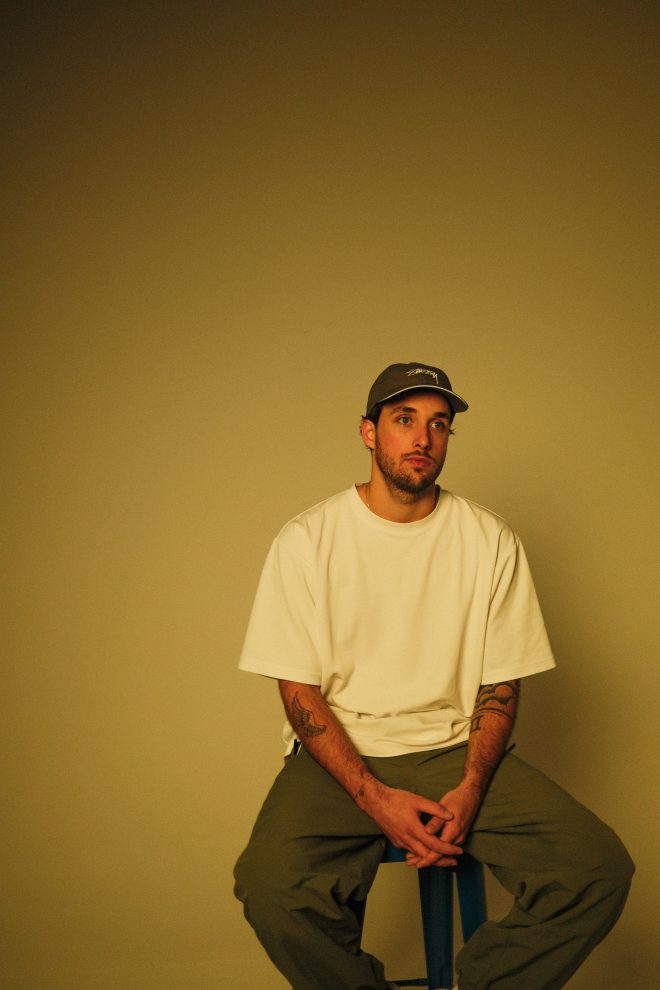
There is also a part of his story that unfolds far from the booth, in a period where access to the industry was limited and progress was anything but immediate. Before the touring and the recognition, there was a phase defined by distance from labels and networks, where the usual entry points simply weren’t available. Instead of waiting for validation, he turned to a platform he already understood, not as an artist, but as a listener. That decision to release independently became a defining move, even if it didn’t feel like one at the time. It established a foundation built on patience rather than momentum.
“I started releasing on Bandcamp at a time when I wasn’t really connected to labels or other artists yet, even though I already had a clear direction with my music. I tried reaching out to labels, but that wasn’t easy at the time. Since I was already using Bandcamp to discover music, I became familiar with the platform. At some point, I thought, " Why not just do it myself? If people connect with it, it will find its way.”
What followed was gradual, shaped by repetition, trial and error, and a growing sense of confidence in his own direction. The absence of early validation allowed space to develop without external pressure, which in turn gave more control over the outcome. As attention started to grow, opportunities with labels followed, but by then the dependency had already shifted. The process had created not just visibility, but a community that continues to play a role in his future plans. Independence, in that sense, became both a method and a long-term philosophy.
“Through trial and error, and by learning along the way, it gradually grew and my music started getting noticed. That eventually opened doors to bigger labels, and sometimes they even began reaching out to me. Over time, it also became an investment in a community, a group of people I want to involve in my own label in the future. Bandcamp taught me patience, independence, and the value of maintaining control. I think it’s still one of the best platforms for young producers to share their work.”
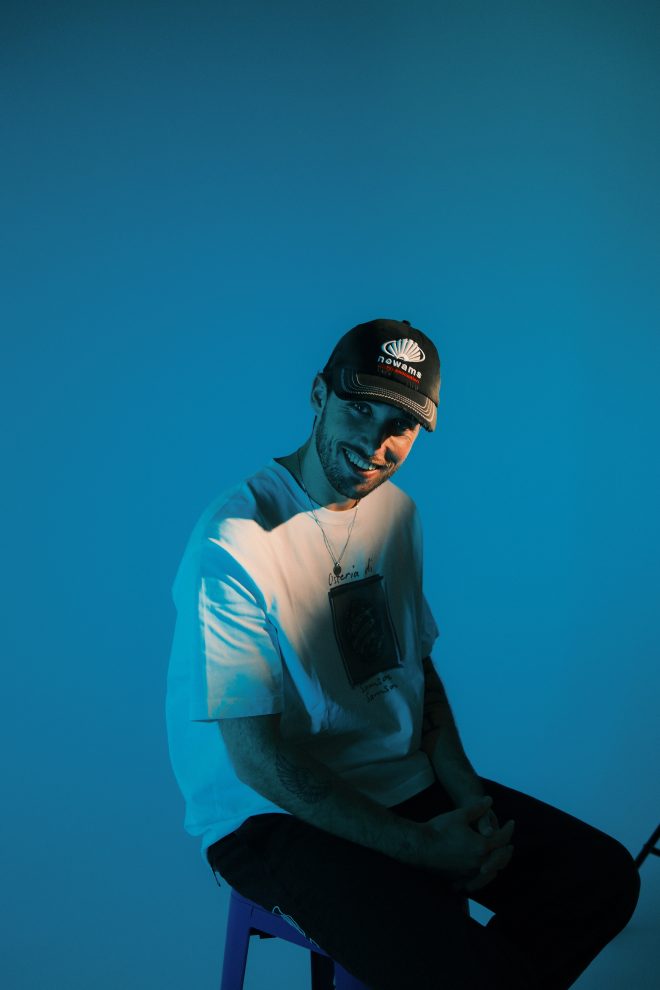
As his schedule became more demanding, the way he approached the studio had to adapt alongside it. The idea of working within a fixed environment became less practical, replaced by a more flexible process that could move with him. Instead of forcing productivity, he began capturing ideas in fragments, often immediately after playing. The transition between performance and creation became more direct, with energy from the dancefloor feeding into new sketches. Collaboration also shifted, becoming less about physical proximity and more about exchanging ideas remotely.
“I’ve always felt most comfortable working from home, being able to move quickly when inspiration hits. Once touring increased, that became more challenging. What really helped was removing the pressure when I wasn’t at home and starting to sketch ideas while on the road instead of forcing full tracks. A lot of inspiration comes right after a show, so I often start new ideas while traveling. The EP with Kepler came together in that exact way, exchanging ideas remotely without spending much time together in the studio.”
Relationships built over time continue to shape his experience behind the decks, particularly in back-to-back settings. His connection with Dennis Quin is rooted in years of shared context, dating back to their time around the Herman Brood Academy. That familiarity creates a different kind of dynamic, one that moves away from competition and into something more collaborative. The set becomes a conversation, where each decision responds to the other in real time. It allows for directions that wouldn’t emerge in isolation.
“Dennis and I have known each other for a long time. I first met him while studying at the Herman Brood Academy where he later also taught. From the beginning, we had a strong musical connection and became good friends. I enjoy doing B2Bs in general, but for me the most important thing is having that connection, especially musically. You can have different styles, but you both need to truly believe in what you’re playing.”
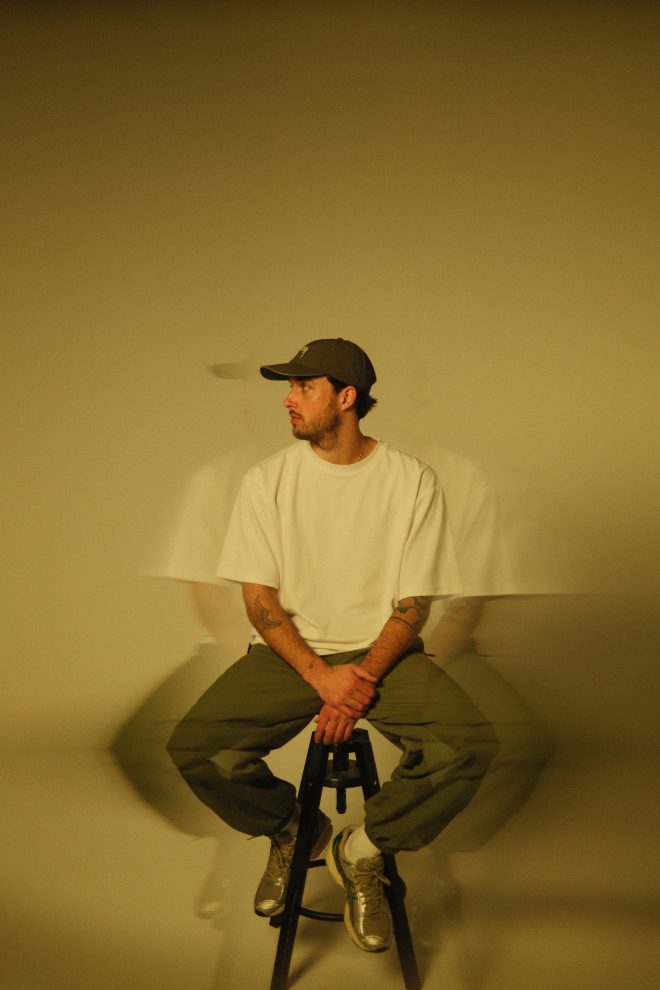
That shared understanding introduces a level of unpredictability that becomes part of the structure itself. The set evolves through surprise, not as a disruption, but as a natural extension of trust between both artists. It pushes the direction into spaces that feel challenging, but never forced or competitive. Each transition carries a sense of response rather than assertion. The result is something that feels alive, constantly adjusting in real time.
“What makes our sets interesting is that we constantly surprise each other. That sometimes pushes the set into unexpected or more challenging directions, but it never feels competitive. I’ve learned a lot from Dennis, he’s always been an inspiration to me. Having the honor doing this together now really feels like a full circle moment.”
Even within larger structures like Ibiza, where expectations can easily override individuality, that same principle of alignment remains central. Rather than adapting his sound to every opportunity, the focus shifts toward selecting the right environments. It becomes a process of filtering rather than adjusting, maintaining consistency without becoming rigid. In a landscape that often rewards visibility over intention, that selectivity becomes a defining choice. It allows growth without losing coherence.
“For me, it’s mainly about choosing the right shows that align with my sound and identity. That way, I can stay true to what I do while still adapting to the environment.”
Looking ahead, that balance between independence and evolution begins to take a more defined shape. The influence of artists like Traumer is present, not as something to replicate, but as a reference for depth and detail. Recent work leans into a more nuanced, refined sound, exploring subtleties without sacrificing impact. At the same time, there is a clear intention to build something beyond individual releases. The next step is not just about music, but about creating a platform that can hold a broader vision.
“My upcoming Gettraum EP is a real highlight for me. Traumer has always been a big inspiration and still is, so being able to release a project like this on his label really means a lot to me. This EP also shows a deeper side of my sound, which I’m really excited about. Over the past period, I’ve tried a lot of different things and learned a lot from doing so. Looking ahead, my creative growth is mainly in building something of my own, a platform with a clear vision where I can bring all my ideas together.”
What ultimately holds everything together is not a fixed definition, but a way of moving through these different layers without losing direction. The early independence, the evolving performance approach, relationships built over time, and the environments he now navigates all feed into the same trajectory. It doesn’t resolve into a single identity, and that’s precisely what gives it strength. The shape continues to shift, but the core remains intact. And in that balance between change and consistency, something much more durable begins to form.