GLIA: BUILDING FROM THE PERIPHERY

For GLIA, finding an artistic identity has meant learning when to absorb what surrounds her and when to reject it completely. The Slovenian-born, Berlin-based producer and DJ has spent the better part of a decade moving between those two instincts, building a language rooted in techno’s physicality but increasingly defined by strange textures, detailed sound design and an unwillingness to let the genre’s current vocabulary dictate where her music should go next.
Her 2023 debut album, The Art of Losing Yourself, released through Diffuse Reality, captured an artist still testing the limits of that language. It moved across different sides of her production rather than presenting a single fixed formula, something GLIA now recognises as essential to figuring out what came next. The real breakthrough arrived a year later with Virgo Psycho, when experimentation stopped being something surrounding her sound and became the sound itself.
“I understood that I wanted to create weird, creative, interesting sounds that surprise you and reflect what is happening in my inner world,” she explains. “The sound design, vocals, melodies, and effects started to feel like a representation of what GLIA actually is internally. I think that part is still evolving today, but the core idea of experimentation and creating something that feels uniquely mine has stayed.”
That distinction matters. Techno is particularly susceptible to periods where production techniques, drum patterns and aesthetics spread quickly enough to become templates. GLIA is interested in the opposite process: maintaining the functional architecture necessary for club music while leaving almost everything above it open to disruption.
The low end is the anchor. Bass, sub and kick need enough weight and precision to translate physically through a soundsystem. Around that, however, she deliberately leaves room for instability. She looks back towards the rawer techno frameworks that preceded the late-2010s shifts in the genre, while simultaneously trying to introduce production ideas that feel detached from a particular era.
“For me, it’s about merging these aesthetics: having a strong low end framework, but on top of that, unlimited creativity that can surprise and move people,” she says. “The goal is not necessarily to make something that sounds like something else. It’s more about entering an experimentation mode and seeing where that takes me, while still keeping the physical connection to dancefloor techno.”
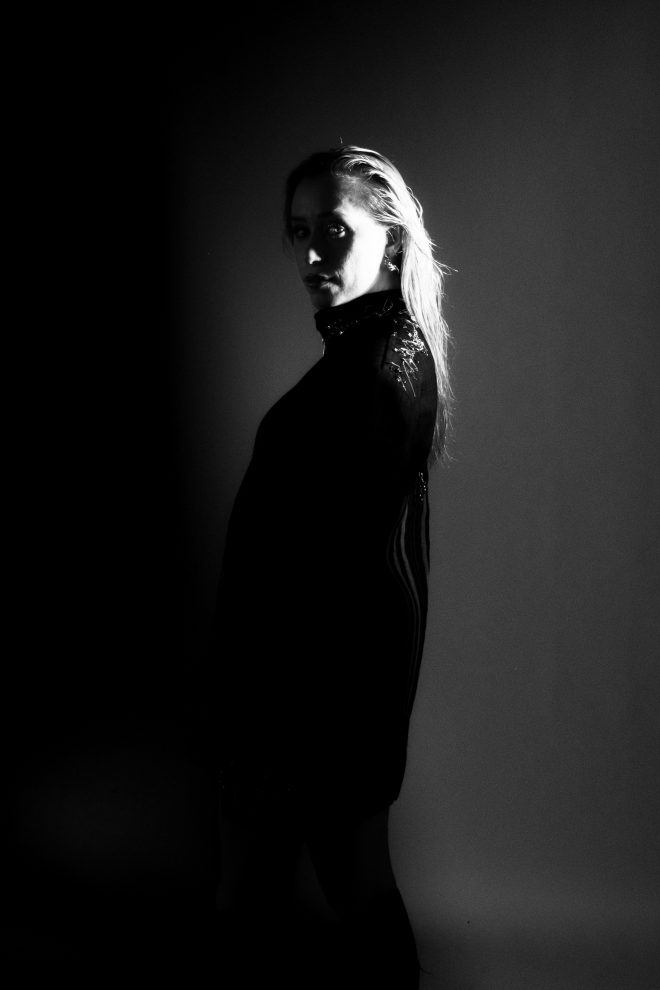
That process has taken GLIA across releases for Diffuse Reality, Suara, Bipolar Disorder and Molekül, with each offering space to explore different rhythms and textures without entirely abandoning the identity underneath them. She is less concerned with repeating recognisable production signatures than with the idea that authorship itself leaves fingerprints.
If she is constructing the sounds herself, she argues, something of GLIA inevitably survives.
“I think you can maybe never really escape from yourself in this kind of way,” she says. “That’s why I believe GLIA will always be GLIA if I am the one making the sounds from scratch.”
It is an interesting distinction between production and DJing. A DJ can move between genres and temporarily inhabit somebody else’s musical language. For a producer building sounds from zero, GLIA sees the limitations of technical knowledge, personal taste and imagination as part of what makes an artist identifiable. Rather than treating those limitations negatively, they become the parameters through which individuality emerges.
Her understanding of how an artist operates extends considerably further than the studio. GLIA has worked behind the scenes across labels, organisations, curation and creative projects, including work around Primal Instinct and Bipolar Disorder, while collaborations with fashion and editorial brands including Ganni, Calvin Klein and Numéro Netherlands have exposed her to different approaches to aesthetics, sound and conceptual development.
She enjoys that machinery. She understands bookings, metrics and the strategic decisions that exist around an artist’s career. But knowing how the machinery works has also made her protective of what sits at its centre.
“Sometimes I wish I could apply more of my knowledge to GLIA, however GLIA is an expression of my soul, so I can’t corrupt it as much,” she says, laughing. The separation is revealing. Strategy can help create the conditions around the project, but it cannot be allowed to determine the project itself.

That independence also has geographic roots.
GLIA grew up in a small village in Slovenia, far removed from the infrastructure that surrounds electronic music in cities such as Berlin, Amsterdam or London. There was no obvious local industry waiting to absorb her into it. Instead, travelling and studying abroad gradually expanded her network, allowing relationships to develop across borders before she eventually relocated to Berlin.
“It’s quite crazy to think about how it started and what kind of ‘non-scene environment’ I came from,” she says. “During my late high school years I was already interested in electronic music, and through travelling and studying abroad, my network started expanding.”
Ironically, arriving inside one of techno’s most established cities did not automatically make networking easier. Berlin brought proximity, but proximity came with its own social structures and pressures. GLIA initially tried to place herself within the right circles before realising that forcing those relationships was incompatible with how she wanted to build.
So she changed the equation.
“I decided to put less pressure on networking and more focus on the music itself,” she explains. “If people connect with my music, bookings follow. That way I build actual organic demand rather than depending on the scene to push me.”
Her experience also complicates electronic music’s persistent idea of itself as inherently borderless. Music may move almost instantaneously online, but careers do not. Clubs, labels, agencies, media and personal networks remain concentrated geographically, and GLIA argues that artists from the Balkans still encounter a structural distance from many of the industry’s central institutions.
“I see it often with artists from the Balkan Peninsula. I feel that if some of them were in the epicentre, like the Netherlands or Germany, they would be BIG,” she says. “You can see the disparity when looking at bigger mainstream techno festivals. The same countries and companies appear again and again, while everything else becomes the periphery.”
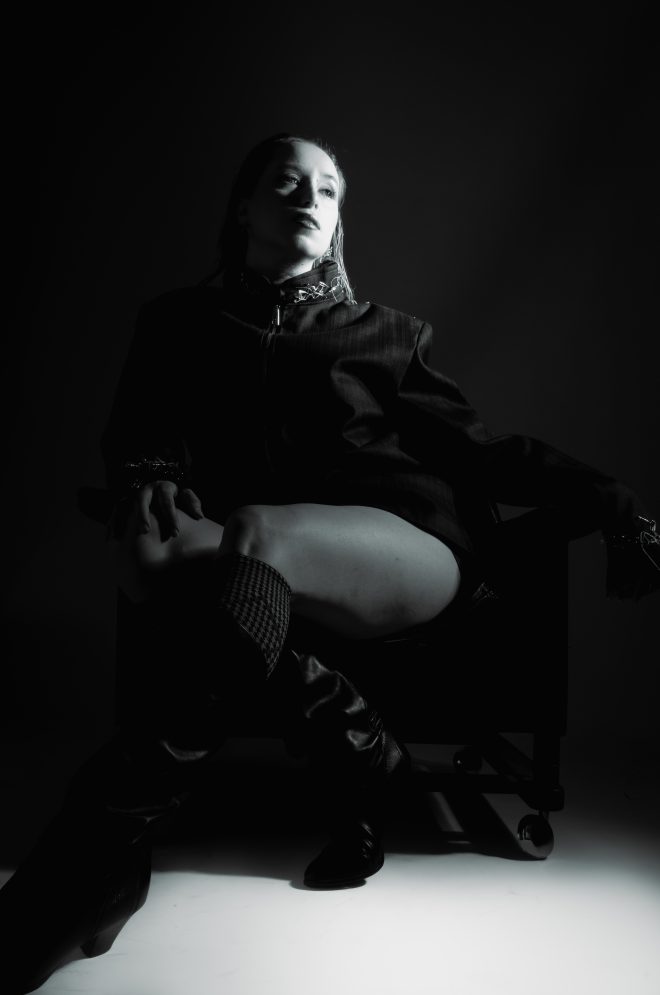
For GLIA, that concentration is not simply cultural. It is economic. Opportunities accumulate around established networks, meaning talent and visibility do not necessarily move together. Her response has been to place greater value on the part of an artist’s career that can be built independently: the craft itself.
“This is why I believe you have to rely on your own music production and actual craft, especially as a non-Western artist,” she says. “I often felt like a person from a small irrelevant country without connections, but along the way I met great people and friends in the industry who helped me take the small steps that got me where I am.”
Today, Berlin is part of GLIA’s environment rather than the definition of her identity. Having played institutions including RSO, Tresor, Lofi and the former Griessmuehle, she has witnessed different cycles of the city’s techno culture firsthand. When she first lived there between 2017 and 2019, hypnotic techno was approaching a peak. Now, she points towards the renewed dominance of so-called groove techno as another turn of the wheel.
She does not believe artists should pretend those shifts have no influence. Trends can create new ideas and movement, and moderate adaptation can be useful. The problem begins when adaptation becomes imitation.
“I don’t think you can be at the forefront if you’re only following trends,” GLIA says. “We are artists, not algorithmic DJs. Sometimes being authentic means being unapologetic about your aesthetic decisions, guiding people and offering a new experience and perspective. After all, why be an artist if you don’t want to offer a new point of view?”

That philosophy increasingly extends beyond her own career. Through projects such as Exibeat, her involvement with labels, events and other creative organisations, GLIA is interested in creating some of the infrastructure she did not have access to when she started. Three issues remain particularly visible to her: sexism, the lack of recognition afforded to smaller producers and the geographic inequalities that determine who gets access to established networks.
As a woman working across different parts of electronic music, she places gender at the front of that conversation. But she also wants more attention directed towards the producers whose work circulates constantly through the ecosystem without their names receiving equivalent visibility.
“There are so many people sacrificing hours and hours to make music, send tracks to bigger names, build communities, and contribute to the scene without necessarily getting visibility or opportunities,” she says. “There is still a lot of nepotism and established networks in the industry, and I would like to see more opportunities based on actual work and talent.”
It brings GLIA’s story back to where it began: creating without waiting for permission from a centre. The distance between a Slovenian village and Berlin is geographic, but it also represents the wider distance between making music and being granted access to the structures capable of amplifying it. GLIA has experienced both sides of that divide, first trying to enter those structures and later helping build alternatives around them.
The objective now is not to settle comfortably into an established version of techno. It is to keep testing what GLIA can sound like, while making room for others to do the same.
“I want to help create spaces where people can connect, collaborate and have their work heard, regardless of where they come from or what connections they have.”