


RBX: The Rise, Reinvention, and Raw Energy of Italy’s Hardest Sound
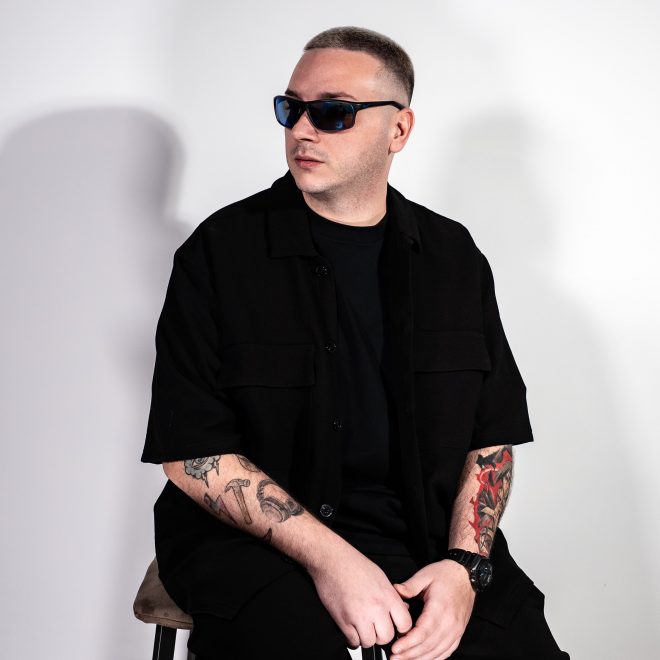
Rome is loud even when it sleeps. Its outskirts carry a different kind of weight, a pressure made of concrete, noise, and emotion that never fully settles. RBX grew inside that atmosphere; he absorbed intensity before he ever organized it into sound. What defines him today is not just hardness, but instinct sharpened by a landscape where feeling runs deeper than structure and where every dream has to be fought for.
Growing up on the fringes of the city, he gravitated toward the sounds that existed in the shadows. Hardstyle, hardcore, progressive, gabber, the remnants of Rome’s old Virus scene. These weren’t references; they were lifelines. He found them while the mainstream clung to vocal hits and polished aesthetics. His world was smaller, more secret, more combustible, and it demanded curiosity. Before adolescence, he was already a spectator of nightlife, learning through observation how music manipulated bodies and space.
“Growing up in a small town on the outskirts of Rome, I was first drawn to niche genres like hardstyle, hardcore, and progressive. Even though in Italy these movements were tiny compared to the mainstream, I felt compelled to explore them. By the age of 11, I had already started hanging around nightlife, watching DJs, learning how everything worked.”
Italy wasn’t an obvious launchpad. He knew it early, and he knew it painfully. Yet that specific constraint forged the aggression in his ambition. It gave him urgency. He understood that to be seen, he had to push harder, louder, deeper. His roots didn’t limit him; they primed him.
The Moment Pressure Became Power
Every artist carries a moment when belief finally overtakes fantasy. For RBX, it happened in 2014, the night he stepped onto a club stage for the first time. Something irreversible sparked. It wasn’t confidence yet. It was recognition.
“The first real turning point came in 2014, the very first time I played in a club. That night, I knew I would never stop chasing this dream.”
The awareness of what he was building came years later. Until then, he balanced days as a plumber in his father’s company with nights working tables, kitchens, anything that paid enough to keep a studio alive. Dedication measured in exhaustion.
“Before 2022, I worked for seven years as a plumber, and on weekends, I did side jobs just to afford a small studio and invest in my dream. I think I truly became aware of what I was doing only about three years ago, when I started making a living solely from music.”
This distance between stability and obsession hardened him. He learned how to endure, how to fail forward, how to keep fire lit under pressure. That tension shaped the identity he brings into every club today.
Energy as a Living Language
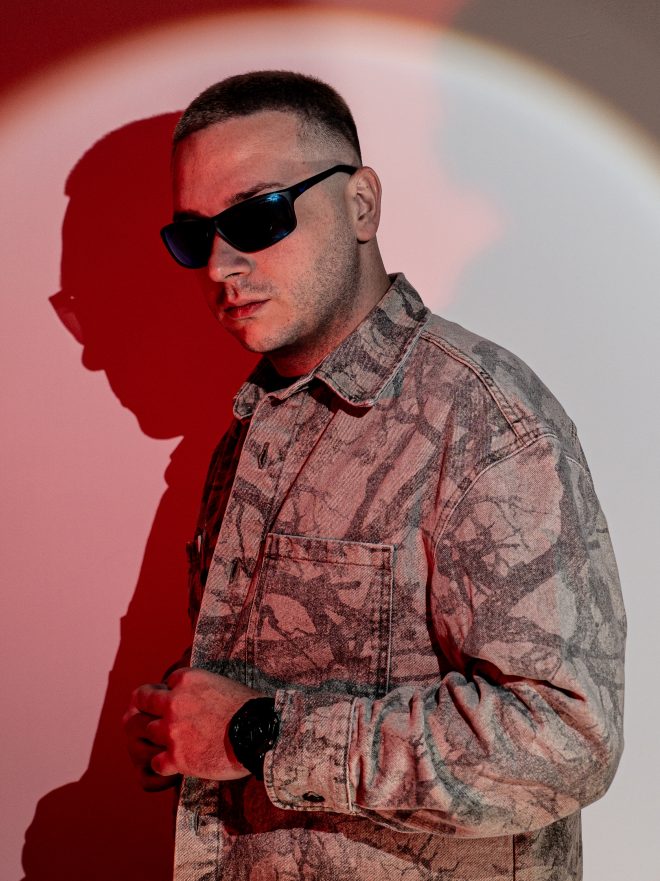
To understand RBX, you have to understand his relationship with energy. For him, it isn’t a stylistic signature or a genre blend. It’s anatomy. Hard Techno, Neo Rave, Gabber, Hardstyle: he doesn’t switch between them; he metabolizes them.
When he speaks about energy, he speaks like someone describing something alive.
“For me, energy is a language, raw, instinctive, and physical. I don’t follow a formula. I start from emotion, from the impact I want to hit with. My sets are stories made of tension and release, told through distortion, speed, and pressure.”
The cohesion in his sets doesn’t come from pre-planned arcs but from instinct shaping rhythm in real time. Control and chaos aren’t opposites for him; they’re communicators. And he uses both fluently.
His remixes of “Meet Her at the Love Parade” and “No Good” didn’t explode because of nostalgia alone but because they reactivated something people didn’t realize they were missing. The early 2000s held a purity that modern production rarely allows. Emotional directness. Imperfection. Honesty.
“Those early 2000s sounds connected because they were built on raw emotion, without overthinking. In a world where everything is polished, those tracks remind us of when raves were about sweat, chaos, and freedom.”
RBX doesn’t use nostalgia as comfort. He uses it as a source of tension: past emotion rebuilt under present pressure.
“For me, nostalgia isn’t about looking back. I like taking those emotions and reworking them with today’s intensity. It’s not about recreating the past, but giving it a new life inside the sound of the present.”
He honors his roots while refusing to be trapped by them. That balance sets him apart from the loudness race currently dominating the scene.
The Quiet Rebirth
There was a silence before this new chapter. A necessary one. It wasn’t burnout. It was clarity. RBX felt himself drifting into autopilot, creating to match the rhythm of the scene instead of his own. So he stopped. Not to retreat, but to recalibrate.
“I didn’t stop because I lost passion, but because I needed to understand what I truly wanted to say through my music. I felt like I was creating on autopilot.”
During the hiatus, he experimented, lived, listened, and let himself breathe without output. That space allowed instinct to return unfiltered.
“What brought me back wasn’t one sound or moment. I realized that I’m not done yet. I still have something to scream into the world.”
What emerged wasn’t a rebrand. It was a rebirth with sharper edges, more profound emotion, and more intent.
This era is defined by instinct. RBX speaks about creative freedom with a blunt honesty that cuts through the fog of trends and metrics.
“I’ve stopped thinking about what I should produce. Now I just create what I feel. When you’re deep in the scene, you constantly compare yourself. Unlearning that was hard but liberating. Now I create with no limits and no overthinking.”
He produces as he did at the beginning: freely, but now with the awareness of someone who knows precisely what he refuses to become.
RBX belongs to big stages, but he doesn’t romanticize them. He treats them as laboratories. Every kick that shakes a crowd, every silence that bends anticipation, becomes material for the next track.
“Every live set leaves a mark on me, and that becomes the starting point for my next tracks. I try to capture a real emotion and turn it into sound. When an emotion is genuine, it always finds its way to the listener.”
This is why his music works in stadiums and in headphones. Its source is personal.
Hard Techno’s explosion has blurred the difference between intensity and noise. RBX draws that line sharply.
“The difference between real energy and empty loudness is intention. True power comes from how you build tension, how you use silence, contrast, and dynamics. A track really hits when it moves people without losing its soul. It doesn’t have to be the loudest. It has to say something.”
This belief anchors his sound in a generation obsessed with escalation.
Holding Ground in a Scene That Never Slows Down
He knows the pressure of a landscape that mutates weekly, where momentum feels fragile and visibility fleeting. But he refuses to chase everything new. He evolves with intention, not panic.
“Every day, there are new artists and new sounds. That pressure is real, but I’d rather do less and do it with purpose.”
The stage is where he finds balance again. The noise quiets. The reason returns. RBX calls this moment a rebirth, but it feels more like ignition. What he wants now is to transmit truth, not just force.
“I want people to feel the same force that brought me here, the desire to be reborn and to never be afraid of change. In five years, I hope RBX won’t just be a name tied to a scene, but an energy that stands for freedom, authenticity, and the drive to go further.”
Hard Techno is accelerating. RBX is deepening. And that is why what comes next carries weight.
