Dxpe: Back To The Source
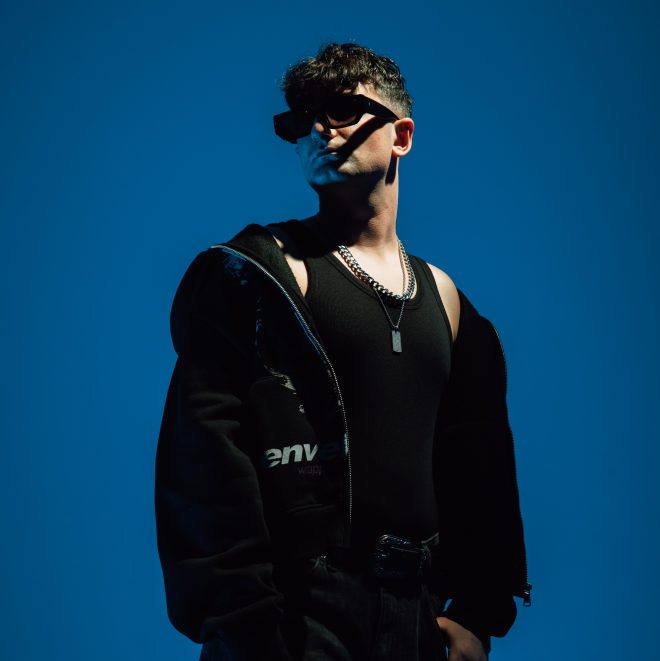
DXPE has spent years pulling fragments of hard trance, hardstyle, Makina and Spanish rave culture into the present. After watching Neorave drift from the movement that first excited him, the Valencia-born producer is looking home again. Through Bounce, Hardbounce and a new tour dedicated to the Bakala era, he is reconnecting with the culture that first inspired him.
DXPE was 14 when electronic music opened up a world radically different from his surroundings. Like many teenagers of his generation, his entry point was not a club or record shop but the explosion of Tecktonik and Electro Dance culture, alongside Hardstyle, Hard Trance and Jumpstyle. The music felt unlike what everyone around him was consuming. His curiosity soon moved beyond listening and dancing to understanding how the records were made, a question that would eventually lead him into production.
“I’ve always been curious and loved discovering new things. Back then, I was tired of the music most teenagers listened to, so I began exploring electronic music through the Tecktonik/Electro Dance movement, where Hardstyle, Hard Trance and Jumpstyle were prominent. Those sounds immediately clicked with me. Long before I thought about becoming an artist, I wanted to know how they were created. That curiosity eventually led me to become a DJ and producer.”
Growing up in Valencia meant making those discoveries in a city with one of Spain’s most complicated relationships with electronic music. The legacy of the Ruta and Bakalao had long been reduced to drugs, danger and tabloid mythology, overshadowing the music, clubs and communities that built it. Yet venues such as Chocolate, Spook and Barraca kept that history alive, and a younger generation began approaching it with less baggage. First as a clubber and later as an artist, DXPE realised this culture could become part of his musical language. What Valencia had once distanced itself from was becoming worth recovering.
“After years of stigma around the Ruta and Bakala culture, the reopening and continued presence of clubs like Chocolate, Spook and Barraca helped my generation bring it back to life. We’re more open-minded and rebellious, which has changed how people see it. After years of clubbing at these venues, I felt compelled to use my music to put Bakala culture back on the map.”
That connection deepened during COVID, when the disappearance of clubs gave artists time to reconsider their work. Listening to producers such as DYEN and VCL incorporate structures from outside techno into a harder contemporary framework changed how DXPE viewed the sounds he had absorbed through Hard Trance, Hardstyle, Jumpstyle and other forms of Hard Dance. Rather than treating those genres as closed historical periods, he could extract their patterns, rhythms and melodies and rebuild them inside something new. The past became material rather than a destination.
“During COVID, when many artists were rethinking their sound, I started listening to DYEN and VCL, who brought structures from other genres into techno. I realised that patterns and details from those styles could work perfectly within harder techno.”
DXPE has never been interested in simply recreating old records. As Spanish rave history resurfaces, Makina, Hard House, Hard Trance, Jumpstyle and early Hardstyle are reaching audiences with no memory of their original eras. Revival can become imitation when recognisable sounds turn into aesthetic shortcuts. For DXPE, what deserves to survive is not a particular kick, synth or melody but the restless attitude that made those records feel new. Keeping Bakalao alive means preserving its experimental impulse rather than freezing it in time.
“The key isn’t using the exact sounds of the past but preserving the spirit of innovation that defined the culture. Certain sounds, melodies and rhythms will evoke those eras, but the aim is to capture their essence without making a poor copy of what came before.”
That instinct initially found a home in Neorave. Around 2018 and 2019, Industrial Techno was moving closer to Gabber and Hardcore, allowing DXPE’s influences to collide with the heavier contemporary techno circuit. Acid, industrial textures, Hard Trance and early Hardstyle could coexist without sounding artificially assembled. This experimentation gave him a distinct position in Europe’s emerging harder scene, and Neorave offered the freedom he needed, until that freedom became a formula.
“Misinformation led people to perceive Neorave simply as a harder style, making it closer to what we now call Hard Techno than its original purpose: bringing the sounds of the ’90s and early 2000s into the contemporary scene. As I tried to follow its emerging conventions, I gradually lost my identity and realised I had to reinvent myself.”
That is where Bounce and Hardbounce enter the story. Rather than simply replacing one genre with another, this new wave has reopened the territory that first attracted DXPE to Neorave: Trance melodies, rhythmic Hard Dance, Hard House and an audience comfortable moving between them. After adapting to an increasingly rigid sound, he can trust his instincts again. Reinvention, in this case, means recovering what was already there.
“Thanks to the new wave of Bounce and Hardbounce, shaped by Trance, rhythmic Hard Dance and Hard House, and its open-minded audience, I can express myself freely again. That freedom is essential for an artist today.”
That freedom is clearest behind the decks. Even when the music is hard, DXPE does not treat a set as a sequence of increasingly aggressive drops. Years of playing longer sets taught him to shape tension, release and movement, reaching peak intensity without staying there indefinitely. At times he maintains the pressure; at others, he gives the crowd space to dance before the next shift. The audience guides the direction, and repetition signals that it is time to change course.
“I try to make my sets tell a story rather than follow the constant ‘drop-to-drop’ approach that dominates today. Playing long sets has taught me to read the crowd, build intensity toward moments of euphoria and then give people space to dance. The crowd ultimately decides the direction. Whenever the energy feels repetitive, I surprise them with a melody, a new element or something unexpected.”
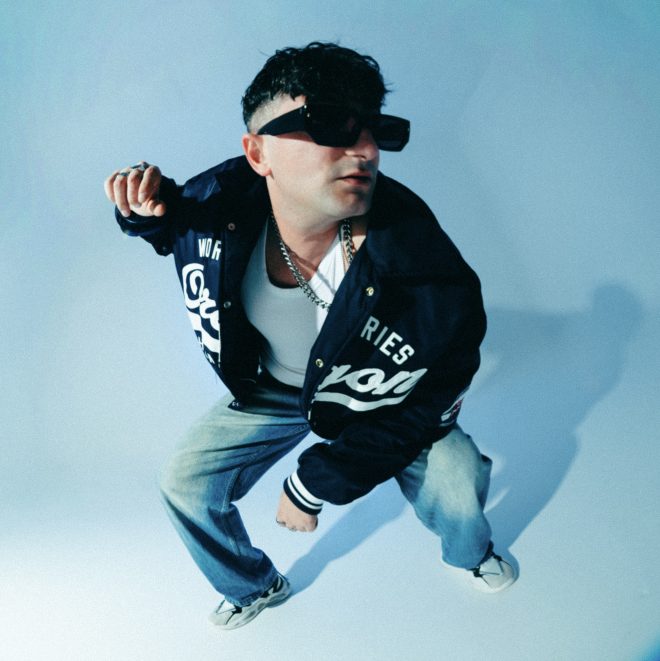
Soon, that relationship with the past will become more explicit. DXPE is developing a Spanish and Bakala-focused tour featuring sets of at least three hours, allowing him to explore the music that shaped him rather than sprinkle references into his international sets. It will focus on sounds associated with Valencian institutions including Chocolate, Sound Factory and Rockola, spanning roughly 1998 to 2005 or 2006. He also plans to revive the era’s mixing style, changing how he performs. Rather than a historical demonstration, the tour will reveal a side of DXPE rarely seen outside Spain.
“The selection will differ greatly from my usual sets, and I’ll mix as DJs did during that era: instead of transitions, they combined two or more drops. The journey will span 1998 to 2005/2006, with a few surprises to be revealed once everything is ready.”
It is fitting that DXPE has arrived here after moving through scenes built by dismantling and reconstructing old sounds. Hard Trance and early Hardstyle left their marks; Industrial Techno opened another door; and Neorave gave those references a contemporary framework before becoming too restrictive. Bounce and Hardbounce now offer a new opening, while the Bakala project takes him back to the culture that shaped his understanding of Valencian nightlife. These movements need not cancel one another out: the constant is the curiosity he discovered at 14.
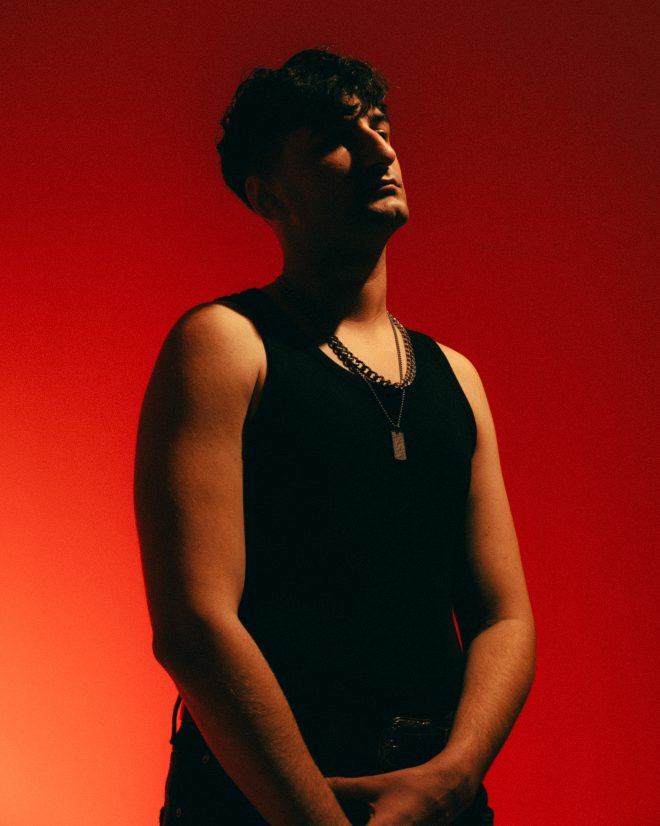
“There are only a few areas left to explore in my sound, but I’ll keep experimenting. I’d especially like to collaborate with artists from genres I’ve always loved, such as Electro and Drum & Bass. I may also release projects I’ve kept under another alias.”
Despite everything that has changed, the principle remains. Genres acquire names, scenes develop rules and successful formulas are eventually broken apart by another generation. DXPE knows what happens when an idea that represented freedom becomes another set of expectations. This time, the goal is not to find the next box but to ensure that none becomes permanent.
“At the end of the day, it’s simply about one thing: innovate, innovate and innovate.”