


Daniel Orpi: Building His Own Legacy
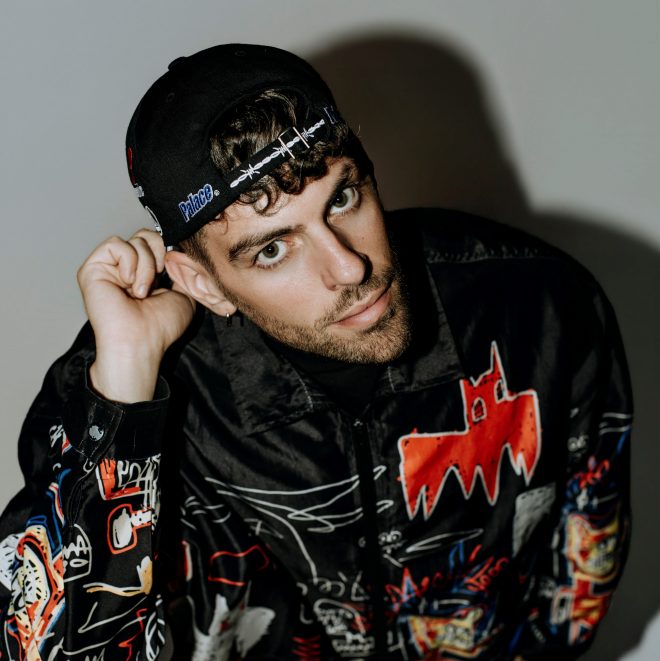
There is a version of Ibiza that exists before anyone ever arrives.
It is built from stories passed between DJs, photographs that circulate online, lineups that feel impossibly distant and careers that appear to have materialized overnight. The island becomes less of a physical place than an idea. A destination where everyone seems to know someone, every opportunity feels within reach and every set has the potential to change everything.
Daniel Orpi arrived carrying that version with him.
Like countless young producers before him, he imagined an industry that rewarded initiative more than patience. Looking back now, he laughs at the memory. The mechanics. The timing. The way careers are actually built.
“Looking back, I definitely had a romantic idea of how the industry worked. This was around 2015, when CDs were already completely outdated, and I genuinely thought walking into clubs with one would get me a gig. I had it all wrong. Ibiza taught me that careers are built through patience, consistency and real relationships, not shortcuts. But one thing that version of me understood better than anyone was how much I loved the scene. I wasn’t chasing status, I just wanted to be part of that world. That passion is still what drives me today.”
The details have changed considerably since then.
His records now circulate through the USBs of some of house music’s most influential selectors. Artists including ANOTR, Michael Bibi, Mau P, Jamie Jones, The Martinez Brothers, Marco Carola and Carlita have all championed his productions. His touring calendar now stretches well beyond Europe, with North and South America becoming increasingly important chapters of his schedule, while DIGGIN’ initially conceived as a personal outlet for releasing music has quietly evolved into a platform with ambitions extending beyond the records themselves.
From the outside, it resembles the trajectory many producers spend years trying to construct.
From Orpi’s perspective, it feels considerably less dramatic.
Careers rarely announce when they have changed.
There is no single flight where everything suddenly feels different. No headline that permanently alters your sense of self. More often, transformation arrives disguised as routine. The airport becomes familiar. Soundchecks replace milestones. Places once imagined as distant aspirations gradually become ordinary entries in a calendar that never seems to stop moving.
Occasionally, however, reality interrupts the routine.
ELROW
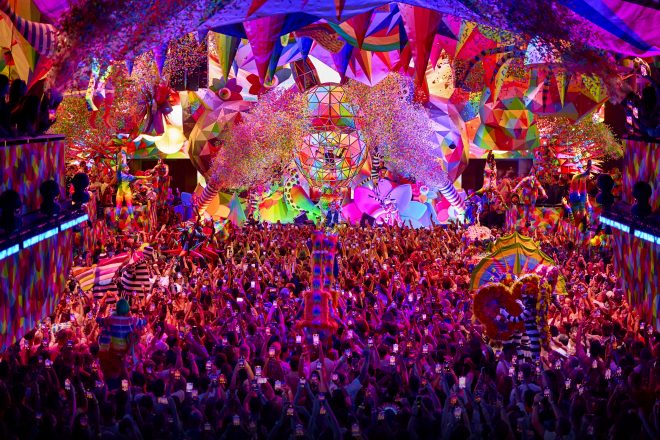
Anyone familiar with elrow understands the ritual. The explosions of color, paper and spectacle are carefully timed. They belong to the crescendo of the night. Opening DJs rarely experience them from behind the booth.
Then, unexpectedly, they happened during his set.
“Playing elrow at Avant Gardner before Danny Tenaglia was one of those moments I’ll never forget. I was opening the show, so I wasn’t supposed to have confetti cannons. Confetti is one of elrow’s signature elements and usually comes later in the night. When they suddenly went off during my set, it completely caught me by surprise. It felt surreal. For a few seconds, I forgot I was the opening DJ and just enjoyed the moment. I don’t know if it was the moment I felt I’d made it, but it definitely made me realize I belonged there.”
Belonging is a curious thing inside dance music.
Most artists spend years pursuing recognition without ever stopping to ask whether recognition and belonging are actually the same thing. One comes from outside. The other is almost entirely internal. By the time audiences begin to perceive someone as established, the artist has usually spent years negotiating that question privately.
Listening to Orpi speak, there is remarkably little interest in describing success through numbers or milestones.
He almost always returns to places.
Ibiza.
Miami.
Dancefloors.
Studios.
Cities become emotional coordinates rather than geographical ones.
Although Ibiza remains the centre of gravity, it no longer represents the whole picture. Miami has become equally significant as a necessary counterbalance. If Ibiza offers silence between records, Miami offers momentum between ideas.
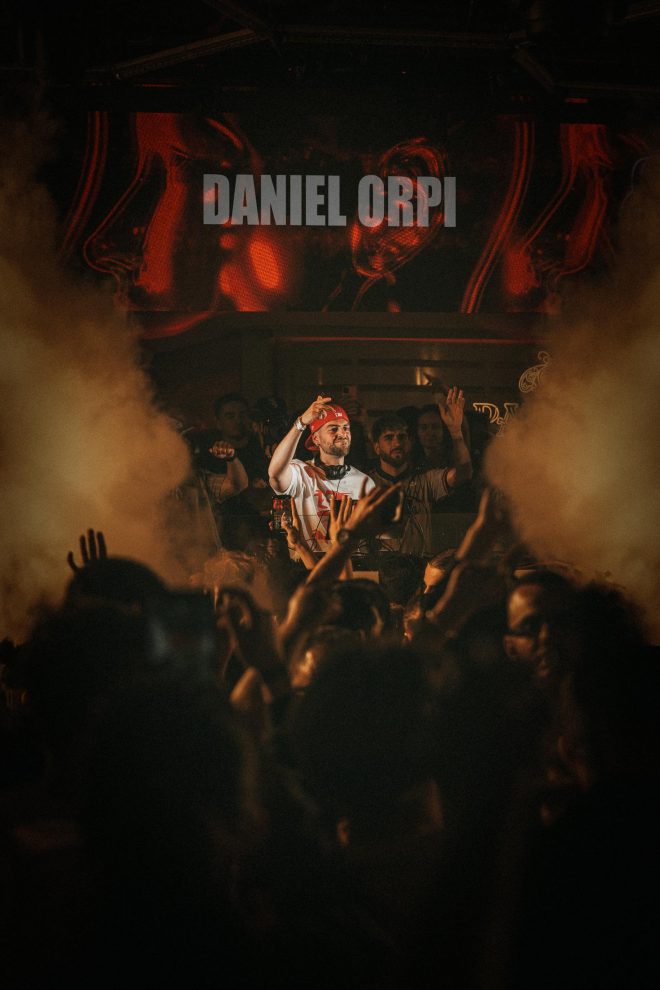
“Ibiza and Miami inspire me in completely different ways, and that’s exactly why I’d love to divide my time between them. Ibiza feels like home. The language is very similar to Catalan, it’s only a 45-minute flight from where I was born, and it’s where I made ‘Siéntelo,’ one of the most important records of my career. The island slows me down and gives me space to create. Miami is vibrant, cosmopolitan and full of people chasing big ambitions. That energy pushes me creatively. Ibiza helps me disconnect, while Miami motivates me to think bigger and keep evolving.”
The contrast feels revealing.
One city encourages reflection.
The other rewards momentum.
One preserves perspective.
The other continuously expands it.
Perhaps that balance also explains why his productions have managed to travel so naturally between different corners of contemporary house music.
Support from influential DJs has become almost routine, but Orpi speaks about that recognition with surprising detachment.
“I actually think the question assumes something that isn’t true for me. I don’t make music thinking about what other DJs want to play. If anything, that’s probably the fastest way to lose your identity as a producer. I simply make music that I enjoy. One habit I’ve developed recently is finishing a track and then leaving it alone for a few days before sending it out. Coming back with fresh ears gives me confidence that I’m sharing something because I genuinely believe in it, not because I’m looking for approval.”
Electronic music has become increasingly immediate. Producers receive feedback within minutes. Clips circulate online before tracks are finished. Algorithms reward frequency. Visibility often arrives before confidence does. Choosing distance waiting several days before listening again almost feels radical, and perhaps that same instinct explains why DIGGIN’ exists at all.
This feels like an attempt to protect a particular way of thinking about music before it disappears beneath metrics, branding and visibility.
It began, as many worthwhile things do, for entirely personal reasons.
For Daniel Orpi, that evolution became DIGGIN’.

“DIGGIN’ started because I wanted complete creative freedom. I created it as a way to express my music without having to wait for anyone’s approval but my own. Over time it became much more than just a label. I felt like the industry was becoming too focused on numbers and big names instead of simply discovering great music. With DIGGIN’, the priority has always been the music itself. I want people to come across artists they didn’t know before and connect with them because of what they hear, not because of hype.”
As the label has grown, so has the conversation surrounding it. What began as an outlet for his own music is gradually becoming a reflection of the culture he hopes to foster around it.
“I hope DIGGIN’ becomes known for its culture more than its size. I don’t know exactly where we’ll be in five or ten years, but there are a few things I never want to compromise on. No VIP mentality. No booking artists simply because they’re big names. I want it to be about expression, unity and people coming together because they genuinely love music. The best dancefloors are the ones where nobody cares who you are outside the club. Everyone is equal, sharing the same experience.”
That sense of openness extends well beyond the label itself. Years spent moving between airports, clubs and studios have inevitably reshaped the way he experiences both music and the world around him, but they haven’t diminished the excitement that first made touring feel special.
“Touring has definitely made my world feel bigger. Every flight still excites me because I know I’m about to experience somewhere new, meet different people and play music for a new crowd. One of my favorite parts is connecting with fans around the world, having people recognize you on the street, discovering local food, experiencing different cultures, hearing new sounds, or receiving music from producers in countries I’ve never visited before. Those experiences constantly inspire me. At the same time, travel teaches you to value your energy. But honestly, this is exactly the life I always dreamed of.”

After years of steady growth, international touring and a catalogue supported by some of the biggest names in house music, the conversation naturally shifts toward legacy. Not in terms of milestones, but in terms of what remains once the tours end and the trends inevitably change.
“More than anything, I hope people remember the music. Trends, charts and venues come and go, but music is what lasts. I also hope people remember someone who stayed true to himself and built a career doing what he genuinely loved. Making a living from music once felt almost impossible to me. If my journey encourages someone else to believe it’s possible for them too, that would mean a lot. Beyond any milestone, I’d love to be remembered as someone who contributed something positive to the scene.”
For someone who once arrived in Ibiza believing the industry would reward ambition alone, Daniel Orpi has come to understand that the careers with the greatest longevity are rarely built around moments of validation. They are built through conviction. Through trusting your instincts when trends shift, creating opportunities rather than waiting for them, and allowing the music to define the work. Long after the charts have been replaced and the lineups have changed, that’s the legacy he seems most interested in leaving behind.
