


Bassjackers: Finding The Bounce Again
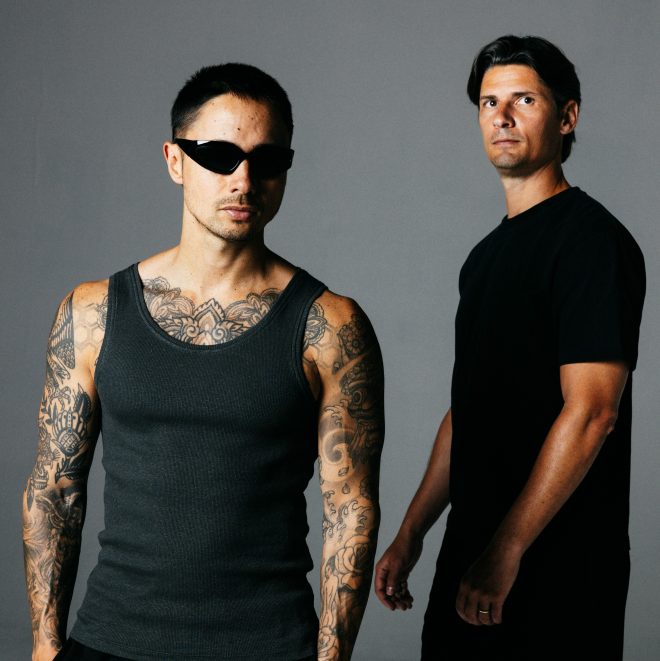
More than a decade after “Mush Mush” helped define an era of festival dance music, Bassjackers are moving faster again. With a run of collaborations spanning Hannah Laing, Maddix, Charlie Sparks, DYEN and Space 92, the Dutch duo are connecting their big-stage instincts with techno, rave and hard dance through a sound they have started calling “tech bounce.”
Reinvention is relatively straightforward when something has stopped working. The more complicated moment comes when it hasn’t.
Bassjackers could have continued comfortably within a sound that had already taken them around the world. “Mush Mush” became one of the defining records of their early career, arriving as festival dance music accelerated towards the big-room explosion that followed. More than a decade later, however, Ralph van Hilst and Marlon Flohr have found themselves exploring faster and harder territory.
Recent collaborations with Hannah Laing, Maddix, Charlie Sparks, DYEN and Space 92 connect Bassjackers with different corners of contemporary techno and hard dance. Somewhere along the way, they found a name for what was emerging.
“It’s a blend of techno, bounce, old school rave and a bit of trance here and there. It has that high energy that’s so typical for us and it is also unique in the sense that it works on the big stages, but also in clubs. At one point, we were working on a remix and started using sounds you would normally hear more in tech house. We joked around and called it ‘tech bounce,’ and the name kind of stuck.”
The term may have started as a joke, but the shift behind it required Bassjackers to reconsider how much their established identity should dictate what came next. Their previous formula hadn’t failed. If anything, that made moving away from it more difficult.
“We had to stop holding on too tightly to what Bassjackers was supposed to sound like. The old formula still worked, but we’ve always liked to evolve and push ourselves. We also had to accept that not every existing fan would understand the change straight away. When you’ve built such a recognisable sound, it can start to limit you if you’re too careful with it. We never wanted to erase our history, but we also didn’t want it deciding everything we made next. Once we gave ourselves that freedom, making music became exciting again and we started finding new ways to bring that Bassjackers energy.”

That energy is the connection between both periods. Put “Mush Mush” next to their current material and the tempos and production vocabulary have changed considerably, but Bassjackers still approach records with the same fundamental question: does it work on the dancefloor?
“The sounds can change, but our special touch is still there. Bassjackers music has always been high energy and super effective on the dancefloor. ‘Mush Mush’ was definitely a dancefloor destroyer. Almost everyone in the scene was playing it. Even back then, we were really focused on arrangement and impact. A track should work in its full form, stay entertaining from beginning to end, hit hard when the drop comes and keep people dancing. We still make music with that same mindset. Strong synths, lots of bass, tension and release, and a bit of fun. The tempo might be faster now, but the DNA is the same.”
It is an important distinction at a moment when harder electronic music has moved increasingly towards dance music’s largest stages. Bassjackers aren’t interested in reproducing whatever is currently working within techno, hard dance or rave. Those scenes provide raw material rather than a blueprint.
“We take inspiration from those scenes, but we don’t try to copy them. Bassjackers music has its own touch, so anything we make still needs to feel like us. We think that’s also why a lot of DJs from those scenes started playing our music. The feedback we often hear is simply, ‘It works so well’ or ‘It sounds so good.’ That tells us that our production, arrangements and dancefloor impact are what set us apart. We take the parts that genuinely inspire us and put them through the Bassjackers filter. If a track doesn’t feel like us or doesn’t work in our sets, there’s no point in releasing it.”
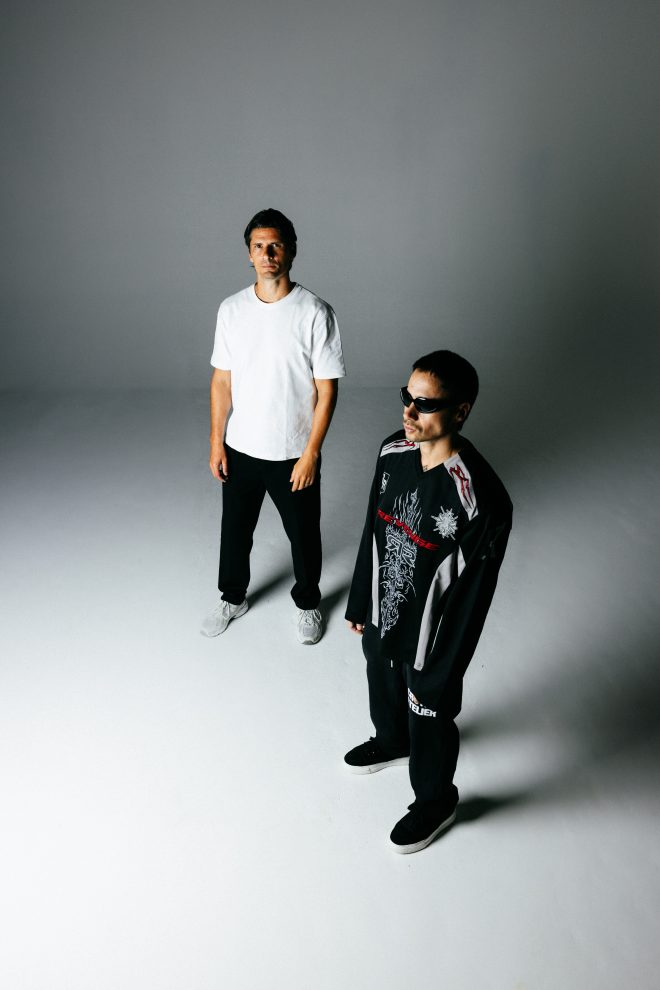
Bassjackers have also seen this kind of cycle before. They were there as big room went from an emerging sound to a dominant force on festival main stages. Today, they see the rise of faster music as part of another change, but one that extends beyond BPM.
“Dance music always moves in cycles, and we were there for the birth of big room. It became huge because it gave people a very clear moment of release together. But when any sound becomes too predictable, people naturally start looking for something new. We saw the music getting faster, but we also noticed that the DJ wasn’t always the main focus anymore. People were watching the stage less and dancing with each other more. It looked fun, spontaneous and much more about the whole room. That energy really drew us in as well. People care less about genre boundaries now, and so do we.”
Behind that evolution is the unusual structure that has defined Bassjackers from the beginning. Ralph spends most of his time in the studio, while Marlon takes the music onto stages around the world. One can obsess over production; the other discovers almost immediately whether those decisions translate to a crowd.
“Our different roles have always been one of Bassjackers’ strengths. Ralph spends most of his time in the studio and can obsess over the smallest production details, while Marlon plays and tests the music around the world. That creates a constant feedback loop. Something can sound fresh in the studio, but it still has to work on the dancefloor. We know each other’s strengths, but the roles aren’t completely separate and we still make the creative decisions together. Ralph also gives feedback on the live sets, and Marlon comes up with ideas for new tracks. This direction has made that exchange even stronger because we’re both exploring new territory.”
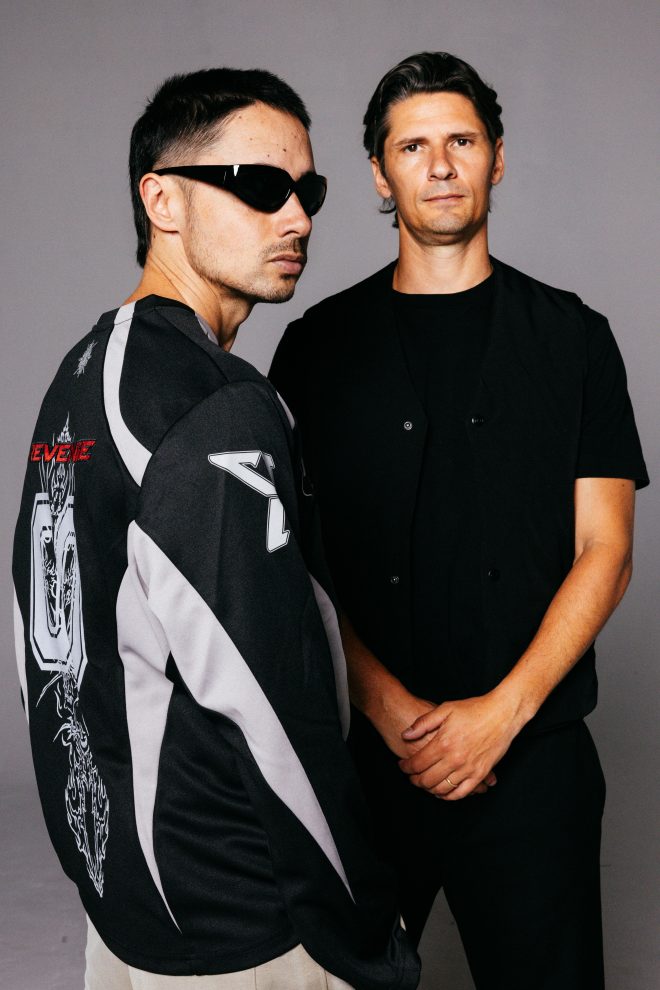
Finding momentum again after more than a decade also feels different. When “Mush Mush” broke through, Bassjackers were experiencing everything for the first time. Now they have enough distance to recognise how unusual a second period of acceleration can be.
“Completely. When ‘Mush Mush’ happened, everything moved incredibly fast and we didn’t really understand what was happening or even what we were doing. We were experiencing everything for the first time. Now we know how special it is to find real momentum, especially more than a decade into our career. It makes us more grateful, but also more focused. We’re working harder than ever and have found a new spark of excitement. Seeing a new generation connect with the music while longtime fans still recognise the Bassjackers DNA is amazing. Working with old friends as well as artists who grew up hearing our records makes it feel like a continuation and a fresh start at the same time.”
That continuation now reaches places that once felt disconnected. The same project can exist in dark clubs, hard dance events and enormous festival environments without needing a separate identity for each.
“What’s exciting is that Bassjackers can now move between dark rooms, hard dance events to massive festival stages and clubs without feeling like a different project in each place. A few years ago, those worlds felt much further apart. We want to keep defining tech bounce through strong original records, cool collaborations and sets that move in waves but are always made for the dancefloor. There are still so many artists and scenes we would love to connect with, and it feels like we’ve only just started exploring what this sound can become. Right now, the possibilities are opening up faster than we can explore them, which is a good problem to have.”
Tech bounce gives this chapter a name, but Bassjackers don’t appear particularly interested in defining its limits yet. After years of knowing exactly what their project could sound like, Ralph and Marlon have opened it back up to uncertainty.
The BPM is faster and the references have changed. The objective hasn’t.
Make it work on the dancefloor.
