


Amanati: the art of becoming
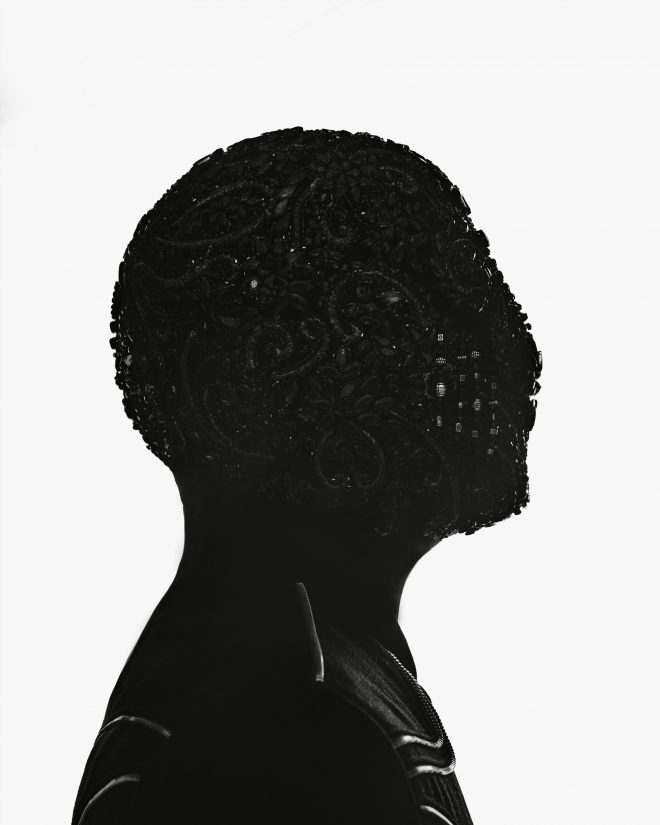
Long before Amanati became one of electronic music’s most enigmatic figures, there was a child growing up on the island of Crete. It is impossible to separate his artistic vision from the place that shaped him, a land where mythology, history and cultural identity remain deeply woven into everyday life. Crete is home to the Palace of Knossos, the legends of Zeus, and some of Greece’s most celebrated writers and artists. Those influences would eventually become central to Amanati’s creative language, long before he ever opened a DAW or stepped into a studio. What emerged years later as an artistic universe was, in many ways, already beginning to take shape during childhood.
“My childhood played a very important role in shaping the way I create today. It defined me, first and foremost as a human being, and then as an artist, not only because of the land I grew up in, but also because of the parents who raised me.”
Rather than pushing him toward a specific path, his parents encouraged exploration and self-discovery. Swimming, drawing, basketball, piano, trumpet and music theory all became part of his upbringing, helping him develop discipline while searching for a deeper sense of purpose. Music eventually became the medium that resonated most naturally, but the values behind his work were established much earlier. Those lessons about independence, responsibility and self-expression continue to define the artist he has become.
For Amanati, the project was never conceived as simply a musical endeavor. The music, visuals, symbolism and philosophy all exist as interconnected parts of a larger narrative that continues to evolve with every release. Looking back, he believes the foundations of that vision existed long before electronic music entered his life.
“Long before I discovered electronic music, there was already this mixture of mythology, history, symbolism, discipline, imagination, and purpose inside me. Electronic music simply became the language through which I could finally express it.”

One of the most widely discussed aspects of his work is the term Exotic Electronic Music. While many listeners view it as a genre, Amanati sees it more as a consequence of a personal journey toward artistic authenticity. Throughout his early years in electronic music, he became increasingly aware of the pressure artists face to follow trends and fit into existing categories. Eventually, that pressure forced him to confront a simple but transformative question about who he wanted to become as a creator. The answer would fundamentally reshape both his sound and his philosophy.
“We have all fallen into the trap of following what is trending or what sells at a specific moment. At some point electronic music started to feel oversaturated to me. I had to ask myself, ‘What do you want to do now? Do you want to do Afro House? Melodic Techno?’ And the answer was simply, ‘I want to do me.’”
As audiences began asking how to categorize the music he was creating, the term Exotic Electronic Music emerged almost by necessity. Yet the name itself is far less important to him than what it represents.
“It represents an intense introspective journey into the deepest parts of the human soul. It is about coming into contact with our contradictions, our taboos, our sensuality, and our need for raw expression.” For Amanati, the concept is ultimately about exploring the body, spirit and subconscious through sound.
That fascination with contradiction appears throughout his work. Ancient mythology sits alongside futuristic aesthetics, while spirituality and ritual coexist with modern production techniques and technological innovation. Growing up in Greece ensured that history and mythology became part of his inner landscape from an early age. At the same time, electronic music introduced him to a world defined by experimentation, innovation and technological progress. Rather than viewing these forces as opposites, he sees them as complementary aspects of the same human story.
“The world needs to evolve for practical reasons, to make our lives easier, and that is where technology comes in. At the same time, we feel a deep urge to return to our roots, even for a few moments, to be in touch with nature, with our traditions, with ritual, and with the pure, perhaps more romantic side of humanity.”
“At the end of the day, it is efficiency versus romance. And I think we need both, even if we do not always want to admit it.”

Perhaps nowhere is that search explored more deeply than on Omen, the conceptual album built around eight spiritual circles of life: Birth, Initiation, Desire, Conflict, Death, Void, Rebirth and Ascension. Rather than approaching these stages as abstract philosophical concepts, Amanati treated them as reflections of his own personal evolution. Each chapter represented a different stage of transformation, both creatively and emotionally. Looking back now, two of those circles continue to resonate more strongly than the others. They have become central to the way he understands both art and personal growth.
“The stages that feel most relevant to my own journey are Rebirth and Ascension. My personal journey, both as a human being and as an artist, has been, and still is, a constant process of rebirth and an effort to reach ascension.”
“I am not sure I have reached it yet, and maybe I never fully will. But I believe it is the journey itself that holds the most significant value.”
Transformation is less about becoming something new and more about evolving into what was always hidden beneath the surface. Growth, in that sense, becomes an act of revelation rather than reinvention.
The most intriguing stage within Omen may be the Void. Modern life encourages constant movement, productivity and certainty, making emptiness feel uncomfortable or even threatening. Amanati became fascinated by the opposite possibility, the idea that periods of uncertainty may be essential to transformation. Rather than treating the Void as something to escape, he chose to explore it directly. The result became one of the album’s most profound philosophical themes.
“The Void might be the single most challenging stage, and that is probably why so many of us fear it. We have the least control in emptiness. There is nothing obvious to hold on to, nothing immediate to fix, and no clear action to take.”
“It is not quitting. It is not giving up. It is trusting that even when you stop forcing movement, something inside you still knows how to rise.”
That realization became one of the most important lessons he carried away from the creation of Omen. It taught him to trust both himself and the creative process during periods of uncertainty.
Trust and self-discovery also lie at the heart of another defining aspect of the project: anonymity. At a time when artists are increasingly encouraged to share every detail of their lives online, Amanati initially envisioned a project with no visible identity at all. No photographs, no public persona and no emphasis on the individual behind the music. The intention was not mystery for its own sake but a philosophical statement about what truly matters. The art, he believed, should always take precedence over the artist.
“What matters is the music and the ideas that the music carries or symbolizes.”
Eventually, however, the realities of live performance required a physical presence. The mask emerged as a practical solution, but over time it evolved into something far more meaningful.
“The mask became another artistic tool, not a way to hide. Down the road, the mask became something more. It works more as a symbol than as a person to me, almost like Batman.” Today, it functions less as a disguise and more as a visual extension of the project’s mythology and symbolism.
The decision has also shaped the relationship between Amanati and his audience. While anonymity offers personal privacy, it has also created room for listeners to engage with the work on their own terms. Rather than attaching every piece of music to a public personality, the mask allows the ideas themselves to take center stage. This openness has become one of the reasons his music resonates in such diverse contexts. The same track can exist simultaneously within club culture, fashion, cinema and personal introspection.
“It can also be about creating space. Space for the audience to project their own emotions, fantasies, and interpretations onto the work. Space for the art to breathe without being constantly attached to the ordinary details of a person’s life.”

That philosophy helps explain why Amanati’s music has increasingly found a home beyond traditional dance floors. His work has appeared in fashion presentations, films and luxury environments, including Louis Vuitton’s Mythica presentation in Marrakesh. Yet he insists those placements are not the result of writing music for specific industries. Instead, they emerge naturally from a creative process rooted in imagery and atmosphere.
“When you are creating a track, you have to create an image in your head. I think about places, bodies, light, movement, tension, elegance, danger, sensuality, and the invisible story behind all of them.”
Because he begins with images and emotions rather than functional club structures, his music often feels cinematic by design. That quality has naturally led him toward larger ambitions in film and video game scoring. His first meaningful encounter with that world came when Mohë Mohë was licensed for The Killer’s Game, introducing him to the collaborative process of adapting music to visual storytelling. The experience ultimately reinforced something he had suspected all along.
“This experience widened my perception and gave me a better understanding of how that industry works. It also confirmed something for me. Amanati has always been about building emotional and visual worlds through sound.”
That realization arrives at an important moment in his career. On June 19, Amanati will release Odyssey, a new single that will also appear on his forthcoming album. The track carries particular significance because it emerged from a period of personal challenges and perseverance. Unsurprisingly, its title reflects the emotional journey behind its creation.
The upcoming album also represents a new chapter in practical terms. After years of creating music in bedrooms and home studios, Amanati now works from a dedicated creative space of his own. That change has already begun influencing the scale of his ambitions and the depth of his vision.
“I feel that my artistic journey is leading me toward expansion. I want the next chapter to feel more mature, more cinematic, and more immersive, but still raw and emotionally honest.”
“I want to create work that inspires people, not only in the field of music, but in general. I would hope that some people might say, ‘Amanati inspired me to do the best of my capabilities as well.’” For an artist devoted to the idea of becoming who you were always meant to be, there may be no greater legacy than that.
