


RESTRICTED | NL 2026 #01
Patience, instinct, and unpredictability
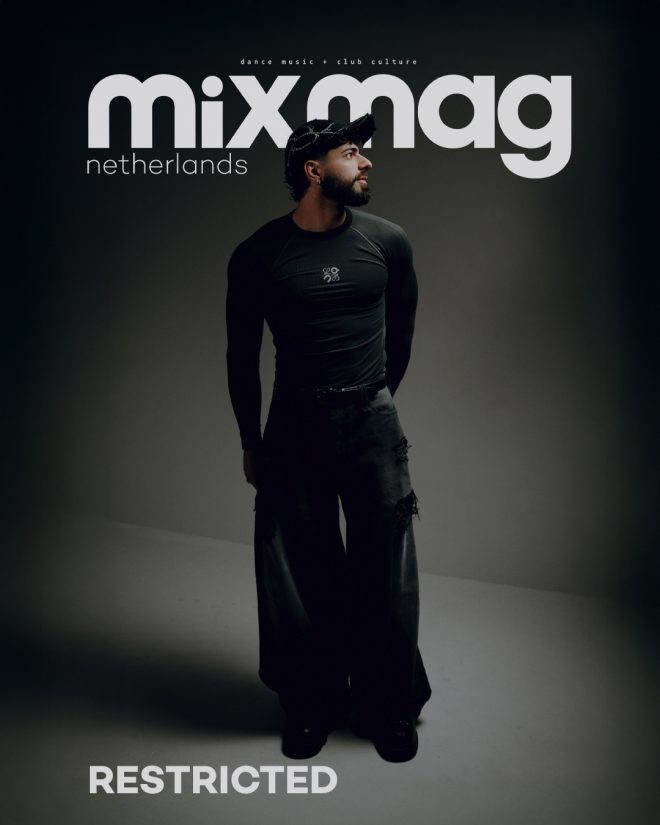
This may come as a surprise, but Restricted doesn’t rush into space. In rooms or in conversation, he keeps things tight. Measured. Focused. There’s a sense that energy is being held back rather than spent, even offstage, as everything passes through the same internal check before it’s allowed out.
That control wasn’t inherited with confidence. It came slowly, through years of touring, during which the sound often travelled faster than the recognition he got for his work. Australia required a lot of patience on his end. Europe introduced scale and the massivity of people who connected with what he is bringing to the industry. America arrived later and heavier, sold out shows, and the people´s energy made everything more than real.
Somewhere along the way, instinct had to be balanced with responsibility. How far can somebody push a room? How long can a body hold up when momentum stops being useful? In our interview, we talk about growth, understanding, appreciation, and a world that´s becoming smaller and smaller for an artist who is taking it by storm! Brace yourselves, because this is a good one!
TUNNEL VISION AND MUSIC MAKING
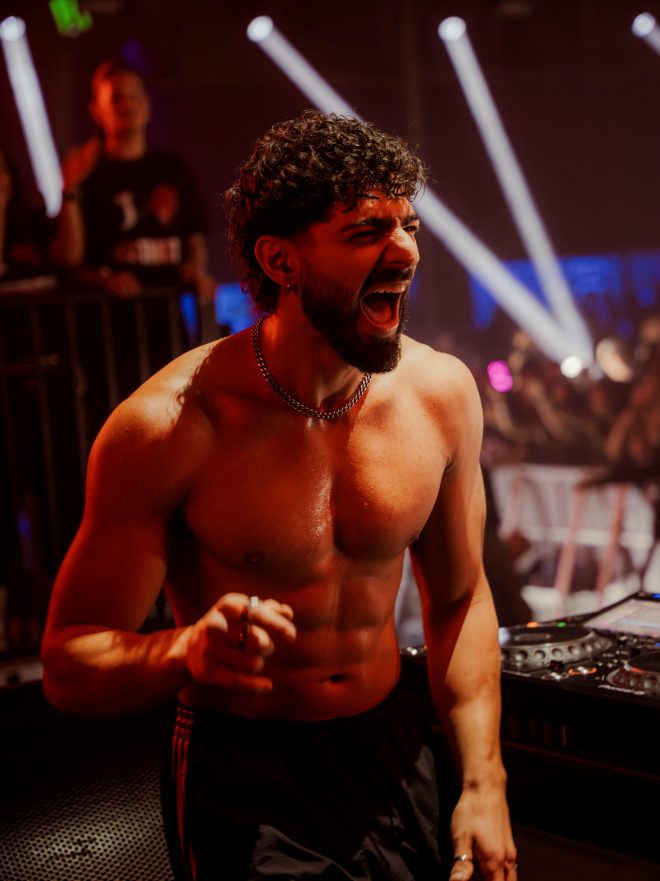
Restricted´s Tunnel Vision became a defining release. When a track sets such a clear benchmark, it's hard not to get caught up in its success while still respecting what made it resonate so strongly.
“I think in my eyes it was a big hit for the sound, but my goals are always about striving for more and reaching higher. There are many elements in the production of that track that carried over into many of the following releases, shaping the style. I couldn't have asked for a better first release on my label.”
That approach has been sharpened by motion. Constant touring compresses time, and with it, possibility. Writing music between flights and soundchecks leaves little room for wandering, which in turn renders the studio a space governed by necessity rather than exploration. As he describes,
“You have way less time when you’re producing on tour, so you’ve really got to take advantage of that time, Instead of being more experimental,” he admits, “I’m writing what I know will work. I love producing when I actually have the time to sit down and treat it like painting a picture, when I can chip away at it and try new things. That’s how I like to make music. But 2025 was super rushed. I’ve been really short on time.”
THE LABEL, THE CULTURE
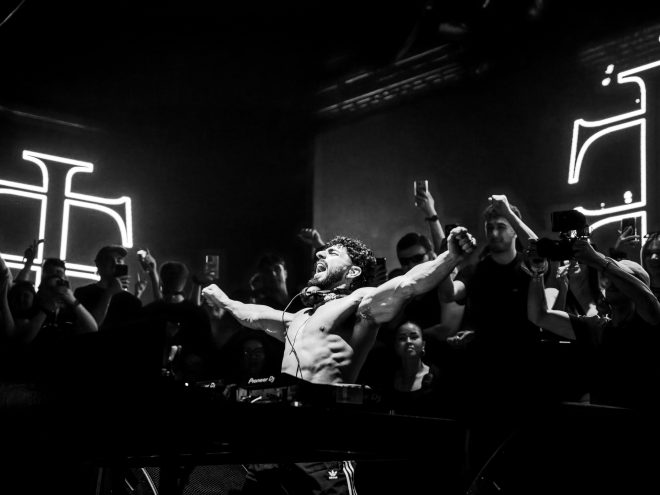
Revive began as a record label, but its evolution into a broader entity shows what it is trying to do: bring coherence and intentionality to an often chaotic musical landscape. Revive serves as a framework that channels the energy of high impact music and culture into a unified vision. This approach not only shapes the branding of events and merchandise but also articulates a critical response to the transience typically associated with electronic music subcultures.
Through this expanded role, Restricted demonstrates the ability to translate the dynamic, adaptive presence he exhibits in conversation into curatorial and organisational contexts, thereby elevating Revive from a mere label to a catalyst for cultural cohesion and innovation.
“We’ve only done one event so far, but I definitely want to build out a series that hosts my own shows and content. Alongside that, I want to develop a merch line that's more of a clothing brand or fashion label. Merch with intention. Stuff that fits perfectly and is really good quality. Basically, clothes I’d actually wear myself. As for the music, I’m looking for anything high energy, a bit ADHD, which doesn’t sit in one box. Lots of switch-ups, vocals, and different kicks. Just stuff that’s exciting and does those things really well.”
That same instinct guides the music he selects for Revive. He avoids strict categorisation, instead seeking out music with unpredictable energy. What matters is how it moves, whether it surprises without losing control, and holds attention rather than demanding it. Revive is all about maintaining momentum. Late at night on the tour bus, he often scrolls through demos. Each unfamiliar SoundCloud link offers a brief escape, allowing him to evaluate not just the beat but the movement it inspires. These moments turn selection into a narrative, making the curation as vibrant as the tracks themselves.
“It’s about always pulling inspiration from different places,” he says. Hardstyle, rawstyle, trance, gabber, and industrial. None are treated as destinations. They’re materials.
TOURING
If Revive reflects his present thinking, Australia reflects his past. The two finally intersected at the end of 2025, when his first headline run there sold out in minutes. For someone who grew up playing locally without access to big stages, the shift landed slowly.
“Honestly, it was surreal. I’ve been playing in Australia for like 10 years. It’s home, but for most of that time I was never really given the big stages or any real spotlight.”
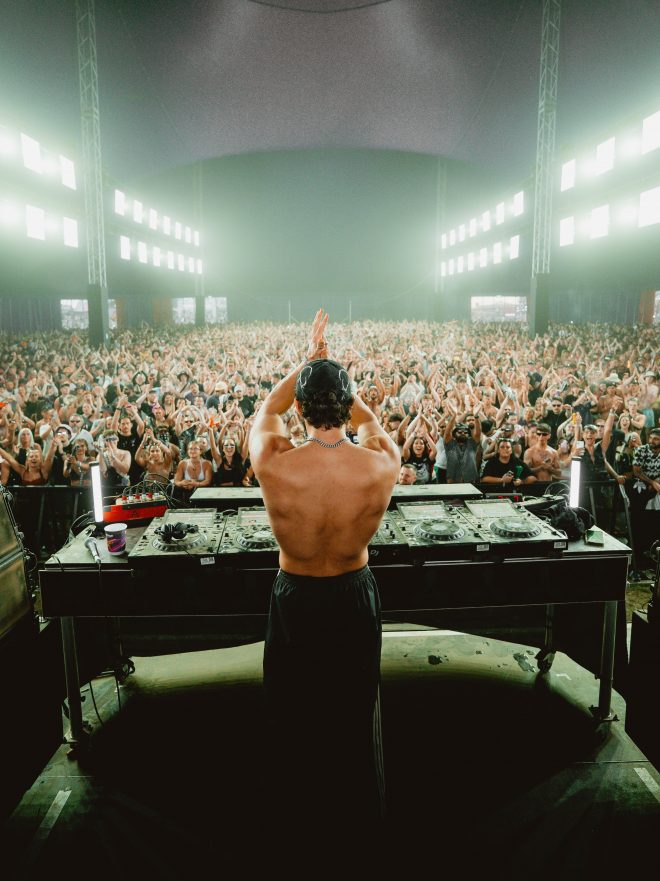
That elsewhere arrived, and then folded back in on itself. After Europe, after momentum had built beyond the country’s borders, the rooms back home finally opened. Dreamstate filled beyond capacity within minutes. The Teletech run followed, and it was fully sold out.
“Over 20,000 people, doing that in your home country is insane, having my family there too, it’s just the proudest feeling. I genuinely didn’t think I’d be doing this back home at this point in my career, even after 10 years. It all happened really fast.”
There’s no sense of closure in the way he describes it. Just another shift. Another alignment that took ten years to arrive, and happened all at once. The change in the United States feels different. Less delayed. Less cautious. Restricted has been returning regularly for the past two years, long enough to watch the curve bend upward in real time.
“Every time I go back, the shows get bigger, sell out, bigger stages, and the crowd response gets crazier. That’s how I knew it wasn’t just like one lucky moment, and there's a proper market for it. The biggest thing is the energy that US crowds bring. They love moving, they love going hard, and my sound is super high energy, so it connects naturally. Even though it’s still a newer sound over there, it’s already massive.”
What was once a European language is now being quickly learned in the US, in larger rooms. Faster sell-outs. Crowds that don’t need convincing.
"That’s how I knew it wasn’t just one lucky moment. There’s a proper market for it." When two Hollywood Palladium shows disappear in under two hours, it reads less like a milestone and more like a signal.”
By the time Restricted closes a night, he’s usually running on instinct more than thought. The body takes over. Reading faces, movement, the way a room is breathing back at him. Those moments are where he feels most locked in, but they’re also where things can tip fastest. At a particular scale, there’s very little margin for error.
That balance was tested at EDC Las Vegas. Closing Sunday night, the crowd kept thickening until it crossed a line. The music stopped. The fire marshal stepped in. For a moment, the set wasn’t his anymore.
Safety always comes first. No one wants to stop the party, but if it’s getting unsafe, then it’s not worth it. The priority is making sure everyone’s okay. But once everything’s under control, moments like that honestly push me more into instinct. I actually feel like I perform better under pressure. It puts me into a different mindset. That intensity is crazy to feed off. It lifts the room, and it lifts me too.
At Creamfields, the pressure comes from somewhere else. The Steel Yard has its own gravity, and stepping into a triple back-to-back meant giving up some control from the start.
“Steel Yard is one of my favourite stages in the UK. Creamfields was already a bucket list thing for me, and last year was genuinely one of my best sets ever. So to come back and play Steel Yard again in only my second year there feels unreal. I love doing new things and taking on challenges, but I’ll be honest: three people back-to-back is hard. With two people, you’re matching one energy and one direction. With three, you’re trying to align three different sounds and instincts at the same time. It adds this extra variable where anything can happen. But that’s also what makes it exciting. It’s unpredictable in the best way”.
PHYSICALITY & PERFORMANCE
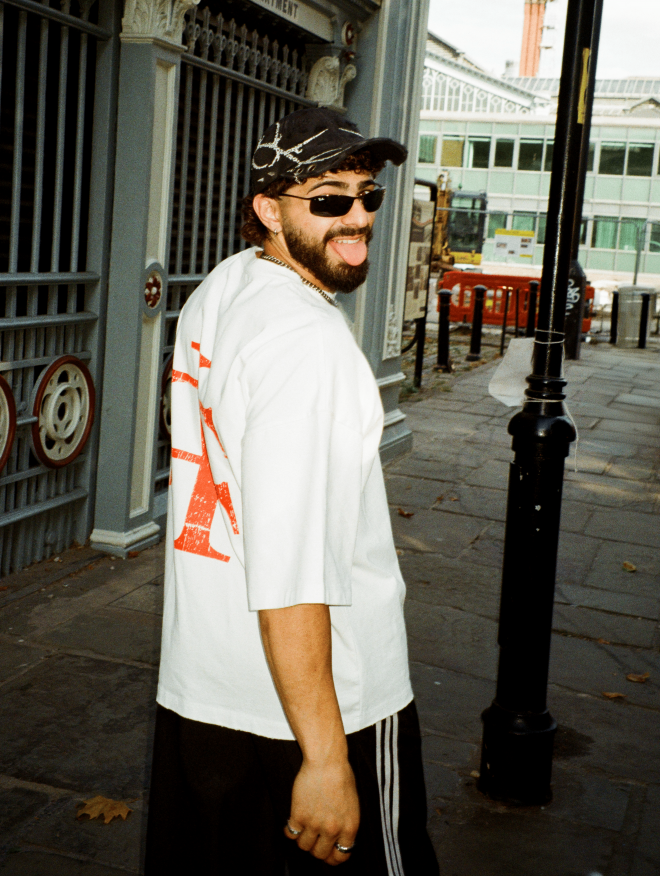
The physicality of Restricted’s sets isn’t performance in the theatrical sense. It’s a necessity. Movement is how the music travels. How does tension release?
“Moving constantly for one or two-hour sets isn’t really an issue,” he says. “That part feels normal to me.”
What changed wasn’t the effort, but the accumulation. Last summer meant close to seventy shows in four months. Hard stages. Bad shoes. Little recovery time.
And yet, it’s the physical side he speaks about most fondly.
“Every set feels like a HIIT session,” he says, almost laughing.
The more demanding the set, the more present he feels inside it. The room responds to that visibility. Effort recognised as effort.
“I grew up playing sports my whole life, so moving constantly for one or two hour sets isn’t really an issue. That part feels normal to me, but last summer I did around 70 shows in four months and yeah, my legs were cooked. Especially with all the jumping on hard stages. And I was wearing bad shoes too, which did not help.”
That sense of presence runs through everything he’s building. Revive. Touring. The way he produces when time allows it. None of it is framed as conquest. There’s no language, no fixation. Just systems being tested and adjusted in real time. Tracks that evolve. Shows that stretch. A home country that finally opens up after a decade of waiting. New markets are learning the language through movement rather than explanation.
What comes through most strongly is his honesty, even when he talks about records that changed his trajectory or rooms that sold out in minutes; his tone stays measured. He seems more interested in understanding why something worked rather than gloating or feeling superior because it did.
He’s also honest about limitations in a way many artists avoid. Time is short. Touring narrows his choices, even his body sometimes pays the price. None of it is framed as drama or sacrifice. It’s simply acknowledged and worked around. When he talks about making music, the version he values most is slow and hands-on, an approach that is not often available. There’s no complaint in that gap, just awareness.
At heart, Restricted comes across as practical and attentive. He pays attention to rooms, to people, to how much pressure things can take before they start to break. That attention shapes how he performs, how he releases music, and how he builds around himself. He’s focused on staying grounded inside music, doing the work carefully, and letting everything else unfold at its own speed.
