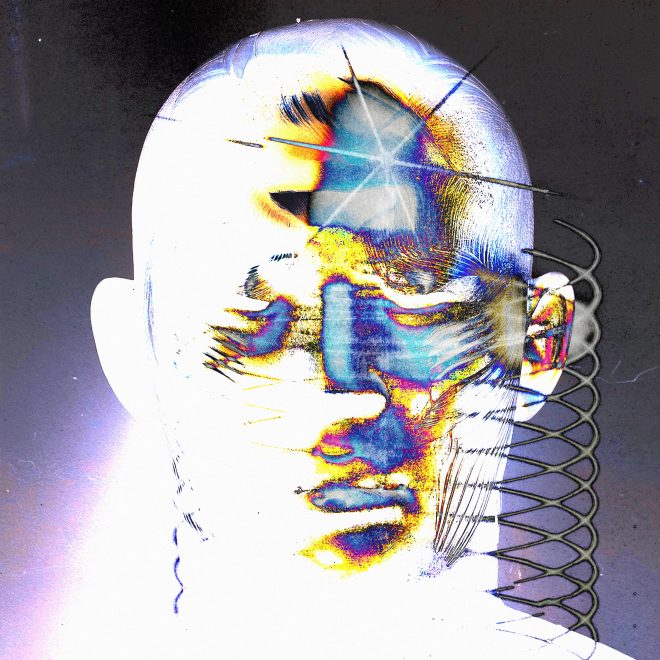


Pressure Without Release

On his ‘Higher’ ep, released on Solomun’s Diynamic label together with ID ID on February 13th, Greggio turns sustained tension into a philosophy, building a concrete, hypnotic space where instinct overrides control and momentum becomes the only form of surrender.
Just before dawn, when a dancefloor has settled into rhythm rather than spectacle, repetition starts to reveal its weight. This is the space Greggio has been refining, not chasing impact but studying tension. The lights are secondary. What matters is control, pacing, and how long a groove can hold without breaking.
With Higher that discipline has become more deliberate. The EP leans into repetition and sustained momentum, allowing tension to remain unresolved. Where earlier work offered more contrast, this chapter narrows its focus. Elements are stripped back. Atmosphere thickens.
Greggio speaks about instinct as something to protect. In the studio, ideas are built quickly, then left alone before they are overworked. Imperfections stay if they carry emotional weight. Refinement ends when the feeling starts to fade.
The first seconds of Gregigio´s new EP do not introduce themselves; they arrive fully formed, suspended somewhere between euphoria and collapse. There is confidence in it, the kind that trusts a structure will hold. There is also risk, the quiet fear that it might not.
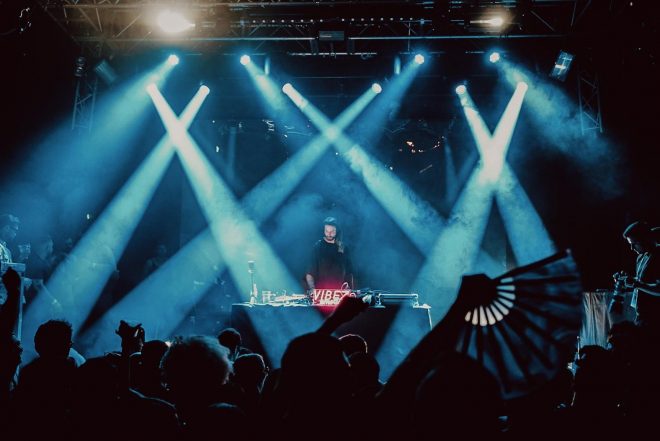
This EP sounds dark and industrial. Heavy bass lines drive every track, loud enough to vibrate through your chest. Sharp bursts of synths and percussion cut in suddenly, like strobe lights in a warehouse, lighting everything up for a second before it drops back into low, thick sound. The production is raw and stripped down, no decoration, no softness, just drums, distortion, and pressure.
It feels like being in a crowded, overhearmd underground space at 3 a.m., bodies close, air heavy, sweat on skin. The mood is tense and physical. The music doesn’t offer relief or big emotional release; it keeps you locked in, moving, wanting more. Walking away would feel like breaking the moment too soon.
“When I say I didn’t want to overthink it, I mean I didn’t want to polish the energy away. In the studio, I work fast at first, drums, bass, core idea, and I trust my initial reaction. If a sound creates a physical feeling, I keep it instead of immediately trying to “fix” it. Which is very important when you are creating a collab with another artist.”
This instinct becomes even more fragile when another artist enters the room. Collaboration demands openness, but it can also encourage compromise.
“There’s a point where refining starts flattening the tension,” he continues.
“When I catch myself tweaking tiny details that don’t change the emotional impact, that’s usually my cue to stop.”
Slight distortion. Imperfect timing. A grain that resists smoothing. These are not flaws. They are pressure points.
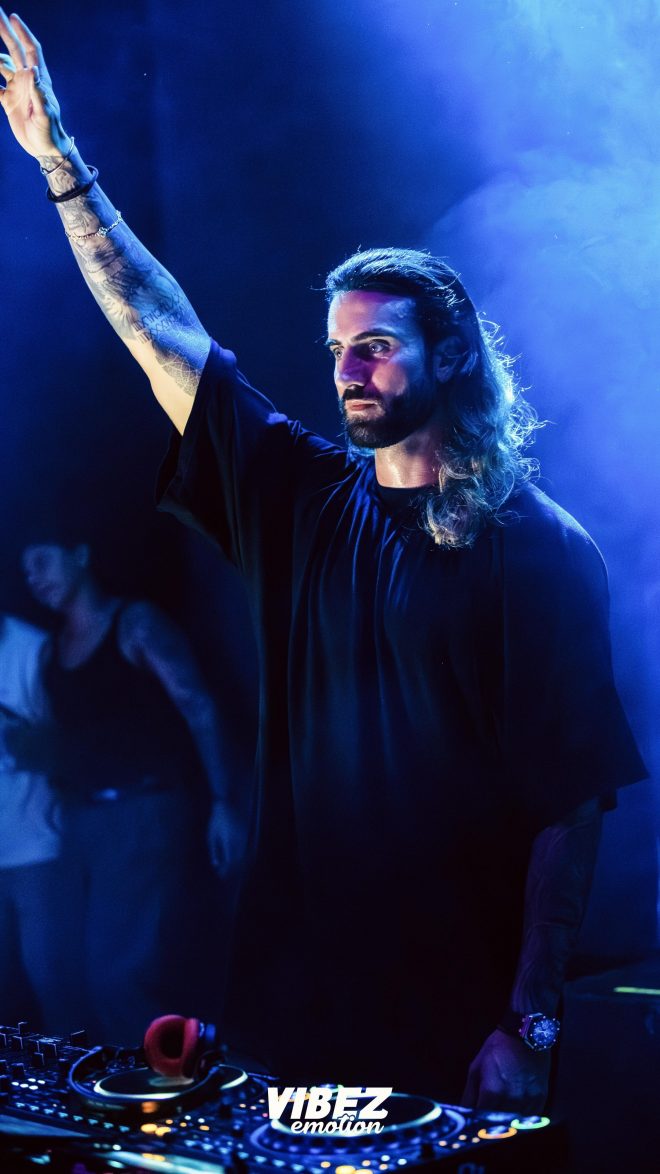
What defines the single most clearly is its refusal to release. Where many club tracks engineer catharsis, this one withholds it. The decision was not accidental. Early drafts experimented with space, with moments of relief. Each time, something essential collapsed. The energy thinned. The honesty drained out.
“It became intentional once I realized the tension felt stronger without a clear release. Every time I tried to create space, the energy dropped in a way that didn’t feel honest. So I leaned into the pressure instead of relieving it”.
“I’m drawn to sustained momentum because it mirrors obsession and desire, emotions that don’t resolve neatly. It’s less about exhausting the listener and more about hypnotizing them. When the groove doesn’t let up, you stop waiting for a payoff and start surrendering to it. The tension becomes the experience.”
Sustained pressure is not about exhausting the listener. It is about altering their relationship to time. When release never arrives, anticipation dissolves. The body stops waiting. It surrenders.
“When the groove doesn’t let up, you stop waiting for a payoff and start surrendering to it. The tension becomes the experience.”
This understanding of surrender is not theoretical. It was tested on a dancefloor far from the studio monitors. One early morning in Ibiza, during a residency night by Solomun, the track took shape in real time. The room was still heavy with darkness. The groove was relentless. Conversation had evaporated hours earlier.
“No one was talking, everyone just locked into the same pulse,” he recalls. “At some point, I stopped thinking and just existed inside the rhythm.”
That night did not provide a melodic hook or a technical solution. It clarified a sensation. The way a crowd can dissolve individual boundaries without spectacle. The way intensity can remain controlled.
The vocal sits inside the track like a destabilizing element. It does not guide. It drifts, occasionally misaligning itself against the rigidity of the groove. The instability is deliberate.
“I didn’t want the vocal to act as a safe anchor,” he says. In much of contemporary club music, the voice offers reassurance, a thread to hold onto. Here, it behaves differently.
For him, vocals in electronic music function as texture rather than instruction. They hover. They disrupt. They carry vulnerability without resolving it. By refusing to stabilize the structure, the voice amplifies the tension already embedded in the rhythm. It makes the concrete room feel less predictable, more human.
Intensity, in this context, is not aggression. It is presence sharpened. Years immersed in club culture have shaped it, but so has personal restlessness. Desire feeds it. A need to push against comfort.
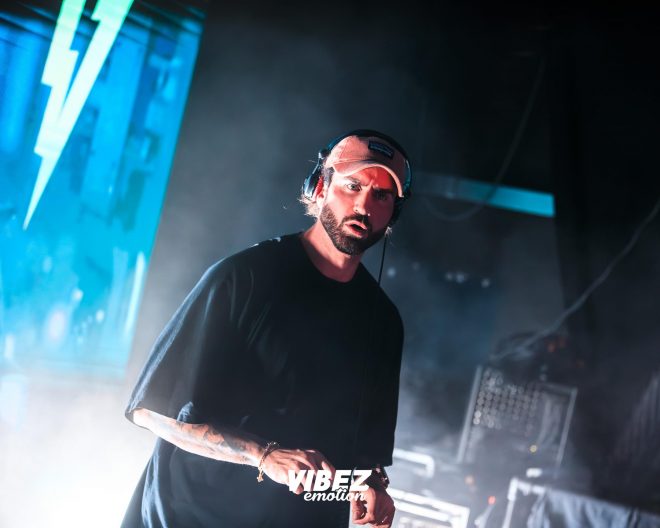
“My intensity comes from a mix of things, club culture, personal restlessness, and desire all feed into it. It’s not aggression for its own sake; it’s more about presence and urgency, that feeling of being fully alive in a moment.”
“I see my sound as both an extension of myself and a heightened version of it. In the booth, certain impulses get amplified, it’s like an alter ego, but one that’s still rooted in my own emotions and instincts. The music lets me explore extremes I carry inside, but can only fully express in that space.”
Behind the decks, this urgency becomes heightened. his alter ego emerges, but not one detached from reality. It is an amplification of what already exists internally. Certain impulses, restrained elsewhere, are allowed to expand. The booth becomes a laboratory for extremes. Not chaos, but controlled combustion.
That tension between instinct and control now defines the wider project. The single sits within an EP that marks a subtle but decisive shift. Elements are being stripped back. Repetition is embraced rather than avoided. Flashy gestures are discarded in favour of immersion.
“This EP marks a shift toward something more hypnotic and immersive,” he says. The movement feels less like reinvention and more like refinement of purpose. The focus narrows. The atmosphere thickens.
This EP is also a response to overthinking in music production. Today, it’s easy to keep tweaking a track forever, adjusting tiny details, polishing every second until the energy disappears. Here, the decision to stop is intentional. The tracks are pushed hard, sometimes close to falling apart, but they are left at the moment where they feel most alive instead of most perfect.
The central question behind the EP is practical: how far can you distort, layer, and intensify a track before it loses its impact? The producer works right at that limit. Some elements feel raw and instinctive; others are tight and controlled. The tension between those two approaches is not cleaned up. It’s kept in.