


Lorcan Kelly clear heads, loud rooms

In spaces built on intensity, excess often becomes invisible, folded into the mechanics of how nights unfold. For Lorcan Kelly, stepping away from that rhythm didn’t feel like a rebellion. It felt closer to subtraction, a quiet recalibration that changed the way everything else could be perceived.
What stands out is not the decision itself, but how cleanly it settled into place. There is no sense of ongoing negotiation, no language of struggle shaping the narrative. Instead, sobriety appears as a fixed condition, something that reshaped his relationship with the environment without removing him from it. The club remains the same space. The difference lies in how it is inhabited.
That shift carries consequences beyond the personal. In a culture where excess is often read as participation, choosing distance can create a different kind of visibility. Not louder, but more precise. Presence becomes less about matching the room and more about understanding it from a slightly altered position, where clarity replaces immersion without dissolving connection.
“I stopped drinking four years ago due to an anxiety disorder, which at one point made me question whether I even wanted to DJ. That actually made the decision to become sober much easier. Because I stopped completely, it wasn’t something I had to gradually work towards, it just became my normal. Seeing other DJs try to navigate nightlife without drinking highlights that contrast, but for me, sobriety has simply become part of how I exist in these spaces.”
The tension inside that position is subtle but constant. Clubs are designed around collective escalation, where energy builds through shared states that are not always entirely conscious. Moving through that space without participating in those shifts can create a sense of distance, but it also sharpens perception. What becomes visible is not just the music, but the behaviour around it, the way connection forms and dissolves across the room.
For Kelly, the anchor point remains simple. The music holds everything together. It provides a common ground that doesn’t rely on altered states to function, allowing engagement to feel intentional rather than reactive. The result is not detachment, but a different form of involvement, one that privileges awareness over surrender without losing the emotional core of the experience.
That distinction becomes more apparent over time. The longer he operates within that framework, the more it defines how he reads a room, how he places himself within it, and how he sustains energy across a set. What might initially feel like separation becomes, gradually, a form of alignment.
“It can feel disconnected at times when others are experiencing something you’re not, but the common ground is always the music. Everyone is there because they love it, and that’s what connects us. For me, DJing is both a job and something I genuinely enjoy, so rather than feeling drained, I feel engaged and present. That enjoyment naturally creates a sense of connection.”

FINDING THE RIGHT RHYTHM OUTSIDE THE DANCEFLOOR
Sustainability enters the picture not as a concept, but as a necessity. Touring rarely allows for a stable life rhythm. Time collapses between cities, sleep fragments, and the line between work and life blurs into something difficult to maintain. Within that instability, structure becomes something that has to be actively built rather than passively followed.
Kelly’s approach leans toward discipline without rigidity. Sobriety sits at the center, but it is supported by smaller decisions that accumulate over time. Health, routine, and the willingness to prioritise personal stability over constant availability all play a role. The balance is not perfect, but it is deliberate.
There is also an awareness that sustainability requires limits. The culture often rewards overextension, reading constant presence as commitment. Choosing when to step back becomes part of maintaining longevity, even when it conflicts with expectations. The result is a practice that values continuity over intensity.
“It takes a high level of intention. Balancing touring with studying can be tough, but it’s part of looking after my long-term wellbeing. Staying sober, prioritising my health, and maintaining structure are all key. I’ve learned that personal life has to come first at times, otherwise burnout becomes inevitable. Staying grounded allows me to fully enjoy the shows when they happen.”
That pressure to remain visible extends beyond the physical environment. Social expectations operate in parallel with creative ones, creating a constant demand for output, engagement, and emotional availability. The idea of always being “on” becomes less an abstract notion and more a daily condition.
Interestingly, Kelly identifies socializing as the more draining side of that equation. The performance itself remains sustainable. It is the surrounding activity, the conversations, the extended presence required beyond the booth, that begins to erode energy. Sobriety sharpens that awareness, making the cost of those interactions more visible.
In response, focus narrows. Energy is allocated more carefully, with attention returning to the music as a stabilizing force. This shift doesn’t remove pressure, but it reframes it, allowing certain demands to fall away while others remain central.
“There’s definitely pressure to always be ‘on.’ Ironically, I find socializing more draining than DJing; three hours out can take more out of me than a six-hour set. Sobriety has made me more focused and intentional with my energy. Social media adds another layer, where it feels like every month has to outperform the last, which can be exhausting. I try to stay grounded in the music itself.”
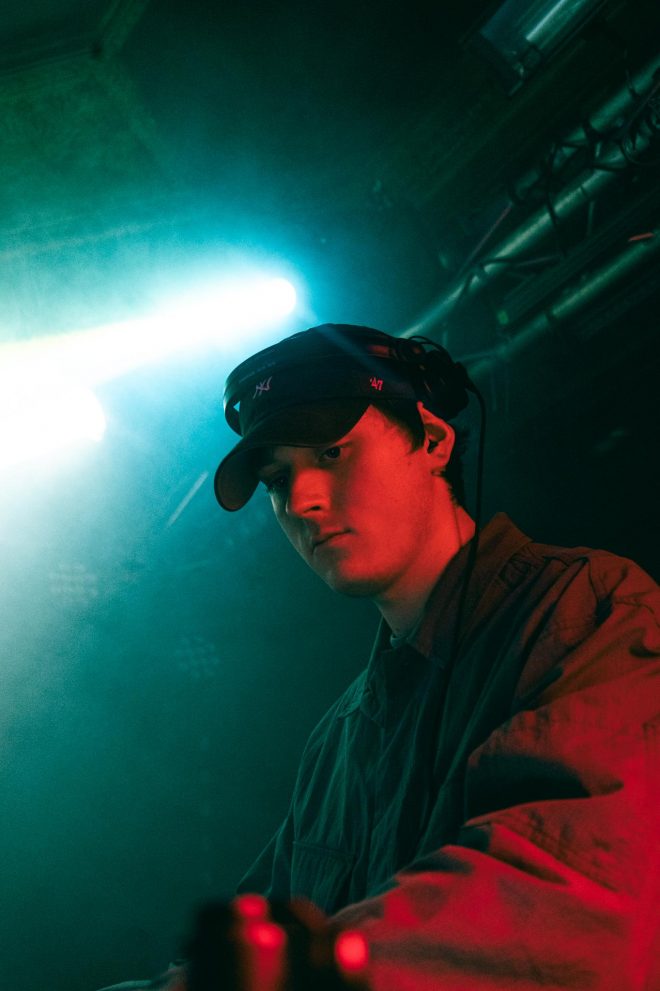
Perception changes in quieter ways, too. Without the blur of intoxication, the experience of music becomes more defined, but also more intentional. The distinction between going out and listening begins to widen, creating a clearer sense of purpose inside each moment.
At the same time, Kelly resists isolating that shift as purely personal. The broader landscape of nightlife has changed in recent years, shaped by external pressures that affect how spaces feel and function. Sobriety exists within that context, not outside of it.
What emerges is a layered understanding of the dancefloor. It is not a fixed environment, but something that evolves alongside the people inside it. Awareness of that evolution becomes part of how he navigates each set.
“Sobriety reinforces that I’m there for the music first and foremost. It separates the experience from just ‘going out’ and makes it more intentional. That said, the way nightlife feels has also changed more broadly; it’s not just sobriety; the overall atmosphere is different now.”
Preparation becomes a way of grounding that awareness. Before stepping into the booth, the process begins with observation. The room is read through movement, through response, through the crowd's behavior in relation to the DJ before him. Context matters as much as selection.
Local knowledge plays a role here too. Understanding how a space functions often comes from those already embedded within it. Watching how they approach the room provides cues that cannot be replicated through research alone. The set begins before the first track is played.
This attention to detail allows for flexibility. Rather than imposing a fixed narrative, Kelly adapts to the environment, letting the room inform the direction while maintaining a sense of control. It is a balance between preparation and responsiveness.
“Preparation is key. I do a lot of research beforehand and wouldn’t show up without understanding the space. Watching the DJ before you is just as important; you can learn a lot about the crowd from their responses. If there are local DJs on the lineup, they often understand the room better than anyone.”
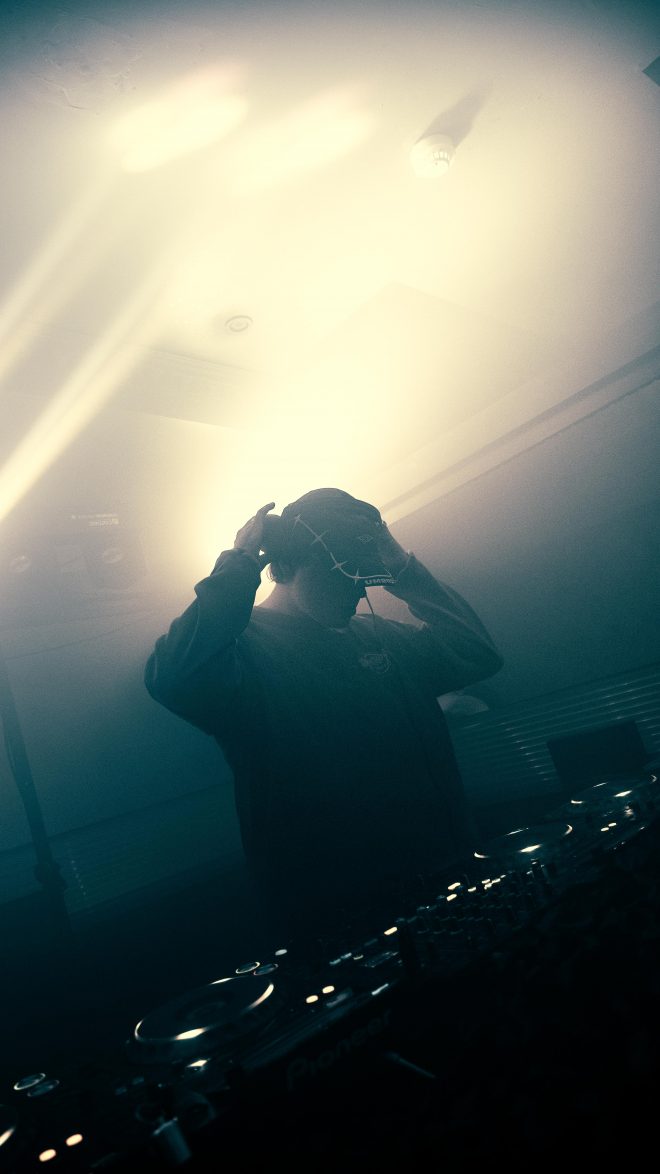
Inside the set, that balance becomes more fluid. The idea of storytelling gives way to something less linear, where energy is maintained rather than directed through clear peaks. Movement between tracks happens quickly, but not randomly. The unpredictability sits within a controlled framework.
What defines the approach is continuity. Rather than dramatic shifts, the focus remains on sustaining momentum, allowing subtle variations to shape the experience without breaking its flow. The result is a set that feels alive without becoming chaotic.
This way of working reflects a broader sensibility. Control is not about dominance, but about maintaining coherence within constant change. The dancefloor becomes a space of negotiation, where responsiveness and intention coexist.
“For me, it’s about energy and unpredictability. I tend to mix quickly because I have a short attention span and like to keep things moving. Rather than making obvious shifts, I aim to maintain a consistent energy with subtle peaks and dips that aren’t predictable.”
Presence, in this context, becomes a form of precision. Sobriety does not alter the fundamental connection between artist and crowd, but it changes the clarity of that interaction. Small details become more visible, from individual reactions to the room's broader mood.
That awareness extends beyond the booth. Interactions before and after the set carry a different weight, shaped by attention rather than distraction. Engagement becomes more direct, less filtered, but also more controlled.
The effect is cumulative. Over time, it builds a different relationship with the audience, one based less on shared excess and more on shared focus. The connection remains, but its foundation shifts.
“Sobriety has made me more aware of how I interact with people in the room. Fundamentally, everyone is there for the same reason; they like the music, so that doesn’t change. What does change is how present and engaged I feel in those interactions.”
Looking forward, the conversation moves beyond individual practice toward the wider culture. Longevity is framed not only by output but also by the environments an artist chooses to support. The emphasis shifts from visibility to contribution.
For Kelly, that contribution is tied to values. Sobriety, inclusivity, and support for local scenes are not presented as separate from the music, but as part of the same ecosystem. They shape where he plays, who he works with, and how he positions himself within the industry.
The ambition is measured, but clear. It is less about expansion and more about alignment, ensuring that growth does not come at the expense of the principles that define the work. In a landscape that often rewards speed, that kind of consistency carries its own weight.
“Longevity, for me, is about values as much as output. Supporting sobriety, inclusivity, and local scenes all play a role. It’s easy to get lost in trying to cut through the noise, so I focus on what I can control: who I work with, the environments I support, and staying connected to where I came from.”
