


Classmatic: brazilian rhythm, global grooves!

The first thing that surfaces when Classmatic looks back isn’t a club, a system, or even a specific moment of discovery. It’s a sensation. A particular lightness tied to sound, place and memory collapsing into one another. Brazilian music doesn’t enter life as reference or genre. It arrives as environment. As something absorbed long before it is understood. For Classmatic, that instinctive relationship with rhythm, swing and repetition was never learned. It was lived.
This conversation for Mixmag LATAM takes place against that backdrop. Not as an attempt to decode a career in milestones, but as a way of tracing continuity. What happens when local rhythm becomes global language without losing its accent. How cultural memory survives success. How groove carries identity across borders without needing translation.
Classmatic speaks slowly, deliberately. There is no rush to frame moments as turning points or to dramatise trajectory. Instead, the conversation moves between Brazil and the wider world, between early listening and present-day production, between the physical intelligence of percussion and the discipline required to sustain it. What emerges is not a narrative of arrival, but one of refinement. A sound shaped by repetition, work ethic and the quiet confidence that comes from knowing where you come from.
For Mixmag LATAM, this exchange it’s about listening to how Latin American musical logic operates inside contemporary club culture without asking permission. His story unfolds less through ambition than through alignment. Rhythm before strategy. Feeling before explanation. And a continued commitment to protecting essence as the scale of the conversation expands.
When Classmatic traces his earliest relationship with music, he doesn’t hesitate. It isn’t a phase or a discovery story. It’s a sound, immediately anchored to place.
“A sound: Garota De Itapema. A city: Rio de Janeiro.”
That pairing says more than chronology ever could. Brazilian music, for him, was never something separate from life. It was already there, folded into atmosphere, into family routines, into the emotional background of growing up. What he remembers most clearly isn’t nostalgia, but a sensation that still shapes the way he works today.
“I feel an incredible lightness when creating,” he says. That lightness doesn’t imply lack of depth. It speaks to fluency. Brazilian music, across its many genres, carries complexity without strain.
“Brazilian music has a unique richness across many different and authentic genres, much of my musical taste was shaped thanks to my father, who always had an enormous collection of MPB and Bossa Nova and made me grow up listening to great music.”
What’s striking is how indirect that influence feels even now.
“I think that, indirectly, this has made my sound characteristics today increasingly closer to the references I grew up listening to.”
Not imitation, but gravity. The music he absorbed early continues to pull his work toward it, even as the context shifts.
In Brazil, rhythm doesn’t wait for nightfall. It exists long before club culture enters the picture, embedded in everyday movement. Classmatic sees that as foundational.
“I think Brazilians, by nature, already love parties a lot,” he says, “partly because of our DNA and partly, I believe, because of our tropical climate.”
The relationship between joy and effort is inseparable. Celebration isn’t escape. It’s part of survival. Those conditions shaped not just his sense of groove, but his discipline.
“We’re used to working very hard to reach a high level in whatever field we’re in,” he explains. That lesson wasn’t abstract. “I grew up watching my family work extremely hard to achieve everything they have, and that strong work ethic influenced me a lot and pushed me to reach my own goals as well.”
The dancefloor energy people associate with Brazilian music is inseparable from that labour. Groove, in this context, isn’t casual. It’s earned.
When Classmatic sits down to make music today, that instinct translates into process. His approach has evolved through travel and exposure to different cultures, but the starting point remains physical. “
Today, my studio mindset has changed quite a lot after experiencing so many different cultures, but I’d say that 99% of the time when I start a project, it begins with a drum idea or a vocal idea.”
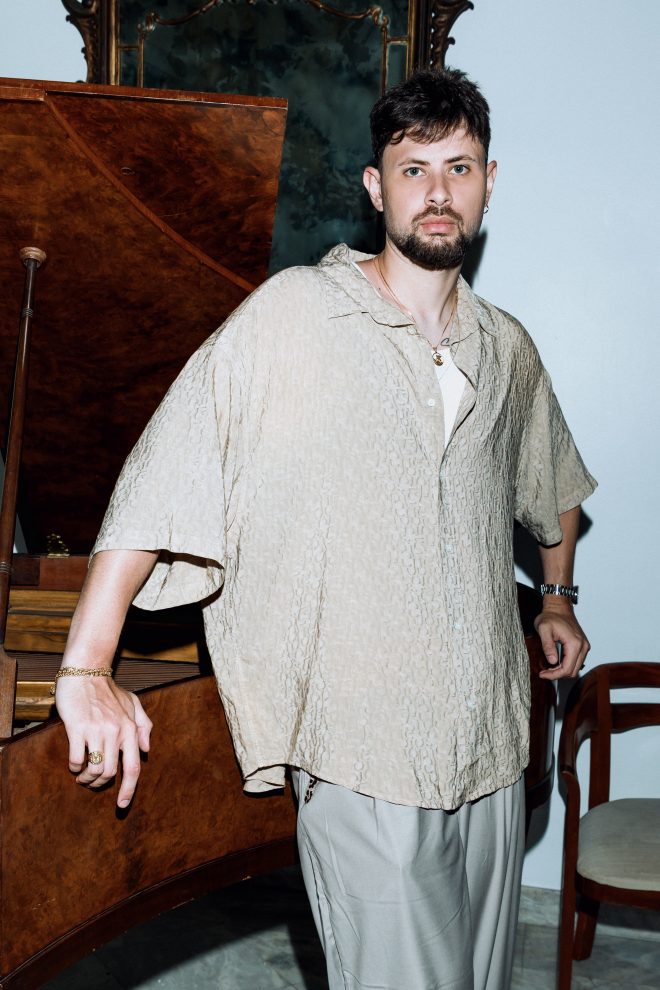
Rhythm comes first. Always. Not as a stylistic choice, but as a way of organising feeling. His tracks are built to move bodies before they explain themselves, carrying Brazilian DNA into global spaces without diluting it. The groove does the emotional work. Everything else follows.
The moment Classmatic realised his sound was moving beyond Brazil didn’t arrive gradually. It arrived abruptly, carried by one record and a sudden shift in scale.
“Yes, and that moment happened thanks to Toma Dale,” he says. Until then, recognition had grown steadily, but within familiar boundaries. This was different. “I had never received so many messages from people asking for a track even before its release, and all the top tech house DJs were requesting it as a promo.” The response wasn’t limited to a scene or territory. It was immediate and international. “That’s when I realised I had broken out of the bubble.”
That rupture didn’t destabilise him. It clarified something. Tracks like El Primer Corazón and Toma Dale didn’t just expand his visibility, they recalibrated his internal compass. “My confidence as a producer grew immensely,” he says. Watching his music land in rooms he had once only imagined carried a very specific weight. “Seeing the biggest names in the world play my tracks at top parties was incredibly fulfilling, that real feeling of mission accomplished.”
What followed wasn’t complacency, but focus. “It’s the kind of opportunity every DJ and producer dreams of,” he reflects. “And I knew that was my moment.” From there, ambition sharpened into discipline. “My focus was to make the most of every opportunity, staying ambitious and delivering a consistently high level in both my music and my performances.” Confidence didn’t inflate his identity. It reinforced responsibility.
That sense of grounded ambition becomes especially visible when he steps into rooms heavy with history. Venues like DC10 or Club Space Miami carry mythology with them, but Classmatic doesn’t treat that weight as pressure. “
To be completely honest, I’ve never felt that pressure and I don’t believe I ever will. For me it’s a privilege to be playing at such special places, and the only feeling I have is excitement.”
Rather than imposing himself onto a space, he listens to it.
“I take these experiences as motivation to always deliver my best, my repertoire changes a lot from one venue to another, so I always study the venue and the lineup I’ll be playing with on the day and adapt to a style of sound that truly makes sense.” Respect, here, isn’t reverence. It’s attentiveness.

Alongside his own trajectory, Classmatic has been building something quieter but no less intentional: Organic Pieces. It functions as a parallel creative channel, less about projection and more about listening.
“Organic Pieces is, for me, a second way of expressing art and what I believe in as a musical curator,” he says.
While the label has become increasingly international, its roots remain visible.
“Although we have many Brazilian artists in our catalog, which is partly a result of the great Brazilian producers we have today, the label is becoming increasingly international, the only responsibility I feel is to keep listening to all the demos we receive, from artists making their very first track to those already established in the scene.”
Across these moments, a pattern emerges. Expansion without abandonment. Growth without rupture. Classmatic doesn’t frame progress as escape from where he started, but as amplification of it. The scale changes. The rooms change. The conversation widens. The instinct, however, remains intact.
Away from the studio and the constant motion of touring, Classmatic’s grounding comes from routine. Not ritualised retreat, but everyday structure. The things that slow time down enough to keep perspective intact.
“In my ideal routine, I need to spend time with my fiancée and my dogs,” he says. Physical discipline matters too. “Go to the gym five times a week, stick to my diet.” Balance arrives in unlikely places. “Play Counter-Strike with my friends, and watch Flamengo matches.” These moments aren’t distractions from the work. They’re what make sustained focus possible in a career defined by acceleration.
As 2026 opens, Classmatic isn’t approaching the year as a rupture. There’s no urge to abandon what works or to chase unfamiliar territory for its own sake. The focus is inward, technical, precise. “I’d say I’m refining and polishing my sound,” he explains. Much of that work will be released through Organic Pieces, carrying a clear intention. “Aiming for a cleaner style without losing the groove and rhythm, but with more musicality.” Evolution here is subtractive. Sharpening rather than expanding.
When the conversation turns toward the future, the language shifts again. Not toward ambition, but preservation. Identity, for Classmatic, is not something to be rebranded as the world grows larger. It’s something to be protected.
“Never lose my essence,” he says. The phrase lands without elaboration. Recognition, for him, isn’t about scale or visibility. It’s about consistency of experience. “Always be recognised for delivering a unique experience, both in my DJ sets and in my music.”
What he’s safeguarding isn’t a sound, but a sensibility. One rooted in rhythm, discipline and Brazilian musical logic. As stages get bigger and conversations wider, that internal compass remains the reference point. Everything else is negotiable.
Away from the studio and the club, Classmatic’s sense of balance is maintained through routine. Not retreat, not isolation, but repetition. Structures that stabilise a life otherwise shaped by constant motion.
“In my ideal routine, I need to spend time with my fiancée and my dogs. Go to the gym five times a week, stick to my diet, play Counter-Strike with my friends, and watch Flamengo matches.”
At the beginning of 2026, he doesn’t frame the year as a reset or a leap into the unknown. The approach is deliberate, measured, inward-facing.
“I’d say I’m refining and polishing my sound,” he explains.
Rather than expansion, the focus is clarity. Much of this work will be released through Organic Pieces, carrying a specific intention.
“I’ll be releasing a lot of music this year through Organic Pieces, aiming for a cleaner style without losing the groove and rhythm, but with more musicality.”
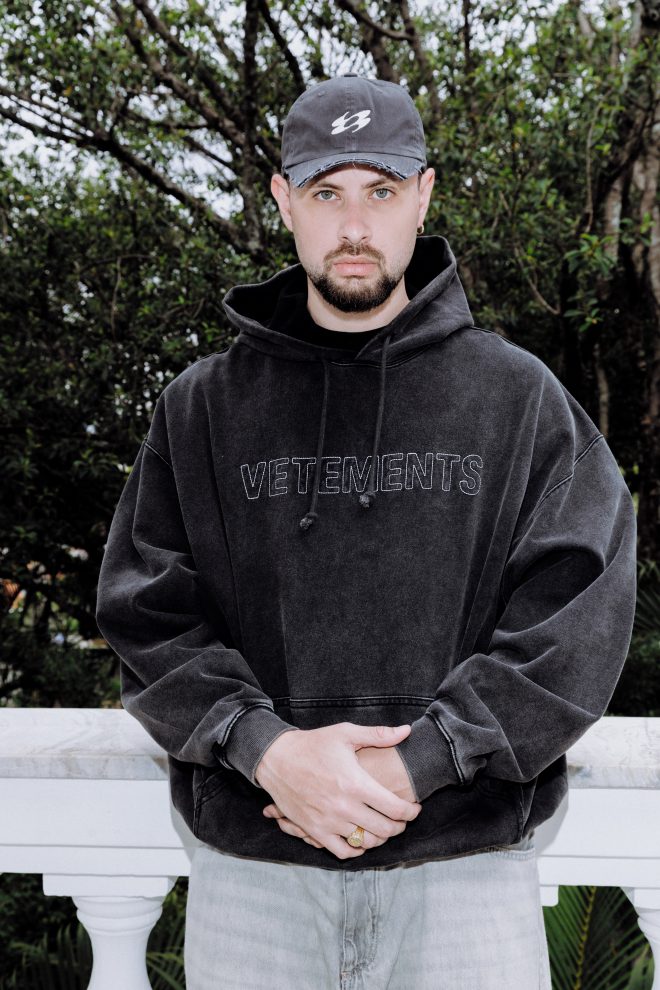
When asked what matters most as his world continues to expand, the answer is immediate and unembellished.
“Never lose my essence, and always be recognized for delivering a unique experience, both in my DJ sets and in my music.”
Identity, for Classmatic, isn’t something to be reinvented as scale increases. It’s something to be safeguarded. Recognition only holds value if it’s rooted in experience.
There is no grand projection beyond that. No future framed as destination. Just continuity. Rhythm intact. Essence protected. And a commitment to let the work speak in the same language it always has.
What stays after this conversation isn’t a sense of ascent. It’s weight. Not heaviness, but gravity. Classmatic doesn’t move by rupture. He adjusts. Re-centres. The sound widens, the rooms grow, but the internal logic remains stubbornly local. Rhythm doesn’t evolve into abstraction. It stays physical. Grounded. The same impulse, spoken louder only because the space allows it.
There is restraint in that choice. At a time when global circulation often demands simplification, he refuses to sand things down. Brazilian musical intelligence is not aestheticised or exported as flavour. It’s structural. Work ethic sits next to pleasure. Discipline next to looseness. Groove carries memory even when no one names it. The dancefloor becomes a place where culture moves without explanation.
What matters, too, is how quietly this extends beyond his own work. Through Organic Pieces, through the care he takes reading rooms, through an attentiveness that treats venues not as trophies but as living systems. Leadership, here, isn’t loud. It’s accumulative. Built from listening more than asserting. From knowing when to step forward and when to let the room breathe.
This isn’t a story about arrival. It’s about refusal. Refusal to disconnect from origin. Refusal to accelerate past coherence. Classmatic doesn’t promise transformation. He protects continuity. And in a moment where club culture often mistakes motion for meaning, that insistence on staying aligned, slightly unpolished, still in rhythm, feels quietly decisive.
