


A Return to the Studio, A Return to Self
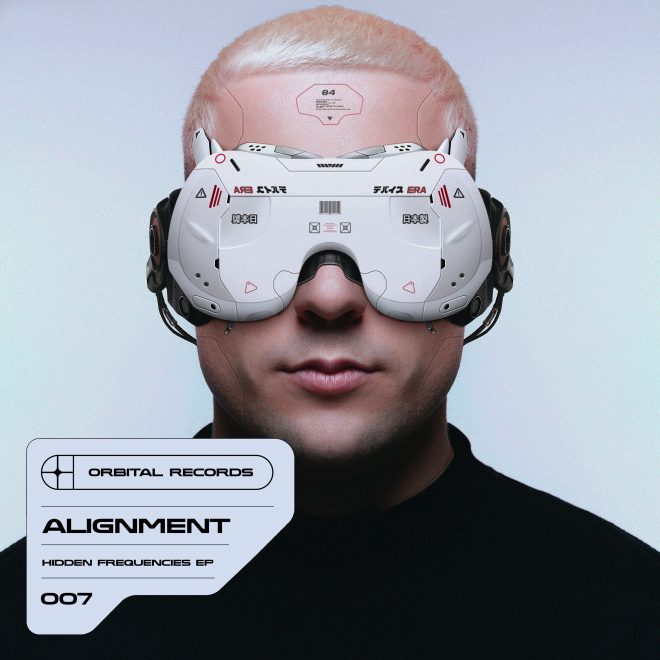
The second half of 2025 marked a decisive shift. After an extended period dominated by live shows, movement, and external momentum, Alignment reclaimed time. Physical time. Mental space. Studio solitude. What followed was an outpouring of material that resisted easy categorisation.
Some tracks aligned closely with the sound he had been refining for years. Others quietly pointed elsewhere.
Rather than forcing a decision, Hidden Frequencies became the container for that ambiguity. An EP designed not to resolve tension, but to hold it.
“When I decided to reclaim that time and refocus on production, a large amount of music emerged,” he explains. “Some tracks were closer to the sound I had been developing and pushing for years, while others were clearly moving in different directions.”
This duality defines the record. It does not expand outward in obvious ways. Instead, it compresses inward. The textures feel tighter. The structures are more deliberate. The energy is more controlled, yet no less physical. If previous releases often functioned as forward propulsion, this one operates as a pressure chamber.
There is confidence here, but also restraint. A sense of an artist deliberately refusing to articulate their next move over.
I Am Alignment: A Manifesto Without Explanation
The EP opens with I Am Alignment, a title that leaves little room for misinterpretation. It functions less as an introduction than as a threshold. A statement of continuity rather than reinvention.
“I Am Alignment is, in fact, a statement, a true manifesto,” he says. “Although my music may take different directions in the future, my vision as an artist and producer remains the same.”
Emotionally, the track establishes authority without aggression. It does not demand attention. It assumes it. Conceptually, it reinforces a throughline that has always defined his work. The idea that stylistic evolution does not require a collapse of identity.
What emerges is a subtle but essential distinction. Alignment is not dismantling his artistic centre. He is removing the fences around it.
This clarity of self allows the EP to move fluidly across terrain without feeling fragmented. Each track operates independently, yet all remain tethered to a singular vision. A reminder that evolution, when rooted in conviction, does not require spectacle.
Physical Tension and the Architecture of Control
The title track, Hidden Frequencies, leans fully into Alignment’s long-standing dialogue with physicality. This is music engineered for collective experience, where tension becomes a shared currency.
Yet the rawness here is meticulously shaped. The aggression was measured. The release was delayed.
“Finding the right balance is never an immediate process,” he reflects. “With this track in particular, it took time, careful listening, and direct interaction with the dancefloor.”
The track’s evolution was inseparable from its testing. Played repeatedly across different contexts, it gradually revealed where energy tipped into excess and where restraint amplified impact. What remains is a piece that feels coiled rather than explosive and suspended rather than unleashed.
At its core lies a dynamic that has long defined Alignment’s productions: an internal struggle between instinct and precision.
“It’s a kind of internal struggle between instinct and balance, control and release,” he explains. “The track evolves, adapts, and is continuously reshaped until it finds its final form.”
The moment of completion arrives not in the studio but on the floor, when sound ceases to be a personal expression and becomes a shared vibration, when it begins to converse with space, bodies, and time.
Introspection as Sonic Material
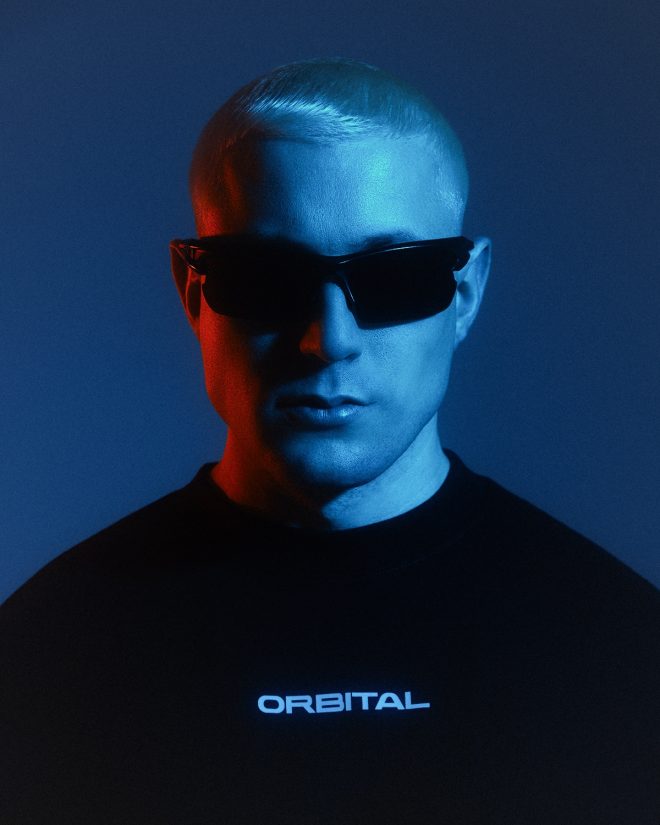
Where Hidden Frequencies operates through control and tension, The Darkness Of This Night turns inward. It introduces vulnerability not as a narrative device, but as a structural one.
Vocals play a central role here, not as ornamentation, but as material.
“Introspection has always played a central role in some of my tracks,” Alignment notes. “Lately, however, it has been evolving through the use of vocals.”
This marks one of the EP’s clearest departures from his past work. Voices are no longer atmospheric support. They carry weight. Emotional density. Narrative presence. They interact directly with rhythm and space, rather than floating above it.
The result is a track that feels exposed without being fragile. The vulnerability is controlled, deliberate, and deeply integrated into the architecture of the piece.
It signals a direction that Alignment is only beginning to explore. One in which emotional content is not separate from physical function but embedded within it. Where introspection becomes something the dancefloor can feel, not just hear.
Threshold States and Continuity of Identity
Taken as a whole, Hidden Frequencies exists in a liminal space. It consolidates an aesthetic that has been taking shape across recent releases, while quietly opening doors toward new forms.
“Vocals are no longer just supporting elements,” Alignment explains. “They become true sonic material, tools capable of adding an emotional and narrative dimension.”
At the same time, the EP remains firmly connected to the language he has developed over recent years, particularly through releases on Orbital. This platform has become inseparable from his artistic identity.
“It’s as if this EP exists on a threshold,” he says. “On one side, it consolidates an aesthetic, on the other, it opens up new possibilities.”
This sense of standing between phases is not framed as uncertainty, but as opportunity. A deliberate refusal to rush the definition. A recognition that not every moment of evolution needs immediate articulation.
Orbital as Ecosystem, Not Infrastructure
Orbital’s role in this process cannot be overstated. More than a label, it functions as an extension of Alignment’s internal logic. A space where speed, risk, and vision operate without compromise.
“I wanted a platform that could act as a direct extension of my creative mindset,” he explains. “Able to move at the same speed as my ideas, without filters or external constraints.”
This autonomy fundamentally alters his relationship with experimentation. Risk becomes structural rather than exceptional. Exploration becomes expectation rather than deviation.
“Risk is no longer something to avoid,” he reflects. “But a necessary tool for building a language that can evolve over the long term.”
Orbital operates as a sonic laboratory. An ecosystem where music is treated not as a product, but as a process. A continuously transforming journey where time compresses and ideas are allowed to mutate.
For Alignment, this structure is not about control. It is about freedom. The ability to imagine music beyond immediate utility. Beyond cycles of relevance.
Toward 2026: Freedom Without Definition
As Alignment looks toward 2026, the absence of predefined boundaries is not framed as a challenge, but as fuel.
“What excites me most is the total freedom of movement,” he says. “Even though it makes it difficult to define what my musical output will be clearly.”
Tempos shift. Structures dissolve. Emotional spaces overlap. Nothing is fixed too early. Ideas remain fluid, allowed to transform organically.
Rather than chasing a destination, Alignment treats the coming phase as an open construction site. Constantly evolving. Continuously reshaped.
“It’s an approach that treats music as something fluid,” he explains. “Closer to exploration than to a fixed destination.”
In that sense, Hidden Frequencies is less a conclusion than a pause between breaths. A moment of stillness that makes future movement possible.
